







Well, it looks like the Cybertruck’s bizarre ride is finally coming to an end.
Elon Musk has announced that Tesla will begin winding down production of its controversial stainless-steel pickup around the middle of next year, clearing the way for increased production of the company’s Cybercab robotaxi.
In a post on X, Musk confirmed the decision, writing: “Tesla will be winding down production of the Cybertruck at Gigafactory Texas around the middle of next year to make room for increased Cybercab production.”
And just like that, one of the most hyped electric vehicles in automotive history appears headed for an early retirement.
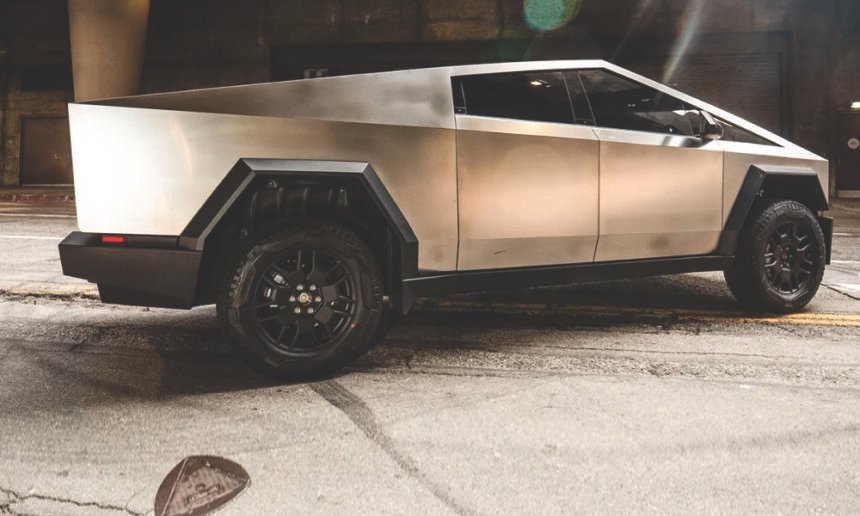
The Cybertruck was supposed to revolutionize the pickup market. Instead, it became a rolling controversy, attracting attention for its bizarre angular design, questionable practicality, repeated recalls, and sales figures that fell far short of the enormous expectations Musk himself created.
The reaction to Musk’s announcement was predictably divided. Some Tesla enthusiasts mourned the truck’s apparent demise, while others wasted little time celebrating.
One user claiming to be a Tesla employee called it “the saddest news!” and declared the Cybertruck the best vehicle Tesla ever sold. Another user, going by Captain Ford, offered a considerably less sentimental assessment: “Fuck that shitbox.”
Tesla has not clarified whether production will end permanently or whether the company simply intends to scale back manufacturing. What is clear is that the Cybertruck’s days as a major production priority appear numbered.
And the numbers help explain why.
Despite Musk once boasting that reservations had topped a million and declaring demand was “off the charts,” the Cybertruck never came close to becoming the blockbuster product Tesla had promised.
By March 2025, total sales had reportedly remained below 50,000 vehicles. Kelley Blue Book figures cited by EVWire indicate Tesla sold just 11,586 Cybertrucks in the United States during the first three quarters of 2026, a 28 percent decline compared with the same period a year earlier.
The timing of Musk’s announcement was also interesting. It came roughly 80 minutes after Tesla raised Cybertruck prices and suspended new orders for its entry-level Dual-Motor AWD version.
In other words, the company was adjusting prices and restricting orders for a vehicle whose production it now says it intends to wind down.
But disappointing sales are only part of the Cybertruck story. The vehicle was plagued by engineering problems and recalls that began almost as soon as it reached customers.
The warning signs were there long before the first production models rolled out.
A leaked internal Tesla report dated January 2022, examined by WIRED in 2023, reportedly documented significant problems with the preproduction Cybertruck, including suspension performance, body sealing, excessive noise, handling, and braking.
Then came the unforgettable 2019 unveiling.
Standing onstage in California, Musk attempted to demonstrate the strength of the Cybertruck’s supposedly unbreakable windows by having a steel ball thrown at them.
The windows promptly shattered.
Not once, but twice.
Musk swore, tried to laugh it off, and acknowledged: “There’s room for improvement.”
That turned out to be a rather significant understatement.
In April 2024, Tesla recalled Cybertrucks because an accelerator pedal pad could become loose and get trapped by interior trim, potentially causing the vehicle to accelerate uncontrollably.
In March 2025, the company recalled nearly every Cybertruck it had produced at the time because an exterior stainless-steel trim panel could detach while driving. Tesla blamed the problem on an adhesive that was not sufficiently resistant to environmental deterioration.
And the headaches kept coming.
In May 2026, another recall involved potential cracking around brake rotor stud holes on the rear-wheel-drive Cybertruck Long Range model. According to a notice filed with the National Highway Traffic Safety Administration, the defect could allow a wheel stud to separate from the wheel hub.
Yes, a Cybertruck could potentially have a wheel detach while someone was driving.
It was reportedly the vehicle’s 11th recall.
The Cybertruck’s troubles even became a running joke in the automotive world. At the end of 2024, iSeeCars executive analyst Karl Brauer told WIRED that the truck’s six recalls at that point made it worse than 91 percent of other 2024 vehicles.
And then there was Musk’s increasingly awkward attempt to turn the Cybertruck into a political and cultural symbol.
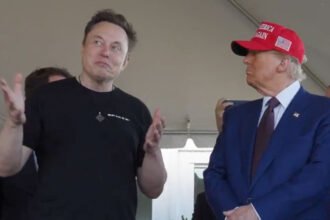
At one point, Musk arranged an impromptu Tesla showroom on the White House South Lawn, hoping to get President Donald Trump interested in buying one of his electric pickups.
Trump ultimately went with a Model S Plaid instead.
Now, Musk says the company is moving on.
His explanation is that Tesla needs the manufacturing capacity for its next big ambition: the Cybercab, an autonomous electric vehicle intended to become the centerpiece of the company’s robotaxi business.
Musk has increasingly insisted that Tesla should no longer be viewed simply as a car manufacturer, but as a robotics and autonomous-driving company.
The Cybercab is central to that vision, although its rollout has hardly been smooth either. The service has so far operated on a limited scale in Austin, Texas, and expanding it into a major business will require considerably more than flashy presentations and promises.
Cybertruck lead engineer Wes Morrill tried to put a positive spin on the decision, writing on X that the pickup “was an incredible technology development platform and lives on through Cybercab.”
Perhaps.
But for a vehicle that was supposed to redefine the future of pickup trucks, the Cybertruck’s apparent retreat is a remarkable ending to one of Musk’s most ambitious automotive experiments.
The futuristic truck arrived with enormous hype, a jaw-dropping design, and promises of revolutionary performance.
It leaves behind a trail of disappointing sales, repeated recalls, broken expectations, and one very memorable window demonstration.
So much for the revolution.