








Donald Trump just lost his grip on Congress—and the political consequences could haunt the rest of his presidency.
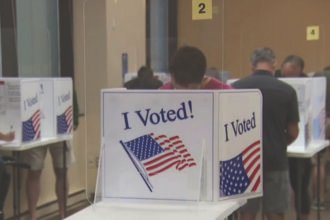
In a stunning midterm repudiation, Democrats have seized control of both the House and Senate, ending two years of Republican dominance in Washington and stripping Trump of the congressional protection he relied on to push his agenda largely unchecked.
But here’s where things get especially uncomfortable for the president: Democrats aren’t just coming to Washington to block his policies. They’re preparing to investigate his administration, subpoena officials, demand answers, and drag controversies the White House would rather keep buried into the congressional spotlight.
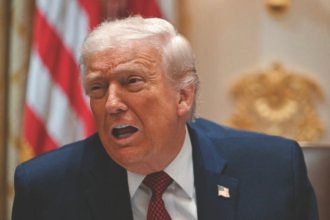
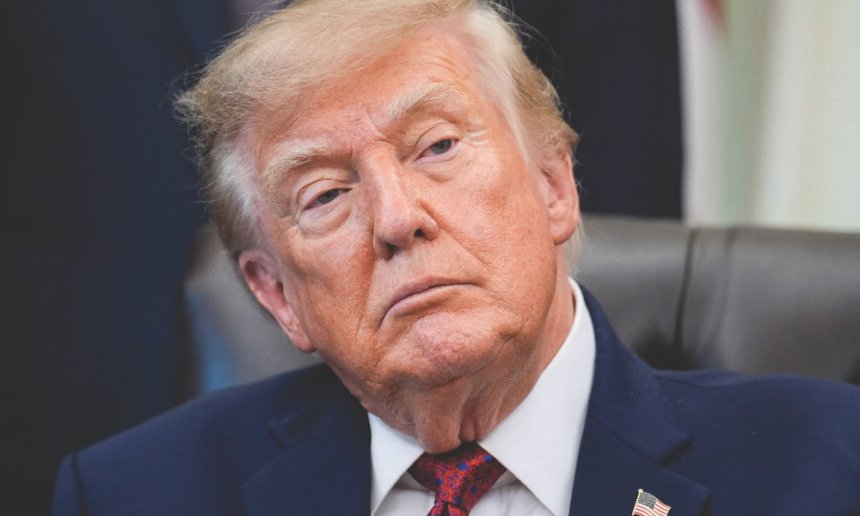
Trump wanted a Congress that would protect him. Instead, he now faces one that can put his administration under oath.
And this may be only the beginning of his political nightmare.
A Midterm Disaster Across the Map
The scale of the Democratic victory is difficult to overstate.
Voters delivered a stunning rebuke to Republicans, flipping seats in states that have reliably supported the GOP for generations. Democrats won Senate races in Kansas, Texas, South Carolina, Iowa, Ohio, Maine and North Carolina, among other major victories, while also taking control of the House.
In Kansas, Democrat Adam Hamilton became the state’s first Democratic senator in nearly a century. In Texas, James Talarico pulled off a historic upset, defeating Republican Ken Paxton and helping Democrats break through in one of the country’s most reliably Republican states.
The Democratic wave extended well beyond congressional races. Gina Hinojosa defeated Republican Gov. Greg Abbott in Texas, while Amy Acton defeated Vivek Ramaswamy in Ohio. Democrats also scored major victories in Georgia and other states, producing a series of historic firsts.
These weren’t isolated disappointments for Republicans. They were part of a nationwide rejection that reached deep into territory Trump carried comfortably just two years ago.
And the results suggest that the coalition that returned Trump to the White House is showing serious cracks.
The election was shaped by a combination of economic frustration, anger over the war with Iran, and growing concerns about corruption and the direction of the country.
Trump had repeatedly urged supporters to treat the midterms as a referendum on his presidency, even telling them to pretend he was on the ballot. But when the results came in, the president attempted to distance himself from the outcome, arguing that he wasn’t actually running and blaming Republican candidates for their defeats.
That explanation may be convenient, but it doesn’t change the political reality: Trump made himself the central figure in these elections, campaigned aggressively for Republican candidates, and now has to live with the consequences of their losses.
According to the AP Voter Poll, voters were deeply dissatisfied with the country’s direction, with affordability and concerns about government corruption weighing heavily on the results. Reuters also reported that half of voters surveyed viewed the election as an opportunity to rebuke Trump, while 70% wanted Congress to provide stronger checks and balances on the president.
That’s a particularly damaging message for a president who has spent much of his second term demanding loyalty from Republicans in Congress rather than encouraging them to exercise their constitutional oversight responsibilities.
The Investigations Are Coming
For Trump, the most immediate consequence may not be the legislation Democrats pass. It may be the investigations they launch.
With control of both chambers, Democrats will have the power to hold hearings, issue subpoenas, demand documents, and compel administration officials to answer questions under oath.
That means a dramatically different environment for the White House.
For the past two years, Republican control of Congress largely insulated the administration from aggressive congressional oversight. Now Democrats will have the authority to examine administration decisions, scrutinize the use of federal power, and investigate potential conflicts of interest involving Trump, his family, political allies and senior officials.
Democratic leaders have already signaled that oversight will be a major priority. Among the areas likely to attract scrutiny are allegations of self-dealing, the administration’s handling of major policy decisions, and the extent to which Trump’s political and business interests have intersected with his presidential responsibilities.
The consequences could reach far beyond embarrassing headlines. Congressional investigations can produce sworn testimony, expose internal communications, generate referrals for further scrutiny, and keep damaging questions in the public eye for months.
And unlike a social media post or a campaign rally, a congressional subpoena is not something the president can simply dismiss with a nickname.
Democratic control also means that much of Trump’s remaining legislative agenda is now in serious trouble.
The House can block legislation the president wants, while the Senate can reject or delay his nominees. That includes senior administration appointments and, should a Supreme Court vacancy arise, a potential nomination to the nation’s highest court.
Democrats will also have greater leverage over government funding and other major negotiations. Trump may still wield the veto, and Republicans will retain a role in the legislative process, but the days of a Congress routinely clearing the way for his priorities are over.
The president will now have to negotiate with political opponents who have little incentive to give him easy victories.
Even measures that Republicans once expected to move through Congress with relative ease could become major political battles.
And with the 2028 presidential election already beginning to shape the political landscape, every confrontation will carry another consequence: it will give Democrats an opportunity to define the final two years of Trump’s presidency.
A Republican Party Facing Its Own Reckoning
The election has also exposed a growing problem inside the Republican Party.
For years, Republicans have been reluctant to challenge Trump, even when his decisions created political liabilities for the party. Many candidates tied their campaigns closely to the president, betting that his support would bring voters to their side.
That strategy has now suffered a spectacular failure.
The losses are likely to intensify questions about whether continued loyalty to Trump is helping Republicans—or dragging them down. They could also accelerate the jockeying among potential Republican presidential contenders looking toward 2028.
Vice President JD Vance and other figures in Trump’s orbit will face a difficult calculation: how closely should they remain tied to a president whose political standing has taken such a devastating hit?
For now, Trump remains the most powerful figure in the Republican Party. But the immediate reality is unmistakable.
He has lost the congressional majorities that helped shield his administration. His legislative agenda faces a formidable obstacle. His allies will be called to answer questions, and his administration will face a level of scrutiny it has largely avoided under Republican control.