








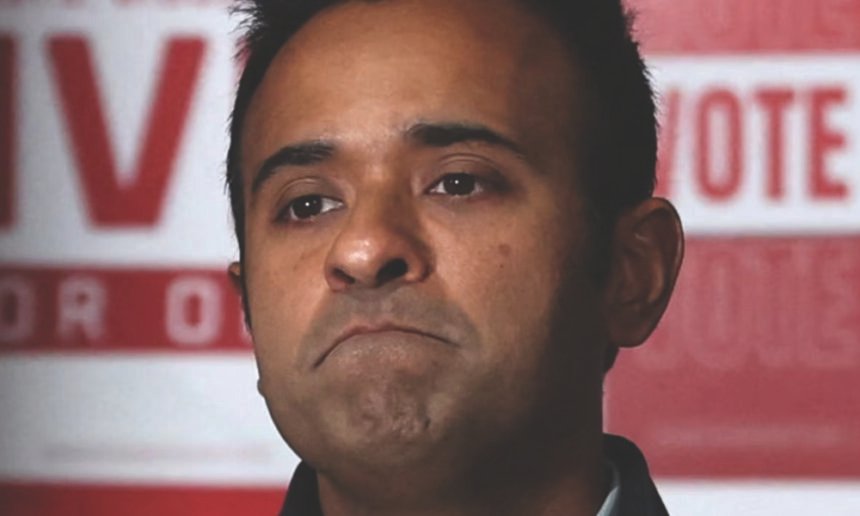
Vivek Ramaswamy is finally moving on from the most controversial ad of Ohio’s gubernatorial race. After triggering a bipartisan backlash for dragging his Democratic opponent’s painful childhood into the campaign, the Republican confirmed Thursday that the advertisement has finished airing.
The ad in question featured Donna Arthur, the long-estranged birth mother of Democratic candidate Dr. Amy Acton, calling her daughter a liar and disputing parts of her account of a troubled childhood. Acton has said she suffered sexual abuse by her mother’s partner when she was a child.
The advertisement sparked outrage across Ohio, including among prominent Republicans. Even outgoing Republican Governor Mike DeWine, who endorsed Ramaswamy, called the commercial “deeply, deeply troubling” and urged him to pull it.
All five living former full-term Republican Ohio governors also opposed the ad.
Acton’s campaign wasn’t impressed by Ramaswamy’s explanation.
“Vivek Ramaswamy should never have run his despicable ad in the first place, and it’s totally unsurprising that he took it off the air in the most cowardly way possible, without even the hint of an apology,” campaign spokesperson Addie Bullock told Newsweek.
She accused Ramaswamy of being willing to harm anyone to get what he wants and said Ohio voters should reject him.
Ramaswamy’s campaign had initially announced plans to spend $4 million airing the advertisement. A 60-second version was later shortened to 30 seconds after questions emerged about one of its central claims.
Police and court records show that Acton’s mother lost custody of her children after her husband, Cledith Arthur, was arrested and charged with raping Acton. He pleaded not guilty, left the area while free on bond, and died before standing trial.
Records also supported an important part of Acton’s childhood account that the original advertisement challenged: Cledith Arthur had lived in a tent.
Acton accused Ramaswamy of deliberately exploiting her childhood trauma to rescue his struggling campaign.
Her brother, Philip Stearns, also publicly supported key parts of her account, saying his sister endured abuse while trying to protect him.
The controversy even divided prominent Republicans. Former Governor Bob Taft said the advertisement crossed “the bounds of human decency,” while other former Republican governors also condemned its use.
Trump and Vice President JD Vance, however, defended Ramaswamy.
There are signs the controversy may have hurt more than it helped.
A Suffolk University-USA Today poll of 500 likely Ohio voters conducted October 21–26 showed Acton leading Ramaswamy 48% to 44%. The four-point difference falls within the poll’s margin of error, so the survey does not establish a clear leader.
But another finding is particularly interesting: 72% of respondents had seen the advertisement or heard about it.
Among those who reported changing their minds, seven said the commercial moved them from the Republican candidate to the Democrat. Just one reported switching in the opposite direction.
The small number of respondents involved doesn’t establish a statewide shift, but it certainly doesn’t provide evidence that the expensive advertising strategy accomplished what Ramaswamy wanted.
Ramaswamy says voters will now see four replacement commercials as the campaign shifts back toward policy.
With the election approaching, the Republican is hoping to redirect attention toward issues such as affordability, taxes and energy costs.
But the controversy has already put an uncomfortable spotlight on his campaign, in a race where Acton is mounting a serious challenge in a state Republicans have dominated for years.
Ohio has elected a Democratic governor only once in its past nine gubernatorial elections.
For Ramaswamy, the question now is whether voters will move past the controversy or remember the campaign that turned his opponent’s childhood trauma into a political weapon.