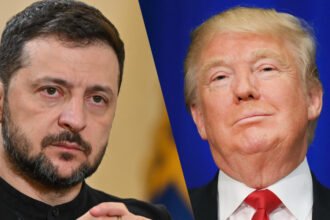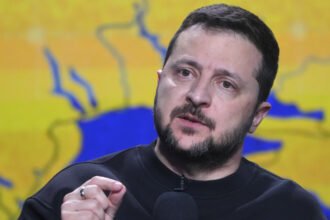







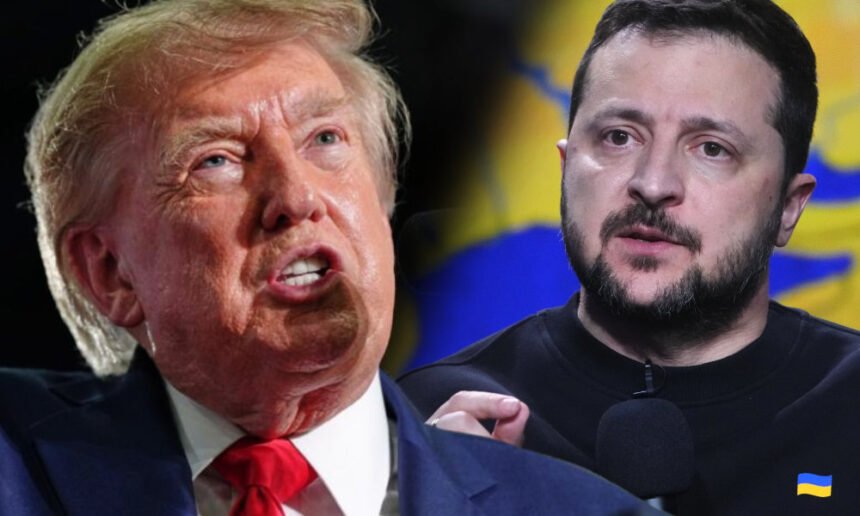
Donald Trump is furious with Ukrainian President Volodymyr Zelensky after Ukraine launched one of its biggest drone attacks on Russia this year, striking a major oil terminal as Trump pushes for a deal to end the war.
Trump accused Zelensky of never really wanting peace, even as Ukraine continues to face relentless Russian attacks and Kyiv insists it is doing everything possible to negotiate a lasting settlement.
The latest clash comes as relations between Washington and Kyiv grow increasingly strained, raising fresh concerns about whether Ukraine can count on continued American support as another brutal winter approaches.
On Sunday, after the overnight drone strikes, Trump took to Truth Social to explain why he didn’t want Ukraine’s attacks to jeopardize his negotiations with Moscow.
“I am in the process of negotiating Peace in the war between Russia and Ukraine, and don’t want to do anything that will drive, foolishly, Russia away from the bargaining table,” Trump wrote, adding that he believes “great progress is being made.”
But Trump also took a direct shot at Zelensky, claiming the Ukrainian leader “doesn’t want to end this war, and probably never did.”
Zelensky has firmly rejected that accusation, arguing that Ukraine has repeatedly supported efforts to end the fighting while Russia continues to attack its cities and critical infrastructure.
The Ukrainian president said he spoke Sunday with Trump’s special envoy, Steve Witkoff, and Trump’s son-in-law Jared Kushner as part of what he described as “nonstop communication” aimed at securing long-term peace.
“We are doing everything on our part to make this happen, and to ensure that America’s position is strong and helps bring peace closer,” Zelensky wrote on X.
The exchange highlights the growing divide between Trump’s push to get Russia to the negotiating table and Ukraine’s insistence that Moscow must face consequences for continuing its invasion.
Ukraine’s latest drone offensive targeted several locations inside Russia, including the St. Petersburg Oil Terminal, a major facility capable of handling up to 12.5 million tons of oil annually.
Russian authorities said the country’s air defenses shot down 1,015 Ukrainian drones overnight into Sunday across multiple regions. Ukraine’s drone manufacturer, Fire Point, reported a fire at the oil terminal following the strike.
Other reported targets included a logistics center operated by Russian distribution company Ozon and a data center associated with VKontakte, Russia’s largest social media platform.
For Ukraine, long-range strikes against Russian oil and logistics infrastructure are part of a broader effort to disrupt the resources Moscow uses to sustain its war.
For Trump, however, the attacks risk complicating his attempt to lower gas prices negotiate an end to the conflict before the midterm elections.
The latest confrontation follows Trump’s claim last week that Russia and Ukraine had agreed to stop attacking each other’s energy infrastructure.
The White House has been trying to ease pressure on oil and diesel prices ahead of crucial US midterm elections. But neither Kyiv nor Moscow publicly confirmed the alleged agreement, and Ukraine says Russia has continued to hammer its energy facilities and cities.
Zelensky said Sunday that Russia had deliberately attacked Ukraine’s energy, oil and gas sectors 76 times since Trump announced the supposed energy ceasefire.
In the 24 hours leading up to Sunday morning, Russian missile and drone attacks killed 11 people and injured nearly 50 across Ukraine, according to Ukrainian authorities. One major assault targeted energy facilities in the Odesa region.
That’s the central problem with Trump’s approach: Ukraine is being urged to hold back on attacks against Russian energy infrastructure while continuing to endure Russian strikes of its own.
And the dispute has become even more contentious because Trump has moved to ease certain restrictions on Russian energy imports and invoked a waiver exempting Russia from sweeping economic penalties mandated by Congress. Those moves have drawn criticism, including from Republicans.
In a Sunday interview with NBC’s Meet the Press, Zelensky argued that easing sanctions strengthens Russian President Vladimir Putin’s ability to continue the war, even as Russian forces struggle on the battlefield.
He also said Ukrainian forces still faced restrictions on their access to Starlink, the satellite communications system used to support military operations and guide certain drones.
Zelensky characterized the limitations as a message from the US government to restrict the speed at which Ukrainian drones could fly. The Trump administration has denied ordering the service to be restricted.
The dispute extends beyond sanctions and drone attacks. Zelensky also said US intelligence sharing had been blocked for three days during Russian ballistic missile attacks, although he said the flow of information had since resumed.
Secretary of State Marco Rubio pushed back on that claim, saying he didn’t know where Zelensky was getting the information and insisting there had been no pause.
The disagreement matters because American intelligence and satellite networks have played a critical role in helping Ukraine detect incoming Russian missiles and warn its population.
On Monday, Zelensky said Ukraine had again received no early warning from its partners before a Russian ballistic missile attack that came in multiple waves overnight.
He also reiterated that Kyiv remained committed to a lasting peace agreement.
“Ukraine never wanted this war, and we have welcomed literally EVERY attempt by our partners to bring this war to a dignified end,” Zelensky wrote.
The conflicting accounts underscore how much trust has deteriorated between the two governments at a moment when Ukraine remains heavily dependent on Western military and intelligence support.
A Possible Trump-Putin-Xi Meeting Raises More Concerns
The tensions could deepen further amid discussion of a possible meeting involving Trump, Putin and Chinese President Xi Jinping to discuss the war.
Rubio said he was aware of discussions about a meeting but that nothing had been finalized. The Kremlin confirmed that the possibility had been mentioned during a recent phone call between Trump and Putin, while stressing that no concrete proposals or agreements had been reached.
Ukraine’s Foreign Minister Andriy Sybiha warned Monday that a meeting involving the three leaders could encourage Putin to continue the war.
For Kyiv, the concern is that decisions affecting Ukraine’s future could be made in talks involving major powers without Ukraine having a meaningful role in shaping the outcome.
That fear comes as Zelensky tries to preserve his relationship with Trump while pushing back against policies he believes are helping Moscow and hurting Ukraine.
Asked whether Trump was an ally of Ukraine, Zelensky offered a cautious answer: “I hope so.”