







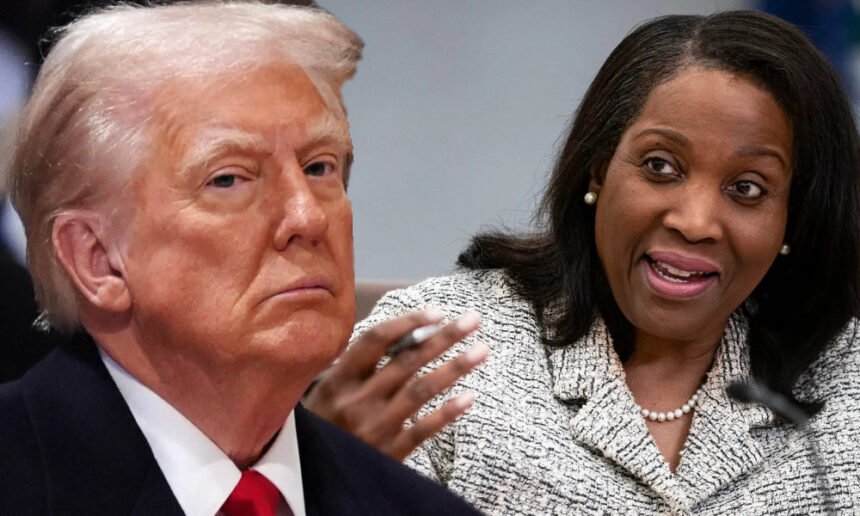
President Donald Trump has opened a new front in his yearlong effort to remove Federal Reserve Governor Lisa Cook, ordering a formal inquiry into allegations that she made false statements on mortgage documents — a move that could intensify the battle over the central bank’s independence just weeks before the midterm elections.
In a presidential memorandum dated October 7, Trump established a committee of inquiry to investigate the allegations and determine whether there is sufficient cause to remove Cook from the Federal Reserve’s Board of Governors. The committee is scheduled to hold a closed-door hearing at the White House on November 5, when Cook will be required to appear and answer questions.
Cook has denied wrongdoing and has not been charged with a crime. Her lawyers say a fair examination of the evidence will demonstrate that there is no legal basis for removing her.
“Governor Cook welcomes the opportunity to present the facts so she can clear her name and demonstrate there is no legal basis to fire her,” her attorneys, Abbe Lowell and Norm Eisen, said in a statement.
The inquiry marks another escalation in Trump’s extraordinary campaign against a sitting Fed governor. He first sought to fire Cook in August 2025, alleging that she improperly identified two properties as primary residences on mortgage applications. Mortgages for primary residences can carry more favorable terms than loans for second homes or investment properties.
Cook’s lawyers have previously characterized the issue as an inadvertent error and pointed to other documents in which one of the properties was identified as a vacation home.
The committee will be led by senior Trump administration officials, including White House economic adviser Kevin Hassett. It will examine the allegations and recommend whether they provide grounds for Cook’s removal. The hearing will not be open to the public, although the administration says it will be transcribed.
The timing and structure of the inquiry are likely to draw scrutiny. The president’s committee will investigate allegations against an official whose removal Trump has already sought, and it will report its findings directly to him.
That raises a broader question: whether the administration is applying a neutral legal standard or using an investigation to advance a political objective.
The Federal Reserve is designed to operate with a degree of independence from the White House. That independence allows policymakers to make decisions about interest rates and inflation even when those decisions conflict with a president’s political preferences.
Trump has repeatedly pressed the central bank to lower interest rates. His effort to remove Cook has therefore become part of a larger confrontation over the president’s authority and the limits designed to protect the Fed from political interference.
The Supreme Court addressed the dispute earlier this year, ruling that the president must establish adequate cause and follow a proper process to remove a Fed governor. The court left Cook in office and returned the case to a lower court.
The new inquiry gives Trump’s administration another opportunity to build its case. But an investigation is not a finding of wrongdoing, and the allegations against Cook remain disputed.
The committee is scheduled to hold its hearing on November 5. Cook may submit a written statement before the hearing and provide additional material afterward, with the committee then expected to deliver its findings and recommendation to Trump.
Whether that process establishes a legitimate basis for removal — or deepens concerns that the White House is trying to bring the Federal Reserve under presidential control — will be central to the next stage of the fight.