


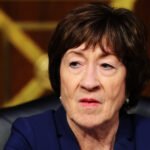

There was a moment when federal investigators were preparing to dig much deeper into how money, political access and government contracts were moving through Washington. Sen. Susan Collins was part of that picture.
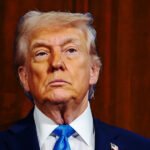
Then Donald Trump returned to the White House, the FBI’s public-corruption unit was dismantled and the investigation went nowhere.
That is the extraordinary story uncovered by ProPublica in a new investigation that draws on FBI evidence, thousands of pages of records and interviews with people familiar with the case. ProPublica reports that investigators had developed enough evidence by late 2024 to seek approval for a broader bribery investigation that could have reached members of Congress from both parties.
At the center of it was Martin Kao, the former CEO of Hawaiian defense contractor Navatek.
Kao was already a convicted federal criminal when he began cooperating with the FBI. He had pleaded guilty to campaign-finance crimes and fraud and was facing years in prison.
But Kao had something investigators wanted: an insider’s account of how he said Navatek used political donations, lobbyists and relationships with members of Congress to pursue millions of dollars in federal contracts.
And one of the lawmakers who figured prominently in his account was Collins.
The Corner Bakery meeting
The story goes back to late 2019.
Collins was facing a difficult reelection campaign, and Scott Reed, chairman of the super PAC supporting her, met with Kao and other Navatek executives at a Corner Bakery in Washington.
According to Kao’s account to the FBI, Reed asked for $500,000.
There was a problem: Navatek was a government contractor, and federal law prohibits government contractors from making contributions in connection with federal elections.
Kao told investigators that Navatek wanted something in return — additional federal funding for the company.
The plan, according to ProPublica, was to disguise the source of the money through a shell company.
Navatek ultimately sent $150,000 to Collins’ super PAC, 1820 PAC, through the shell company.
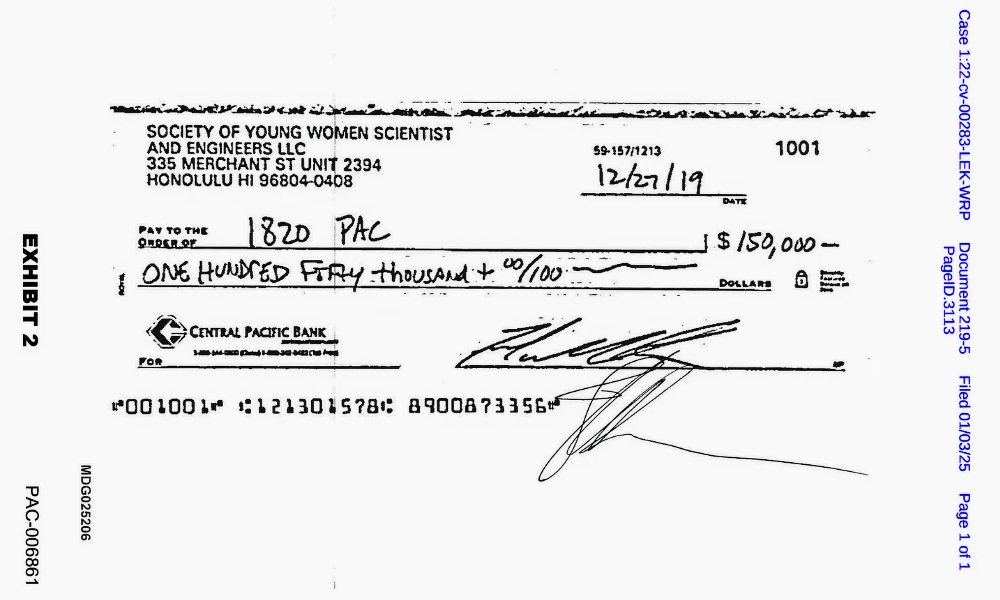
An email from Kao to Reed discussed the plan. Kao described the new LLC as a way to conceal the identity of the buyer or seller in real estate transactions.
Reed’s response?
“Very smart and glad your counsel understands.”
ProPublica reviewed the emails.
Two months later, Kao told Navatek executives that Collins had committed to getting the company $32 million in naval contracts, according to an internal company email reviewed by ProPublica.
The money and the contracts
Collins’ office had already helped Navatek land millions in federal funding.
In 2018, Kao and his network began making contributions to Collins as Navatek pursued an $8 million Navy research project.
ProPublica reports that emails showed Collins’ staff communicating with the Navy about sending the money to Navatek.
One Navy official wrote in February 2019:
“I spoke with Sen. Collins office regarding the $8M. The interested company is Navatek.”
Later, after a fundraiser involving Collins, the Senate released a draft defense budget containing $21.5 million for projects Navatek wanted in Maine.
Kao subsequently emailed a Collins campaign fundraiser thanking her for the senator’s support.
“We are here to help anyway we can … financially or whatever,” he wrote.
That sort of overlap — political fundraising on one side and government funding on the other — became central to the FBI’s investigation.
According to ProPublica, agents assembled extensive records showing contributions from Kao and his associates around the same time Collins was directing federal funding toward Navatek.
They also found evidence that Kao used relatives as donors to get around campaign contribution limits.
Kao’s FBI confession
After federal agents arrested Kao in 2020, he eventually began talking.
A lot.
Over multiple lengthy interviews, Kao described what he portrayed as a broader pay-to-play operation involving members of Congress, lobbyists and congressional staffers.
He gave investigators a 50-page document naming people he believed were involved.
ProPublica reports that agents compared his claims with hundreds of thousands of records seized during the investigation and found that much of his account was consistent with the documentary evidence.
There was an obvious problem, however.
Kao was a convicted felon seeking a reduced sentence.
That meant investigators could not simply take his word for everything.
They needed evidence.
And according to ProPublica, they found enough to keep digging.
By late 2024, FBI agents believed they had sufficient evidence to seek approval for a broader investigation into possible bribery involving members of Congress.
They were considering undercover operations.
They were asking detailed questions about Collins and her office.
Then the political landscape changed.
Trump returned — and the investigation collapsed
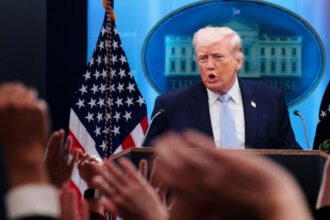
Trump returned to the White House in January 2025.
His administration soon began reshaping the Justice Department and FBI, including targeting personnel who had worked on investigations involving Trump.
Among the units affected was the FBI’s public-corruption squad known as CR-15.
ProPublica reports that FBI agent Michelle Ball, who had worked on the Kao investigation, was fired after being accused of having “weaponized” the Justice Department because of her previous work connected to Trump’s effort to overturn the 2020 election.
Another agent involved in the investigation, Kevin Gounaud, was pushed out in 2026.
The Justice Department’s Public Integrity Section also suffered a major upheaval, with prosecutors resigning after the department ordered them to drop a case involving New York City Mayor Eric Adams, according to ProPublica.
The result was devastating for the Kao investigation.
The broader corruption probe never got off the ground.
The agents who had been building the case were gone.
And the government stopped talking to Kao.
A potential investigation into whether political donations had been exchanged for government favors effectively died before investigators could determine where the evidence would lead.
Collins denies wrongdoing
Collins’ office strongly disputes the allegations.
Her deputy chief of staff, Annie Clark, told ProPublica that Collins “vigorously” denies Kao’s allegations of bribery and pay-to-play and called them “outlandish.”
Clark said Collins’ office fully cooperated with the FBI.
She also pointed to the earlier investigation, saying that the Biden administration’s Justice Department had thoroughly examined the Navatek matter and that the Collins campaign ultimately returned illegal contributions it had received without knowing their source.
The FBI likewise pushed back on the new reporting.
FBI spokesperson Ben Williamson told ProPublica that the bureau had investigated allegations involving Collins years ago and “ultimately found nothing implicating Senator Collins or Senator Collins’ campaign.”
But Williamson did not answer ProPublica’s questions about the separate investigation launched in 2024 after Kao’s extensive cooperation with the FBI.
A bigger Washington story
The Collins allegations are only one piece of a much larger story.
According to ProPublica, Kao told investigators that Navatek had developed a system for turning political donations and lobbying into federal contracts.
The company targeted lawmakers with influence over defense appropriations.
It worked with lobbyists and congressional staffers to develop projects that could be inserted into enormous defense spending bills.
Once the money was approved, the company relied on congressional pressure to help secure the contracts.
Navatek’s own employees reportedly referred to the strategy as “the method.”
And the numbers grew.
Navatek’s annual revenue increased from roughly $10 million around the time Kao acquired the company to nearly $40 million when he was arrested.
The company eventually pursued hundreds of millions of dollars in additional federal funding.
But ProPublica found evidence that much of the company’s research produced little of practical value for the military.
One former employee described a Maine boat project as essentially ending with PowerPoint slides and a white paper.
“The boats weren’t delivered to the Navy — the Navy didn’t even want them,” the former employee told ProPublica.
That raises a much bigger question than what happened at one Corner Bakery.
How much of Washington’s federal contracting system depends on relationships, political money and access rather than simply on which companies can deliver the best work?
The investigation that never happened
That’s what the FBI’s anti-corruption agents were beginning to investigate.
By 2024, they had a convicted defense contractor offering a detailed account of how he said the system worked, a mountain of corporate records and emails that ProPublica says independently corroborated much of his story, and evidence involving lawmakers from both parties.
They were preparing to find out how far it went.
Then Trump returned to office.
The agents were pushed out.
The public-corruption unit was dismantled.
The broader investigation was abandoned.
And the government stopped pursuing the informant who had handed investigators a 50-page roadmap into Washington’s political influence network.
Collins has not been charged with bribery, and ProPublica’s reporting does not establish that she committed a crime.
But the central fact of the investigation is difficult to miss: federal agents were preparing to investigate whether political money and government contracts had been improperly exchanged, and that investigation died after the Trump administration took control of the Justice Department and FBI.
The full implications remain unresolved.
And that may be precisely the problem.
This article is based on reporting by ProPublica, which said it independently corroborated much of Martin Kao’s account and reviewed FBI evidence and thousands of pages of legal records. Collins and the FBI dispute key allegations concerning her and her campaign.