







A federal judge just told Trump’s top law-enforcement officials that their plan to move the FBI’s headquarters at Donald Trump’s request was unlawful — and ordered them to stop.
U.S. District Judge Theodore Chuang blocked Trump’s plan to move FBI headquarters from its current location in Washington, D.C., to the Ronald Reagan Building, ruling that the proposed move was “not in accordance with law.”
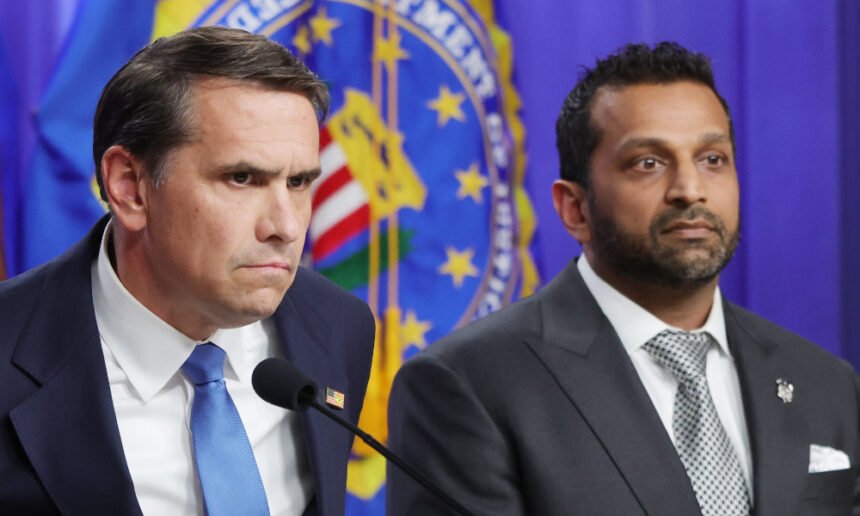
The decision is a major setback for FBI Director Patel and Attorney General Blanche, who were pushing the plan on Trump’s behalf.
And the judge’s message was pretty simple: You can’t move the FBI just because the administration wants to.
Chuang ruled Monday that Congress never authorized the proposed move. He barred Patel and Blanche from relocating the FBI to the Reagan Building or using federal money to renovate the building for the bureau.
Trump blew up the original plan
The J. Edgar Hoover Building in downtown Washington is aging and badly needs to be replaced. After a lengthy competition between Maryland and Virginia, the General Services Administration selected Greenbelt, Maryland, in 2023 for the FBI’s new headquarters.
Then Trump returned to the White House.
His administration scrapped that decision in 2025 and proposed moving the FBI into the Ronald Reagan Building instead — a short distance from the bureau’s current headquarters.
Maryland and Prince George’s County sued, arguing that the administration had improperly abandoned the previously approved plan.
Now they’ve got a federal judge on their side.
Congress had already put up a roadblock
Chuang’s ruling also focused on language Congress included in the 2026 Appropriations Act.
Lawmakers blocked previously appropriated money from being spent on remodeling the Reagan Building until the FBI produces complete architectural plans.
Those plans haven’t been submitted.
The administration wanted to move the FBI into a building Congress hadn’t authorized for that purpose — and apparently wanted to spend money renovating it before completing the required plans.
Sources reportedly revealed that Trump planned to name the new FBI headquarters after himself.
Chuang wasn’t buying it. His ruling concluded that the proposed switch was unlawful.
The bureau responded by accusing the court of interfering with the administration for political reasons.
A spokesperson for the FBI said the ruling was another example of courts trying to undermine Trump’s efforts to make government more cost-effective.
The bureau also defended Patel’s leadership and claimed the FBI has achieved the largest reduction in crime in American history under Trump.
Meanwhile, the General Services Administration insisted it still intends to deliver a new FBI headquarters faster and at a lower cost.
But there’s a small problem with that argument:
The judge just told them they can’t carry out this particular plan.
Maryland says the case is bigger than a building
Maryland officials celebrated the ruling as a victory over what they see as executive overreach.
Maryland Attorney General Anthony Brown said the case isn’t really about where the FBI puts its headquarters.
It’s about whether the administration can ignore Congress when it doesn’t like the outcome.
“When Congress makes a decision, the Federal Government cannot simply ignore it because they do not like the outcome,” Brown said.
Maryland Gov. Wes Moore called the decision a major victory and urged the administration to stop fighting the state’s effort to bring the new headquarters to Prince George’s County.
Prince George’s County Executive Aisha Braveboy said the Greenbelt development could create 7,500 jobs and attract roughly $4 billion in investment, making it the largest investment in the county’s history.
“We’re in it to win it,” Braveboy said.
Another headache for Patel
The ruling is also another embarrassment for Patel, whose tenure as FBI director has already drawn plenty of criticism.
His critics have even given him a nickname: “Keystone Kash,” a reference to the spectacularly incompetent police force from old silent-era comedies.
Trump wanted the move. Patel and Blanche tried to make it happen. Congress hadn’t authorized it, and a federal judge just pulled the plug.