








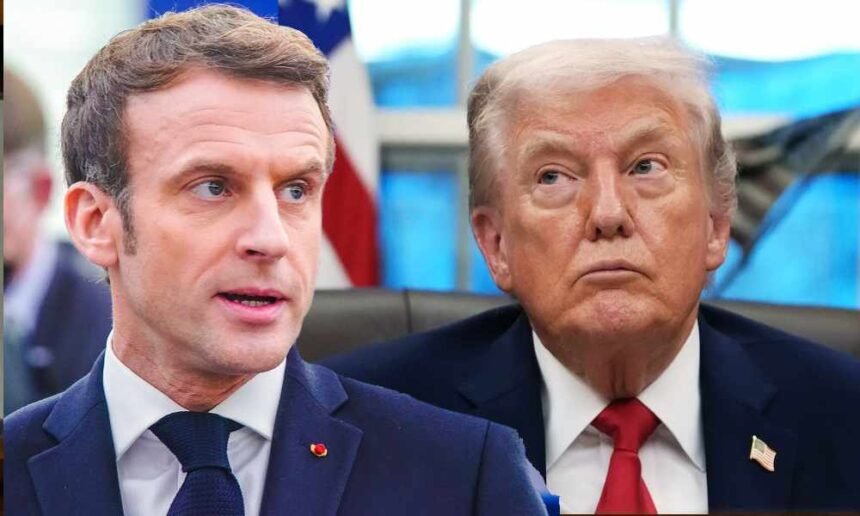
French President Emmanuel Macron pushed back on Donald Trump’s threat to slap 100% tariffs on French wine, making clear that Paris isn’t about to scrap its digital tax on American tech companies just because Trump demands it.
After Trump warned in an interview with The New York Post that he could slap a 100% tariff on French wine unless President Emmanuel Macron rolls back a 3% tax on U.S. tech companies, Macron responded with a blunt reminder that France is, in fact, still France.
“This digital tax, decided by Europeans, implemented by several countries, is part of our law,” Macron told French broadcaster TF1. “It’s not the United States that decides on the Europeans’ law.”
In other words: no.
Trump had argued that Macron could easily defuse the situation by simply removing what he described as a “sales tax” on American companies, saying, “All he has to do is get rid of the sales tax, and he wouldn’t have that kind of pressure.”
The framing, however, didn’t land particularly well in Paris, where officials see the digital levy not as a negotiable fee but as domestic tax policy.
The standoff is the latest flashpoint in Trump’s broader push to use tariffs as leverage in disputes ranging from trade balances to foreign regulatory policy—an approach that often runs into the same problem: allies don’t always treat U.S. demands as binding instructions.
France’s response underscores that tension. Macron’s message was simple and unmistakable: French tax law is decided in France, not negotiated through tariff threats or televised interviews.
Still, the exchange fits into a familiar pattern—Trump issues an economic ultimatum, a foreign leader pushes back, and global markets are left watching to see whether rhetoric turns into policy or fades into another round of diplomatic noise.
For now, French wine remains untariffed at 100 percent, and Europe’s digital tax remains exactly where it started.