







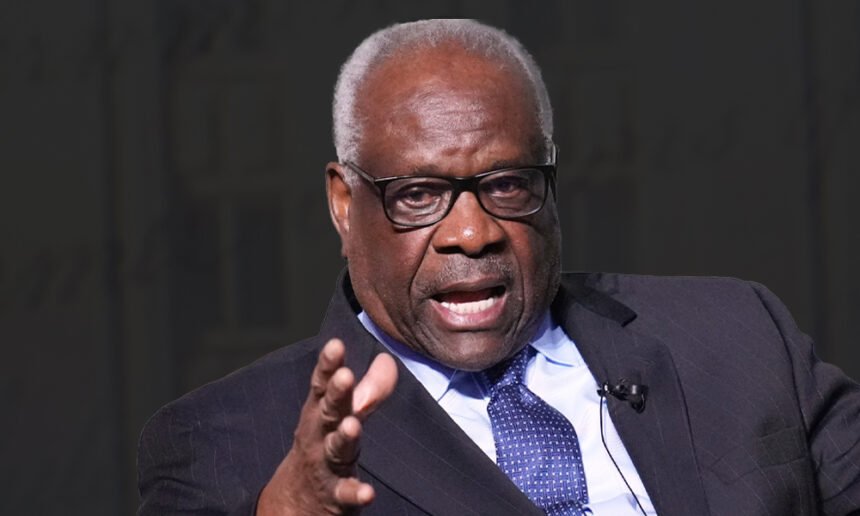
Justice Clarence Thomas issued a sharply worded dissent Monday after the Supreme Court ruled in favor of a Florida death row inmate, openly criticizing his colleagues for intervening in a case he said never should have reached the nation’s highest court.
The Court’s majority sided with death row inmate Gary Whitton, finding that his appeal had been improperly dismissed after lower courts relied on evidence that the jury that convicted him never heard.
At the center of the dispute was new DNA evidence and questions about testimony from a key witness who was later found to have lied on the stand.
Lower courts had repeatedly rejected Whitton’s appeal, concluding that even if the jury had known more about the witness’s credibility, the outcome would not have changed.
But the case took a different turn at the U.S. Court of Appeals for the Eleventh Circuit, where judges also pointed to DNA evidence not presented at trial in refusing to grant relief—an approach the Supreme Court ultimately found flawed.
In an unsigned majority opinion, the Court ruled that the Eleventh Circuit’s reasoning improperly relied on material outside what the original jury considered, warranting a reversal.
Justice Thomas, joined in part by Justice Samuel Alito, forcefully disagreed.
Writing in dissent, Thomas said he could not understand how the Court overturned the ruling based on what he described as a minor procedural error.
He questioned why the Court agreed to take up the case at all, arguing it should not have intervened on behalf of a convicted murderer.
“It is unfortunate that the Court chose to intervene at the request of a convicted murderer,” Thomas wrote in his dissent.
He went further, criticizing the Court for what he characterized as misplaced priorities, arguing that it overlooks more significant legal errors affecting law-abiding citizens.
“What makes it even worse is that the Court does so even while it refuses to correct far more consequential errors for law-abiding citizens,” Thomas wrote.
In his dissent, Thomas also outlined the prosecution’s case against Whitton, arguing the conviction was strong enough that the Court should not have entertained further review.
Beyond the case itself, Thomas pointed to several other disputes he believes the Court should have prioritized instead, including challenges involving race-conscious college admissions, claims of censorship at universities, and a separate case involving benefits for a military widow.