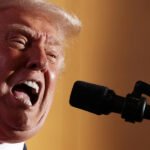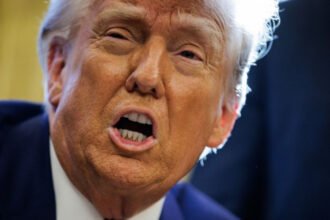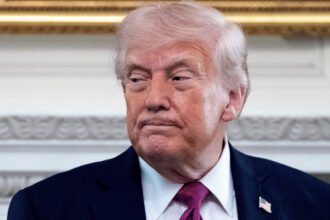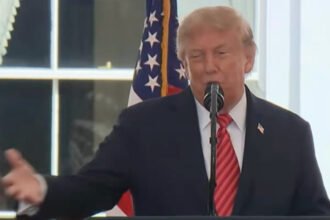






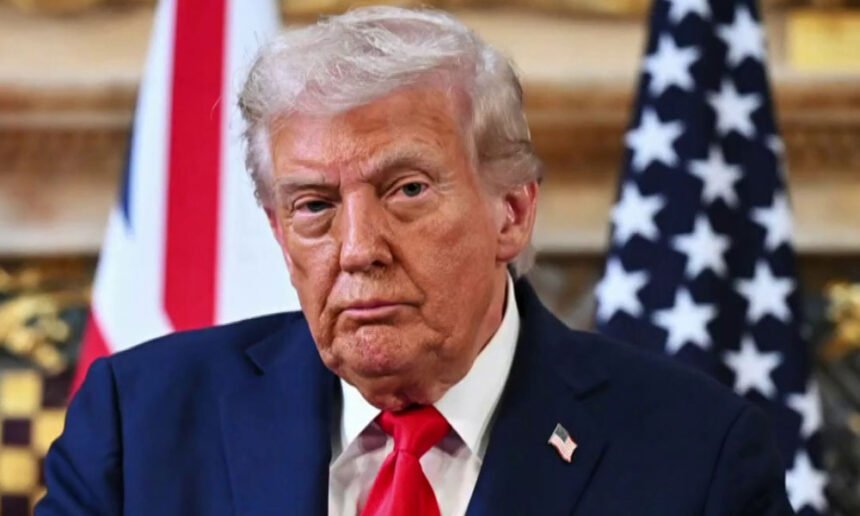
President Donald Trump faced a sharp and unrelenting challenge from the Supreme Court on Wednesday, as justices signaled serious doubts about his authority to impose sweeping tariffs.
Trump has framed the case as “literally, LIFE OR DEATH for our Country,” but the court’s questioning suggested his claims of emergency power may not hold water. At issue is whether the president can legally use emergency powers to levy tariffs on imports from more than 100 countries—a move with far-reaching consequences for American consumers, businesses, and the limits of presidential authority.
During arguments, justices—including Trump appointees—bombarded U.S. Solicitor General D. John Sauer with pointed critiques as he struggled to defend the administration.
Chief Justice John Roberts highlighted the constitutional stakes, noting that the power to impose taxes “has always been a core power of Congress.” He raised the central questions doctrine, a legal principle requiring Congress to explicitly authorize federal agencies to act, and suggested it could limit the president’s actions here.
Justice Amy Coney Barrett pressed Sauer on the legal basis for the tariffs, asking him to point to any instance where “regulate importation” was used to “confer tariff importing authority.” Dissatisfied with his response, she added that none of the cited cases actually talked about “conferring tariff authority.”
Justice Neil Gorsuch delivered one of the harshest critiques, warning of a “one-way ratchet toward the gradual but continual accretion of power in the executive branch and away from the people’s elected representatives.” He pressed the government on where the administration would draw the line on presidential authority in foreign affairs.
Trump justified his tariffs by declaring a national emergency over the U.S. trade deficit. The administration argued the tariffs were necessary to reduce the deficit and promote American manufacturing. But more than a dozen states and small businesses challenged the move, saying it encroached on Congress’s taxing authority.
At the center of the dispute is the International Emergency Economic Powers Act (IEEPA), a 1970s law that allows the president to regulate or prohibit transactions involving foreign entities during a declared national emergency. The government argued that the trade imbalance posed a threat of “major economic and national-security catastrophe.”
Opponents countered that Congress never delegated the power to impose tariffs under IEEPA. Representing small businesses, attorney Neil Katyal told the court: “Tariffs are taxes. They take dollars from Americans’ pockets and deposit them in the U.S. Treasury. Our founders gave that taxing power to Congress alone.”
Sauer argued the president’s actions were about regulating foreign commerce, not raising revenue, which he called “only incidental.” Katyal disputed that, pointing out the government’s own brief projected it would “raise $4 trillion,” and accused Trump of bypassing Congress to impose one of the largest tax increases “in our lifetimes.”
In a twist, several briefs supporting the challengers came from conservative, libertarian, and business groups—traditional allies of Trump—who oppose the tariffs.
While Trump has warned that a loss in court would be catastrophic, administration officials have indicated alternative authorities could be used if the Supreme Court rules against him. Katyal acknowledged the administration has other tariff tools at its disposal.
Wednesday’s hearing delivered a rare moment of blunt skepticism from a court that has often favored Trump, signaling that the justices are drawing firm lines around executive power and reminding everyone that Congress still controls the nation’s purse strings.”