









The Trump administration has made a stunning personnel move inside one of the U.S. Navy’s most critical research arms — ousting a highly decorated admiral and replacing him with a 33-year-old former DOGE employee with o military background.
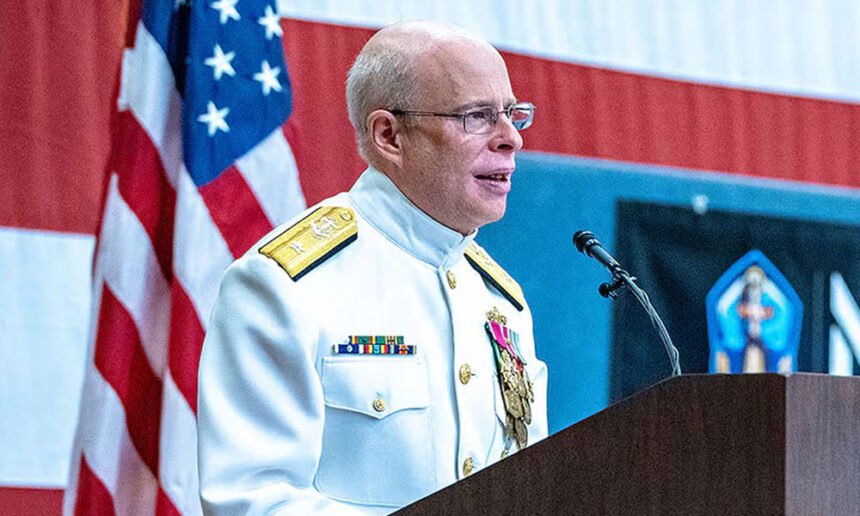
Rear Admiral Kurt Rothenhaus, a career officer and respected technologist, has been removed as Chief of Naval Research — the top job at the Office of Naval Research (ONR). In his place: Rachel Riley, a former McKinsey & Company partner who joined the administration earlier this year in DOGE-related roles.
Two officials familiar with the decision confirmed the swap, and both the Trump administration and Sen. Mark Kelly (D-Ariz.) verified the move. Kelly, a former Navy pilot and astronaut, didn’t mince words about the significance of the change.
“Usually the head of Naval Research is a very senior member of the military or the senior executive service with an extensive experience in technology, science, engineering,” Kelly said in an interview, according to The Bulwark. “That’s the kind of person we put in that job. So I think it’ll be important to see—and I don’t have a lot of information on this nominee’s background—but I do know it’s somebody rather junior who came from the world of DOGE.”
The Office of Naval Research isn’t just another bureaucratic post. It’s the nerve center for billions in funding that shape the Navy’s future tech — from next-gen weapons and AI systems to undersea warfare research. Traditionally, it’s been led by senior officers with decades of experience navigating both the Pentagon and scientific communities.
That’s what makes Riley’s appointment so jarring to current and former defense officials. Riley’s résumé reads more like that of a Silicon Valley strategist than a naval scientist: McKinsey consultant, DOGE staffer. What it doesn’t include is any record of naval service, defense research, or federal acquisition management.
For now, the administration is staying tight-lipped. A spokesperson for Senate Armed Services Chairman Roger Wicker (R-Miss.) declined to comment on the decision.

Inside the Pentagon, the move has fueled unease. One defense official described the reaction among senior Navy researchers as “bewildered,” adding, “This isn’t just about experience — it’s about stewardship. The Office of Naval Research isn’t a sandbox for political appointees.”
Riley’s defenders point to her academic credentials and reputation as a “rising star” within the administration’s tech policy circle. But for many in uniform, it’s hard to shake the optics: a decorated admiral replaced by someone who, until recently, worked in a crypto-adjacent sphere of government.