








A whistleblower is raising the alarm over a new U.S. Postal Service system for verifying mail ballots, alleging that the plan has been kept from the public and that the agency is rushing the system into operation ahead of the midterm elections.
The allegations are contained in a new report released Tuesday by Connecticut Sen. Richard Blumenthal. The report was prepared by attorneys representing an unnamed USPS whistleblower.
According to the report, Postal Service employees have privately expressed serious concerns about the system’s development, with multiple people allegedly describing the rollout as a “sh*t show.”
The whistleblower says USPS leadership has pushed ahead despite changing technical requirements, inadequate testing and an extremely compressed development schedule, CNN reports.
“USPS leadership, it appears, has discarded all best practices as they speed the project to be ready for a September 1 implementation,” the report says, raising questions about whether a potentially catastrophic failure could become “a feature rather than a bug.”
At the heart of the controversy is a system created after President Donald Trump signed an executive order in March giving USPS an unprecedented role in screening state mail-ballot programs.
Under the plan, states would provide USPS with lists of voters who are expected to receive mail ballots.
The Postal Service would then compare that information with data associated with ballot envelopes.
And according to the whistleblower, the process could be extremely unforgiving.
One mismatch could hold up thousands of ballots.
The report alleges that the system includes verification procedures that aren’t fully spelled out in the publicly available regulations.
In one stage, information uploaded by election officials would reportedly be compared against “manifests” submitted for each batch of ballots.
Those manifests would include information such as unique bar codes assigned to individual voters.
The whistleblower alleges that the information would have to match the data in the USPS system before election officials could proceed with delivering the ballots.
Then comes another verification step.
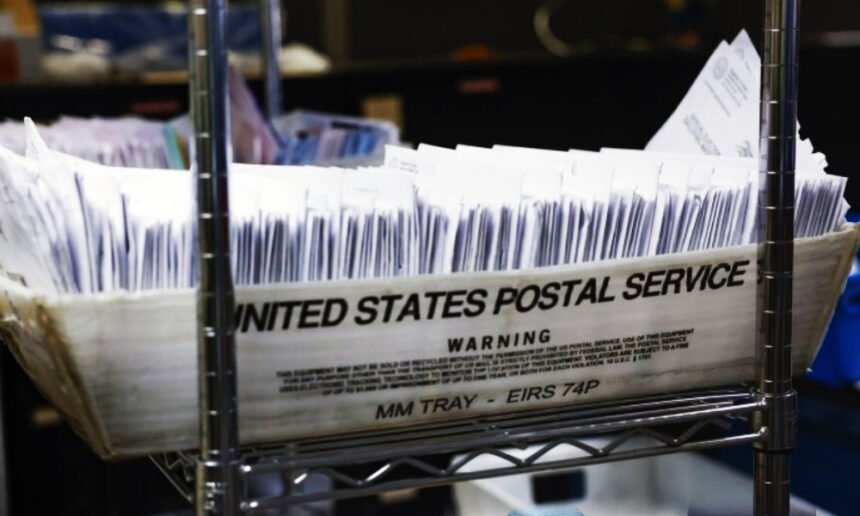
When election officials bring ballot envelopes to a USPS facility, the envelopes could either be scanned individually or sampled, depending on the location.
According to the whistleblower, if even one ballot envelope fails to match the information in the system, USPS could refuse delivery of the entire batch.
That could potentially put thousands of ballots on hold at once.
“As designed, the process is entirely unforgiving,” the report says. “It could delay ballots by the thousands in repeated verification cycles — and thus prevent states from mailing enormous numbers of ballots.”
The concern is particularly significant because election officials work under strict deadlines. A delay isn’t simply an inconvenience when ballots must reach voters, be returned and processed before election deadlines.
The whistleblower’s concerns go beyond how the system works.
The report also describes what it characterizes as a chaotic development process.
USPS information-technology teams were allegedly given less than a week to test the system once development was completed.
The reason was the rapidly approaching election calendar.
North Carolina was scheduled to begin sending ballots this week, with other states following later in September.
According to the whistleblower, system requirements were “constantly changing” throughout development.
The requirements also allegedly weren’t clearly documented for the employees building the system.
USPS leadership, the report says, dismissed concerns about the lack of written requirements and insisted employees understood what was needed — while simultaneously saying there wasn’t enough time to document everything.
The testing schedule allegedly made matters worse.
Under the timeline for a September 1 implementation, only four days were allotted for a stage in which potential users could test the system.
“For a system that manages something as important as handling voting and ballots, 4 days of user testing is entirely unreasonable,” the whistleblower report says.
Courts are already fighting over the plan
The dispute isn’t happening in a vacuum.
Multiple courts are considering challenges to the administration’s mail-ballot requirements.
A judge last week froze the requirement that states use the USPS system if they want the Postal Service to deliver their ballots.
The ruling nevertheless allowed USPS to make the portal available to states that voluntarily choose to upload mail-voter information.
The Justice Department is appealing the decision.
Meanwhile, the whistleblower report says it remains unclear whether the portal was actually ready for the September 1 target date.
That leaves election officials facing a system that, according to the allegations, has been developed under intense time pressure and subjected to limited testing.
And there’s another unusual element to the controversy.
Some of the procedures described by the whistleblower allegedly aren’t contained in the public regulations governing the system.
That means election officials may have to navigate requirements that weren’t fully visible when the rules were announced.
The stakes are enormous
The Postal Service handles millions of pieces of election mail.
Under the system described in the whistleblower report, however, the problem wouldn’t necessarily have to be widespread to create widespread consequences.
A technical error, data mismatch or scanning problem could potentially prevent an entire batch of ballot envelopes from being delivered until officials identify and correct the discrepancy.
The whistleblower argues that repeated verification cycles could therefore delay large numbers of ballots.
According to the whistleblower, USPS has been racing toward implementation while technical requirements continue to change and testing time remains extremely limited.
With courts still weighing the legality of the requirements and election officials already preparing for mail-ballot deadlines, there is little room for a systemwide technical failure.
And if the whistleblower’s concerns prove justified, the consequences wouldn’t be confined to a broken piece of software.
They could show up in the form of delayed ballots, potentially by the thousands.