



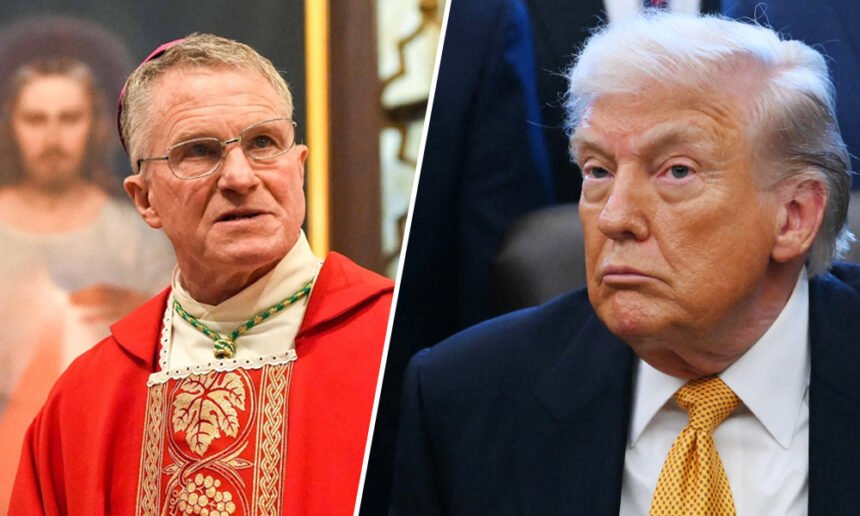
In a jaw-dropping break from expected silence, Archbishop Timothy Broglio — the top Catholic bishop responsible for U.S. military personnel — told the BBC this weekend that American troops could refuse orders to attack Greenland if such an order were ever given.
The high-ranking cleric put moral veto power on the table for U.S. soldiers facing what many see as a politically driven, blatantly unjust mission.
Broglio’s comments came during an interview on BBC’s Sunday program, and he didn’t sugarcoat it: service members “could be put in a situation where they’re being ordered to do something that’s morally questionable,” and in that situation, “within the realm of their own conscience, it would be morally acceptable to disobey that order.”
Make no mistake — that’s a direct challenge to the traditional assumption that military obedience is absolute. Broglio acknowledged the real world of the chain of command but drew a sharp line: conscience and moral principles matter. “We do have international law and we do have moral principles that should guide all of us,” he said, stressing he doesn’t see any circumstances where invading a NATO ally’s territory — Greenland is part of the Kingdom of Denmark — would fulfill the criteria of a just war.
This seismic statement comes against the backdrop of an administration that has repeatedly dangled talk about acquiring Greenland, including vague threats of military force — rhetoric that’s rattled NATO partners and international legal scholars alike.
Broglio, whose job is literally spiritual care for active duty Catholics, didn’t mince words about the untenable moral predicament such orders could create for individual service members. “It would be very difficult for a soldier … to, by himself, disobey an order such as that,” he said, but insisted that strictly speaking, refusing would be morally valid.
His stance leans on long-established Catholic teaching about conscience and just war — principles so ingrained in Church doctrine that they’ve been cited repeatedly to justify conscientious objection in other contexts.
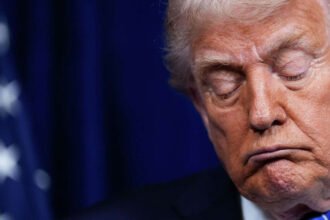
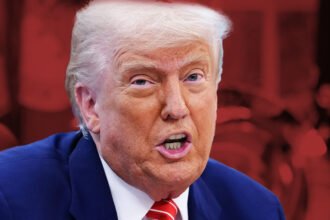
It’s not just pastoral concern. Broglio warned Donald Trump’s hyperbolic terrain-grabbing talk “tarnishes the image of the United States in our world.” That’s an eyebrow-raising critique coming from within the military portfolio of one of the largest religious institutions in the country.
And he’s not alone. Other Catholic leaders — including three U.S. cardinals — have publicly called for a “genuinely moral foreign policy,” framing this moment as the most intense ethical debate about U.S. global action since the end of the Cold War.
So what does this mean? At a bare minimum, it signals a crisis of conscience at the intersection of religious teaching, military obedience, and political ambition. At worst, it’s a shot across the bow of an administration increasingly comfortable with throwing diplomatic norms — and potentially U.S. service members’ moral agency — under the bus.