








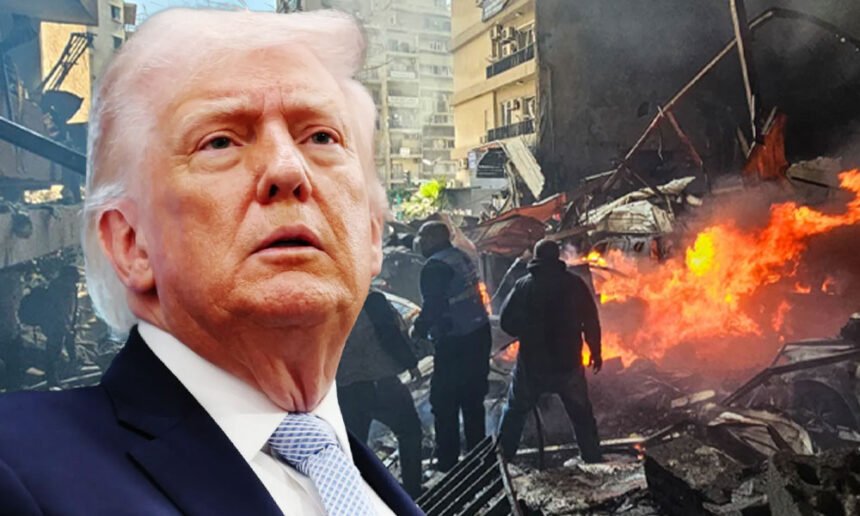
Donald Trump’s already chaotic Iran strategy just took another turn—and it’s not a good one.
Hours after the White House insisted everything was under control and ships were moving again, reports out of Tehran say Iran has closed the Strait of Hormuz again, throwing global shipping—and Trump’s fragile “ceasefire”—right back into turmoil.
The trigger? More violence.
While Trump was touting a two-week pause in hostilities, Israel launched what it described as its largest coordinated strike on Lebanon since the war began, killing at least 112 people and wounding hundreds more, according to Lebanese officials. Trump brushed it off, saying the attacks were “not included” in the ceasefire.
That explanation isn’t landing in Tehran.
Iranian Foreign Minister Abbas Araghchi warned the U.S. can’t have it both ways—calling on Washington to decide between honoring the ceasefire or enabling what he described as “continued war via Israel.” Meanwhile, Iran’s parliament speaker says parts of the proposed agreement were already violated before talks even properly began.
And just like that, the Strait of Hormuz—a chokepoint for roughly 20% of the world’s oil—became leverage again.
Inside the administration, the confusion is just as bad.
Vice President JD Vance admitted there are multiple competing “10-point plans” floating around, including one he mocked as looking like it was “probably written by ChatGPT.” Another proposal, he said, is actually being negotiated. A third? Even more extreme.
In other words: no one seems entirely sure what the deal actually is.
“Ceasefires are always messy,” Vance said, while insisting things are still on track.
But on the ground, it looks anything but stable.
Israeli Prime Minister Benjamin Netanyahu reportedly didn’t even know which direction Trump would go until the last minute. According to sources, Israel was preparing for both a ceasefire and a major escalation at the same time—including potential joint strikes with the U.S. on Iranian infrastructure.
“It is all one man’s decision,” one Israeli official said before Trump made his call.
That unpredictability is now colliding with reality.
Iran says the U.S. violated key terms. The U.S. says Lebanon was never part of the deal. Pakistan says it was. Meanwhile, Israeli strikes continue, Iranian-backed militias are threatening retaliation, and civilians in Lebanon are paying the price.
Even the United Nations is sounding the alarm, calling the scale of destruction “nothing short of horrific” and warning that the violence is putting enormous pressure on an already fragile ceasefire.
And hanging over all of it is the same unresolved issue: the Strait of Hormuz.
Vance made it clear the entire deal hinges on it reopening.
“If we don’t see that happening, the president is not going to abide by our terms,” he warned.
But with Iran now reportedly shutting it down again—and accusing the U.S. of bad faith—the situation is spiraling fast.
What Trump sold as a breakthrough is starting to look more like a moving target—one where the terms keep shifting, the players aren’t aligned, and the consequences are getting more dangerous by the hour.
For a ceasefire that was supposed to calm things down, this one is doing the exact opposite.