






Just days after the Trump administration tried to sell its Iran framework as a breakthrough that would stabilize the region and reopen global energy flows, the deal is already showing cracks, and they’re not subtle.
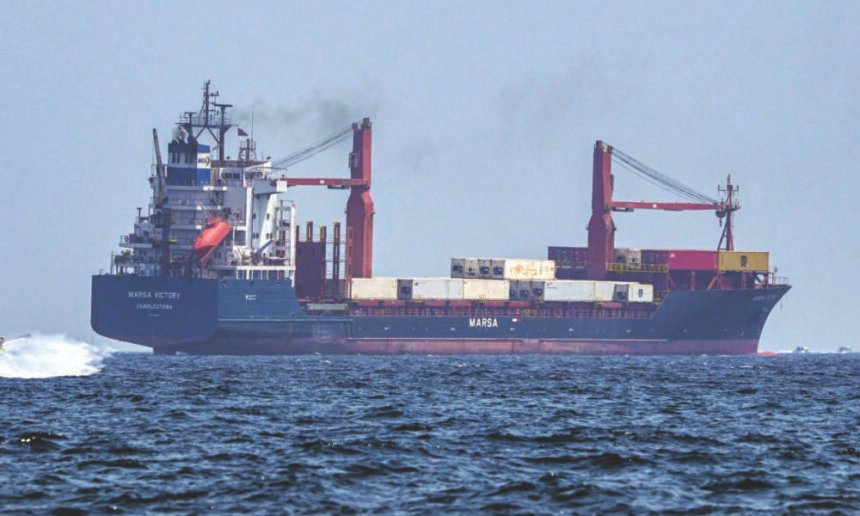
On Saturday morning, Iran’s top joint military command announced it will close the Strait of Hormuz, the world’s most critical oil shipping corridor, citing ongoing Israeli strikes in Lebanon and what it described as violations of the ceasefire framework tied to the U.S.–Iran agreement.
The Khatam al-Anbiya Central Headquarters said the strikes against Hezbollah, the Iran-backed Lebanese militia, amounted to a breach of the ceasefire understanding that underpinned the deal. In its statement, the command accused Washington of failing to enforce its commitments while hostilities continued on the ground.
“In view of the United States’ bad faith and its clear breach of its commitments… it hereby announces that the Strait of Hormuz will be closed to the passage of vessels,” the statement said, The Hill reported, citing Iranian state media IRIB.
It’s a sharp escalation—and a direct challenge to the idea that the agreement was actually holding.
Just days earlier, President Trump signed a framework deal with Iran that was supposed to stabilize the region and restore maritime traffic through the strait, a chokepoint that handles a huge share of global oil exports. During the earlier phase of the conflict, disruptions there helped drive energy prices higher and rattled global markets.
Now that corridor is once again being turned into leverage.
The announcement also lands awkwardly alongside the administration’s public messaging. On Friday, Trump told a crowd at Joint Base Andrews that “ships are flying out of the Hormuz Strait like nobody’s ever seen before,” signaling that normal traffic had resumed.
Vice President JD Vance reinforced that optimism earlier Saturday in an interview with Fox News, saying roughly 16 million barrels of oil had moved through the strait in the last 24 hours and suggesting conditions were effectively back to prewar levels.
“That is basically to where it was before the war even started,” Vance said, arguing the waterway was functioning normally again.
Iran’s announcement, however, directly contradicts that picture.
Following the closure declaration, U.S. Central Command pushed back, saying commercial shipping through the strait had actually increased and that U.S. forces remained present to secure maritime traffic.
“Safe passage through the strait remained intact,” Centcom said, adding that American forces were “vigilant” in ensuring the terms of the agreement are enforced.
But that reassurance now sits alongside a very different reality: one side of the deal is declaring closure, while the other is insisting everything is fine.
Behind the scenes, diplomatic efforts are still moving forward. A U.S. delegation is in Switzerland ahead of planned technical-level talks aimed at salvaging the broader agreement and pushing toward a permanent ceasefire framework.
Vance said special envoy Steve Witkoff and Trump adviser Jared Kushner are involved in those discussions. Mediators from Pakistan have also confirmed that representatives from Qatar will join the talks in Bürgenstock, alongside Iranian Foreign Minister Abbas Araghchi and his delegation.
But the timing is brutal.
Instead of a clean diplomatic landing, the deal is now unfolding in real time against renewed escalation, contested narratives about whether the strait is open or closed, and fresh military activity tied to the Lebanon front.
What was being presented as a stabilizing framework is now looking more like a pressure system—one that shifts every time a strike lands or a statement is issued.