


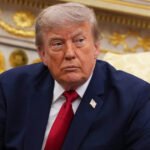
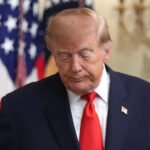


President Donald Trump wants to freeze the pay of federal workers next year, even as inflation continues to eat into their paychecks.
But there’s an exception.
ICE officers would get raises under Trump’s proposal, while military personnel could receive increases of up to 7%.
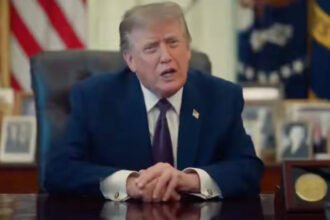
Trump outlined the plan in a letter to House Speaker Mike Johnson (R-La.) last week, calling it his “alternative pay plan” and arguing that routine federal pay increases in 2027 would be “irresponsible.”
Unless Congress acts, the White House recommendations could take effect through an executive order later this year.
“I have therefore decided to set at zero the pay adjustment to be made for the 2027 pay year,” Trump wrote, arguing that the move would put the country “on a fiscally sustainable course.”
The proposal would give law enforcement personnel a 3.8% annual raise, which Trump said would help with recruitment and retention in “critical” roles.
That includes the immigration enforcement personnel who have become a major priority for his administration.
The contrast is hard to miss.
Most federal workers would get nothing. ICE officers and other law enforcement personnel would get 3.8%. Military personnel could receive raises of up to 7%.
The proposal also echoes how Trump treated federal employees during last year’s government shutdown, when his administration found a way to keep Immigration and Customs Enforcement officers and Border Patrol agents receiving paychecks while other federal workers went without them.
Everett Kelley, president of the American Federation of Government Employees, the largest federal employee union, called Trump’s proposal “a slap in the face to the dedicated civil servants who keep our nation running.”
Federal workers have already been dealing with rising costs for housing, food, utilities and other necessities, Kelley said.
“For years, wages for federal employees haven’t kept pace with rising costs for housing, food, utilities, and other essentials,” Kelley said. “Making sure they earn a fair wage isn’t just good for them — it’s good for the quality of government services and the people we all serve.”
And inflation isn’t exactly disappearing.
Higher prices have continued to erode workers’ purchasing power, making annual pay increases particularly important for employees trying to keep up with the cost of living.
The administration’s war in Iran has also pushed energy prices higher in recent months, adding to household expenses. The average U.S. household has faced an estimated $400 in additional gasoline costs since late February, while inflation remains above the Federal Reserve’s 2% target.
Trump nevertheless invoked inflation as one of the reasons for freezing federal pay—and blamed the problem on President Joe Biden.
“A large raise for Federal employees while most Americans still struggle with the consequences of the Biden Administration’s giant inflation spree is unacceptable and would be unfair,” Trump wrote.
There’s another irony here.
Trump has spent much of his second term making the federal workforce smaller and, by many accounts, less attractive to work in. His administration has eliminated agencies and programs while laying off or pushing thousands of federal employees toward early retirement.
Trump’s budget director, Russ Vought, has previously said he wanted to put federal workers “in trauma” and make them “not want to go to work.”
Now, Trump is proposing to freeze their pay.
Rep. Steny Hoyer, a Maryland Democrat who represents more than 70,000 federal employees, said the proposal fits neatly with that broader strategy.
“Once again, this administration is trying to drive hardworking public servants out of government,” Hoyer said.
For federal workers already dealing with higher prices and an increasingly uncertain workplace, Trump’s message is pretty straightforward:
No raise for you—unless you work in one of the parts of the government he considers a priority.