





Millions of Americans who depend on food assistance are now caught in the crossfire of a political and legal showdown in Washington. After a week of confusion and courtroom battles, the Supreme Court has sided with the Trump administration — effectively freezing key payments from the Supplemental Nutrition Assistance Program (SNAP) and leaving 42 million people unsure how they’ll eat this month.
SNAP, a lifeline for low-income families, is federally funded but administered by the states. It’s what keeps groceries on the shelves for millions. But the Trump administration’s refusal to release full payments during the ongoing government shutdown — and its aggressive pushback against court orders demanding it do so — has pushed the program to the brink of collapse.
The crisis hit a breaking point on November 1, when SNAP benefits were hours away from expiring. U.S. District Judge John McConnell ordered the White House to use a $5.25 billion fund to keep payments going. It wasn’t enough to cover the full month, but it bought a little time. Days later, the Trump administration said it would fund the program partially, without touching that reserve.
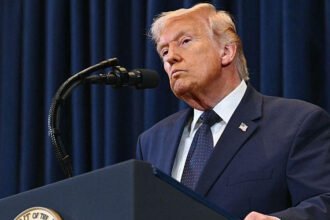
Then President Trump threw more fuel on the fire, declaring that payments would only resume when “Radical Left Democrats open up government.”
McConnell rejected that approach, ordering full SNAP benefits restored. The White House fired back, with Vice President J.D. Vance calling the ruling “absurd.” The Justice Department immediately filed an emergency request to block the order.
By Friday, the USDA told states in a memo that it was “working towards implementing November 2025 full benefit issuances” to comply with McConnell’s order. A few states even managed to start payments. But relief was short-lived — the administration’s appeal reached the Supreme Court, and late Friday night, Justice Ketanji Brown Jackson sided with the Trump administration, temporarily pausing some payments while a lower court reviews the case.
For families living paycheck to paycheck, the ruling was a gut punch.
“Before the shutdown, food insecurity rates were at their highest in decades, higher even than at the peak of the pandemic,” said Linda Nageotte, president and COO of Feeding America. “Hunger is significant in the United States. Food insecurity rates stand at about 12 percent now. One in 7 people in this country, 1 in 5 kids, experience food insecurity, and that is an extraordinary thing.”
The uncertainty around SNAP funding has rippled through every level of the system — from federal agencies to state offices to food banks already struggling to meet demand.
“It’s unprecedented, which is part of why states don’t have any programming ready to go right to do a partial benefit,” said Dottie Rosenbaum, senior fellow and director of federal SNAP policy at the Center on Budget and Policy Priorities (CBPP). “They have to figure out how to change the amount in the benefit formula. Those are automated systems and so states need to figure out how to reprogram and substitute the different maximum and minimum benefit levels.”
Meanwhile, food banks have been bracing for the worst.
“We are hearing from our members that need is escalating quickly,” Nageotte said. “We’re hearing about dramatic expansions and the number of people waiting in line at food distributions. We’re hearing from members that they need folks to step forward in their local communities with financial support, with donations of food.”
SNAP’s scale makes the idea of replacing federal funds nearly impossible. “The stark reality is this,” Nageotte said. “For every meal’s worth of food our nation’s food banks distribute in a year, the SNAP program provides nine. The difference between the scale in those is so vast that despite all of the efforts that we are making right now, we cannot close that gap.”
Still, the Trump administration has maintained that partial payments are all the law allows during a shutdown. “Indeed, governing regulations contemplate that, in the event of a shortfall in funding, USDA will direct the States to reduce their benefit allotments — which is precisely what USDA did this week,” the Justice Department argued in its appeal.
Judge McConnell dismissed that as “arbitrary and capricious,” and the CBPP argued the crisis was entirely avoidable. “Issuing only partial benefits wasn’t necessary in the first place,” the group wrote. “The courts affirmed that the Administration could provide full benefits by transferring funds from other food assistance programs, as it has done twice to support WIC during the current government shutdown.”
Even amid the chaos, Rosenbaum believes states will do everything possible to get benefits to their residents. “States have shown in the past, when they’re thrown a curveball like this, that they will go to heroic efforts to get benefits to people,” she said. “Like during COVID, during previous shutdowns, when they’ve been asked to amend how they issue benefits, they have taken on that challenge.”
But for now, that challenge looks insurmountable. With the Supreme Court’s ruling freezing payments and the White House refusing to budge, the nation’s food safety net is hanging by a thread — and millions of Americans are caught in the middle.