







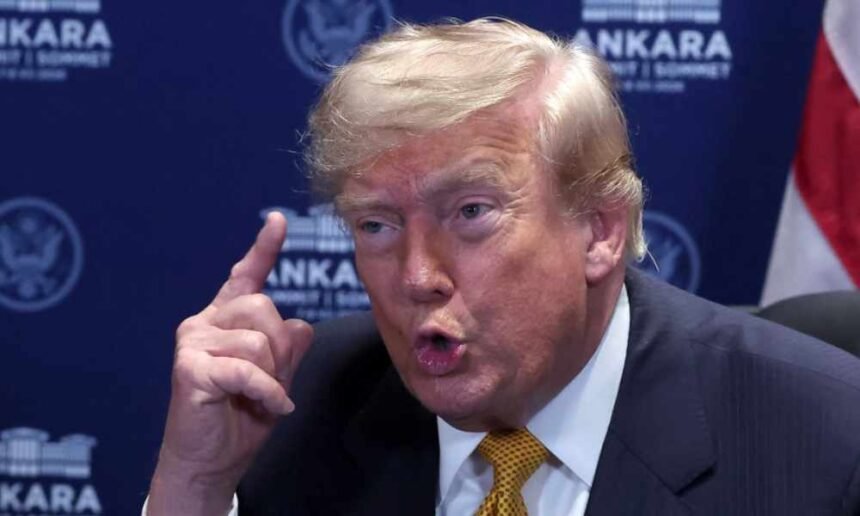
Donald Trump spent months bragging that he had finally brought peace to one of the world’s most dangerous flashpoints. Then, standing in front of cameras at the NATO summit on Wednesday, he appeared to blow up his own deal in the span of a few angry minutes.
During a rambling exchange with reporters in Ankara, Trump declared it was now a “waste of time” to negotiate with Iran, announced that he believed the ceasefire was effectively dead, and threatened to “hit Iran hard again tonight”—all while insulting Iran’s leaders as “scum” and “cuckoo.”
“I think it’s over,” Trump said, referring to the U.S.-Iran agreement that his administration had been promoting for weeks.
If there was any doubt about whether the ceasefire still had a pulse, Trump’s public meltdown may have finished it off.
The outburst came after Iran launched retaliatory strikes against U.S. military facilities in Bahrain and Kuwait following another round of American attacks inside Iran. U.S. Central Command said more than 80 Iranian targets were hit in an operation aimed at degrading Tehran’s ability to threaten commercial shipping through the Strait of Hormuz.
Rather than trying to calm an already volatile situation, Trump escalated it.
Instead of reassuring nervous allies gathered for the NATO summit, the president unleashed his frustration on just about everyone. He blasted European leaders for refusing to fully back the U.S. military campaign against Iran, complained that America’s allies had abandoned him, and even revived threats to pull tens of thousands of U.S. troops out of Europe.
The summit was supposed to focus on NATO’s future and European defense spending. Trump made sure it became all about himself.
His comments also put America’s partners in an impossible position. European governments had quietly supported parts of the U.S. operation while pushing for diplomacy to prevent a wider regional war. Now the president who negotiated the ceasefire appears to have publicly torched it before the agreement had even run its course.
That kind of unpredictability makes it nearly impossible for allies, or adversaries, to know whether Washington is pursuing negotiations or preparing for another military campaign.
The timing couldn’t be worse.
The fragile ceasefire had already been under enormous strain following the latest exchange of missile strikes. Shipping through the Strait of Hormuz remains vulnerable, energy markets remain on edge, and fears of a broader regional conflict continue to grow.
Trump’s remarks are also likely to embolden hardliners on every side.
Israeli officials had been skeptical of the agreement from the beginning, arguing it failed to impose strict enough controls over Iran’s nuclear program. Prime Minister Benjamin Netanyahu has repeatedly insisted that Iran’s enriched uranium should be removed entirely rather than relying on Tehran’s promises.
European leaders have likewise argued that any lasting agreement would require much tougher negotiations over Iran’s nuclear activities.
But instead of strengthening diplomacy or building international consensus, Trump appeared to abandon his own agreement in a fit of anger.
Whether the ceasefire is officially dead remains unclear. The White House has yet to clarify whether Trump’s remarks reflected a formal policy shift or simply another off-the-cuff rant that left aides scrambling behind the scenes.
Either way, the damage may already be done.