








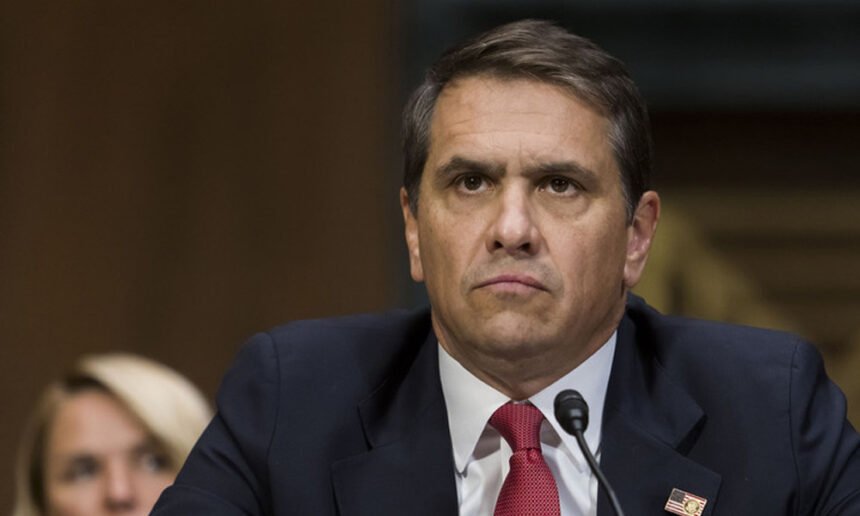
The Department of Justice says it needs more time before the public can see the full scope of its files on convicted sex offender Jeffrey Epstein. The reason, according to Deputy Attorney General Todd Blanche: the government is still scrubbing names.
That explanation isn’t sitting well with a growing number of lawmakers—and it’s fueling fresh questions about what, or who, the DOJ is really protecting.
Blanche told Fox News on Friday that the department would release “several hundred thousand” documents by the legal deadline, with “several hundred thousand more” to follow in the coming weeks. The files, he said, are being reviewed line by line to remove names and identifying information tied to witnesses.
“So today is the 30 days when I expect that we’re going to release several hundred thousand documents today. And those documents will come in in all different forms, photographs and other materials associated with, with all of the investigations into, into Mr. Epstein,” Blanche said.
He insisted the delay is about protecting victims. “What we’re doing is we are looking at every single piece of paper that we are going to produce, making sure that every victim, their name, their identity, their story, to the extent it needs to be protected, is completely protected. And so I expect that we’re going to release more documents over the next couple of weeks.”
But the law compelling the release doesn’t allow for a slow drip.
Congress passed the Epstein Files Transparency Act with near-unanimous support, and President Trump signed it into law after reversing his earlier opposition. The statute gave the DOJ 30 days to release the unclassified Epstein files. While it allows redactions for victims and limited investigative material, it does not authorize an open-ended, rolling release.
That’s where the story starts to feel familiar.
Senate Minority Leader Chuck Schumer (D-N.Y.) accused the administration of outright defiance. “The law Congress passed and President Trump signed was clear as can be – the Trump administration had 30 days to release ALL the Epstein files, not just some. Failing to do so is breaking the law. This just shows the Department of Justice, Donald Trump, and Pam Bondi are hellbent on hiding the truth,” Schumer said.
He went further, saying, “Senate Democrats are working closely with attorneys for the victims of Jeffrey Epstein and with outside legal experts to assess what documents are being withheld and what is being covered up by Pam Bondi. We will not stop until the whole truth comes out.”
House Democrats echoed the alarm. Reps. Robert Garcia (D-Calif.) and Jamie Raskin (D-Md.) said they were “now examining all legal options in the face of this violation of federal law.”
What’s unusual is that the criticism isn’t just coming from Democrats.
Rep. Thomas Massie (R-Ky.), one of the lawmakers who forced the Epstein Files Transparency Act to a vote, has been blunt. Posting a screenshot of the law on X, Massie highlighted the 30-day deadline and said there’s no ambiguity about what’s required.
“This is a very unique situation. … This is a case where the president who appointed the attorney general and for whom the attorney general works has signed the law and the ink is not even dry yet on his signature on this law,” Massie said. “There’s nothing subject to interpretation.”
Massie warned that Trump “has agreed to comply with this law” and Bondi “has to comply with it,” adding that penalties are on the table if the DOJ doesn’t follow through.
That’s what’s raising eyebrows. The law is clear. The deadline has arrived. And yet the public is being told to wait—again—while names are scrubbed, documents are reviewed, and explanations are promised later.
For a case that has long been surrounded by sealed records, powerful connections, and unanswered questions, the optics are hard to ignore. The Epstein files were supposed to bring transparency. Instead, they’re arriving in fragments, under heavy redaction, with assurances that the rest will come eventually.
Whether this is about protecting victims—or protecting something else entirely—is the question the DOJ hasn’t answered.
See more on this story in The Hill’s video report below: