









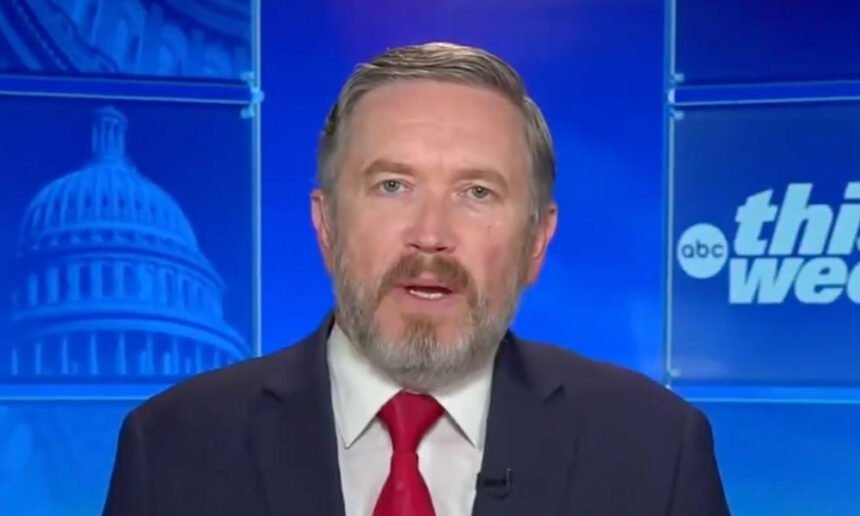
Rep. Thomas Massie went on ABC News Sunday and didn’t mince words: the Justice Department dumped millions of Jeffrey Epstein files online — and then quietly pulled some of the biggest ones back down. Massie says that’s not just suspicious. It’s unacceptable.
Last month, the DOJ published roughly 3.5 million Epstein-related files in an online database. The release came with heavy redactions, which critics argue stretch the limits of what the law allows. Members of Congress can review unredacted versions — but only if they physically show up at DOJ headquarters.
According to Massie, that window is closing fast.
“The problem is they’ve taken down documents before we were able to go over to the DOJ and look at the unredacted versions,” Massie said.
Massie says the files removed weren’t routine paperwork — they were among the “most significant.”
“They took down some of the most significant documents. Two of them involving Virginia Giuffre’s case and other things, the picture of Epstein in a room where it’s got CIA written on the boxes. That’s been taken down. We want to be able to look at all these files. They can’t keep those documents down after they’ve already produced them.”
One of the files now missing is a photo of Epstein standing next to a woman — her face covered with a black box — inside a room stacked with bins labeled “CIA.” The file, identified as “EFTA01144176,” no longer shows up in the DOJ’s own Epstein database. Search it now? Nothing.
Massie is pointing directly at that disappearance.
The file purge comes after the DOJ was compelled to release the trove under the Epstein Files Transparency Act, legislation that became law and forced the department’s hand. That law tightly restricts what can be blacked out. Redactions are largely limited to protecting the identities of minors or victims — not shielding officials, agencies, or anyone else from embarrassment.
Yet critics have already argued the department went overboard with redactions. Now, according to Massie, they’re not just blacking things out — they’re pulling documents entirely.
And the timing matters. Lawmakers can only inspect unredacted materials in person at DOJ headquarters. If files vanish from the database before they can be reviewed, that review becomes impossible.
The DOJ has not provided an explanation for why those documents were removed.
Watch the video below:
“They took down some of the most significant documents"@RepThomasMassie says the DOJ took down important Epstein docs BEFORE they could review unredacted versions in person at the DOJ HQ pic.twitter.com/m3y4KGerdV
— Alexander Willis (@ReporterWillis) February 15, 2026