









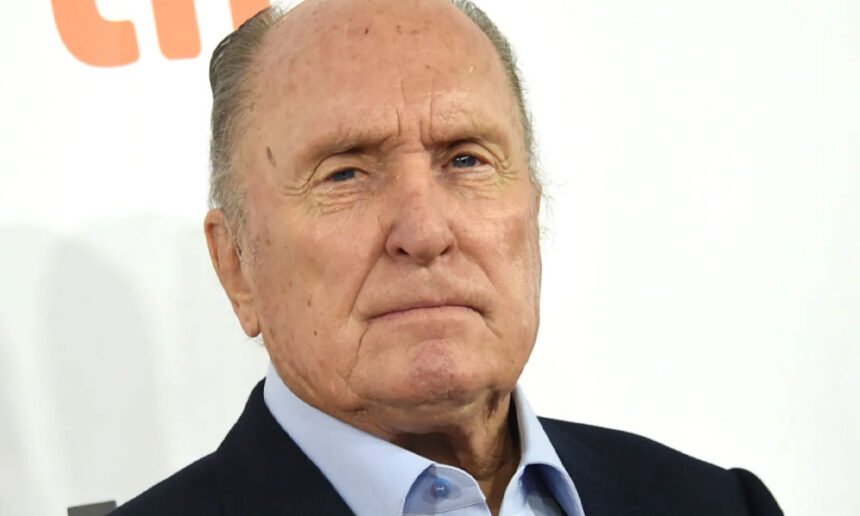
Oscar‑winning actor Robert Duvall, the man who gave flesh and bone to unforgettable characters from The Godfather to Tender Mercies, has died at the age of 95, his wife Luciana announced on Facebook Monday.
“Yesterday, we said goodbye to my beloved husband, cherished friend, and one of the greatest actors of our time,” she wrote. *“Bob passed away peacefully at home, surrounded by love and comfort.”
Duvall’s legacy isn’t just in the awards or the decades‑long résumé — it’s in how he embodied American cinema itself. Whether as the calm, sharp‑eyed consigliere Tom Hagen in The Godfather or the weary, heartfelt country singer in Tender Mercies (for which he won the Best Actor Oscar in 1983), he was the rare performer whose presence elevated everything around him.
For more than half a century, Duvall brought a kind of lived‑in truth to the screen. He wasn’t a star in the flashy blockbuster sense — he was the guy whose face you remember, whose performances you feel. His body of work spanned from gritty war epics like Apocalypse Now to nuanced dramas and even western sagas, producing roles that became benchmarks of American acting craft.
His wife’s tribute underscored what many fans have known for years: that beneath the accolades was a man devoted to his craft and to the people he loved. “To the world, he was an Academy Award‑winning actor, a director, a storyteller,” Luciana wrote. “To me, he was simply everything.”
At an age when most actors are long retired, Duvall continued working into his 90s — a testimony to both his stamina and his passion for storytelling. Across seven decades, he earned acclaim not just from audiences but from colleagues and critics alike, with roles that ranged from dry humor to brutal intensity.
A cause of death has not yet been publicly disclosed. At 95, he leaves behind a career that helped define modern American film and television, influencing countless performers who came after him.
Social media and film communities reacted with an outpouring of respect and grief. Fans remembered him as a “legendary actor,” praising his performances as “real” and “timeless,” and vowing to revisit his work as a way to honor his memory.