









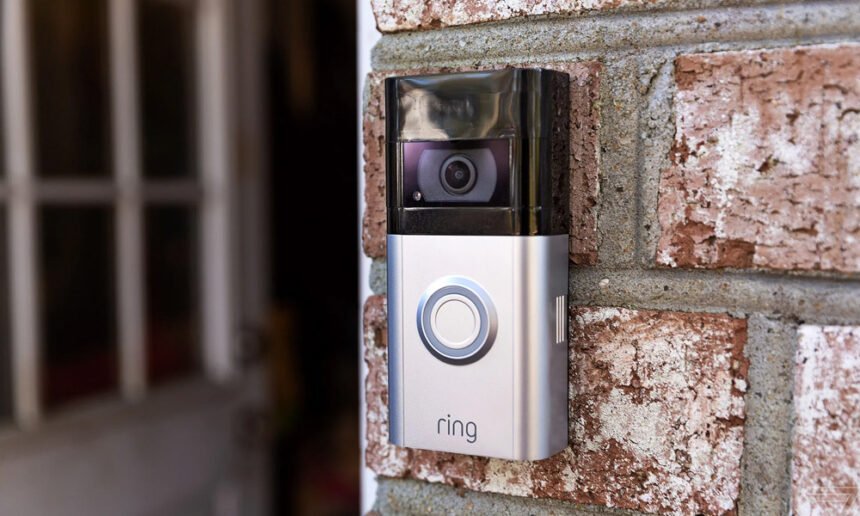
Amazon’s ubiquitous Ring doorbell cameras — those little gadgets millions of Americans install to “protect their homes” — have quietly become a surveillance pipeline for law enforcement that now include U.S. Immigration and Customs Enforcement, according to privacy advocates and reporting on the new tech partnerships.
In a controversial move last year, Ring announced a partnership with Flock Safety, a company that runs a sprawling network of AI‑powered surveillance and license‑plate cameras used by police departments and federal agencies, including reported access by ICE through intermediary systems. That means footage captured by your Ring camera could be requested by law enforcement for “evidence collection” — and some fear ICE is now part of the bigger surveillance machine.
Privacy and civil liberties critics say this isn’t just an incremental creep — it’s a massive expansion of government‑accessible surveillance into private neighborhoods. Ring’s integration with Flock means local law enforcement personnel can use Flock software to post requests for Ring footage via Ring’s Neighbors app, turning millions of front porches into potential data points in AI‑driven investigations.
Progressive activist Guy Christensen blasted the development online, urging followers to “smash your Ring doorbells” to deprive law enforcement agencies of a tool activists see as weaponized against everyday Americans. “Amazon owns Ring, and they’ve decided to begin sharing surveillance collected from your front step with ICE and Flock Safety, weaponing surveillance against the American people,” Christensen said in a viral TikTok clip.
Experts have long criticized Ring’s cozy relationship with law enforcement. The Electronic Frontier Foundation, among others, has warned that Ring’s expanding access points for police and federal agencies erode civil liberties and contribute to a nationwide surveillance network that feels more like a digital panopticon than neighborhood safety tech.
Ring has a checkered history on privacy: in 2023 the company agreed to pay $5.8 million to settle Federal Trade Commission claims that employees and contractors improperly accessed customers’ footage, including in private settings. That settlement forced some changes — but critics say the fundamental problem remains: Ring collects massive amounts of data that can be shared with law enforcement with minimal oversight.
Some defenders of the Ring‑Flock partnership say it’s opt‑in and designed for specific “investigative work,” but privacy watchers are unconvinced, especially given Flock’s broader use by agencies like ICE and its networks of automated surveillance tech. The fear is not just police requests — it’s that federal enforcement, including immigration agents, could exploit this infrastructure to monitor communities and deport immigrants without sufficient transparency or accountability.
This comes at a moment of heightened activism nationwide, with digital rights groups urging Ring users to disable cameras, cover lenses during certain events, or ditch cloud‑connected systems entirely to preserve privacy. Whether Amazon’s wear‑your‑camera approach to surveillance will face legal or regulatory pushback remains to be seen — but for now, Ring cameras have quietly morphed into a civil surveillance web that reaches far beyond doorstep “safety.”