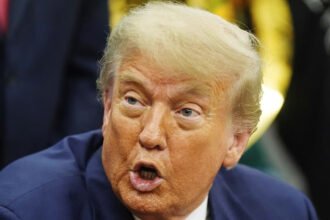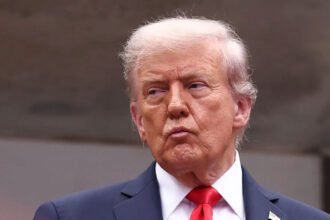






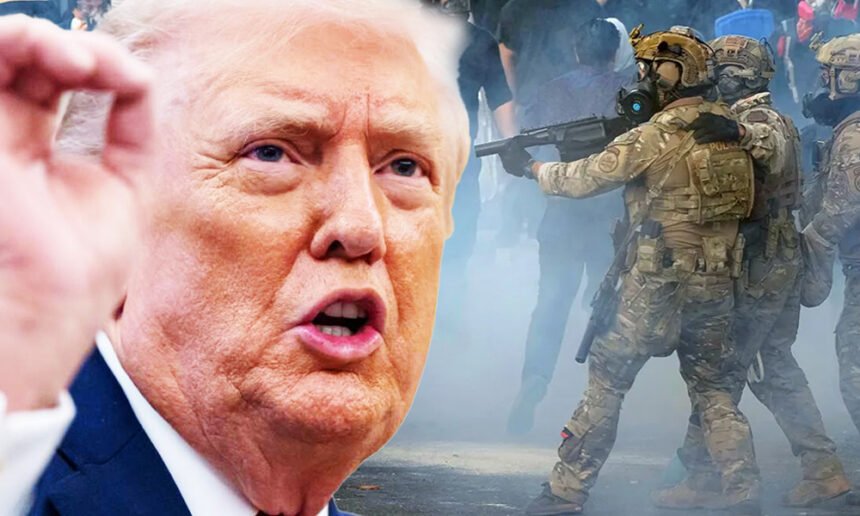
President Donald Trump went full authoritarian this week, threatening a “day of reckoning and retribution” for Minnesota’s Democratic leaders as federal immigration enforcement in the state explodes into violence and political warfare.
Trump’s tirade came in a lengthy Truth Social post in which he painted Minnesota as overrun by “already convicted murderers, drug dealers and addicts, rapists, violent released and escaped prisoners… dangerous people from foreign mental institutions and insane asylums,” and blamed crime on the state’s liberal leadership. He claimed ICE’s job is to “remove them from your neighborhood,” and insisted that “every place we go, crime comes down.”
That bombastic language — complete with all‑caps threats of “FEAR NOT, GREAT PEOPLE OF MINNESOTA, THE DAY OF RECKONING & RETRIBUTION IS COMING!” — wasn’t just political theater. It followed a brutal escalation of federal immigration enforcement in the state that’s already triggered lawsuits and fierce resistance.
The Trump administration has deployed hundreds — possibly thousands — of Immigration and Customs Enforcement and Department of Homeland Security agents across Minnesota as part of what officials are calling the largest enforcement operation the agency has ever mounted. Federal authorities claim the surge is aimed at undocumented immigrants and fraud cases, including ongoing investigations into alleged welfare fraud in the Somali community.
But the backdrop is ugly: the operation has been met with widespread protests, and even legal action. Minnesota, along with Minneapolis and Saint Paul, sued the Trump administration in federal court, arguing that the surge of ICE agents violates constitutional rights and amounts to a “federal invasion” of the state following the fatal shooting of 37‑year‑old Renee Good — a Minneapolis resident killed last week during an ICE encounter that has sparked nationwide outrages and demonstrations.
Local leaders blasted Trump’s rhetoric and tactics. Minneapolis Mayor Jacob Frey called the state and federal response “propaganda” and attacked the justification for aggressive enforcement, while Democratic officials argue that the federal show of force is politically motivated and dangerously escalatory.
Trump, however, repeated the administration’s talking points, doubling down on claims that unrest in Minnesota is caused by “anarchists and professional agitators” and trying to divert attention from the controversies engulfing the operation.
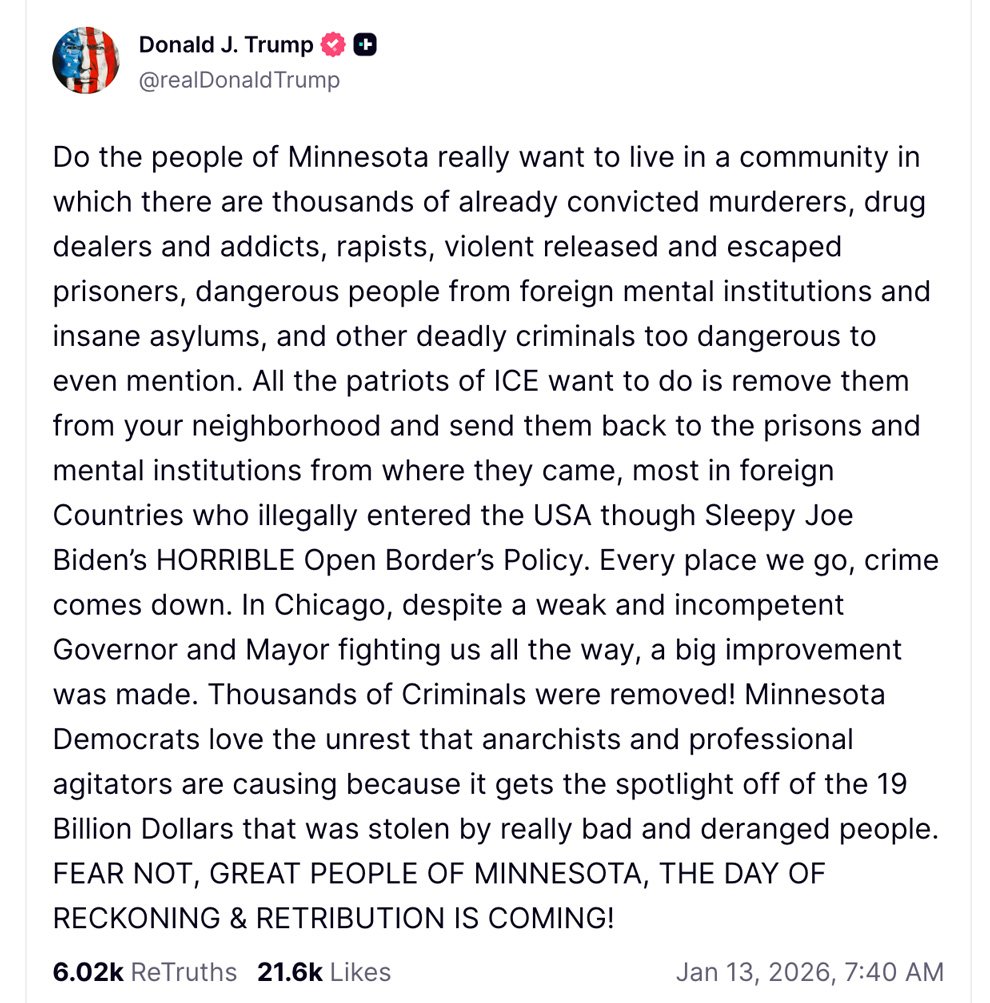
The president’s focus on crime and border policy in blue states comes as at least one lawsuit aims to block further federal enforcement actions and protect civil liberties. Illinois has also filed challenges against similar federal immigration surges.
Whether Trump’s promise of retribution amounts to a policy shift, a partisan message aimed at energizing his base, or simply the next terrifying escalation in a cycle of federal‑state conflict is anyone’s guess. But the use of immigration enforcement as a political cudgel — and threats of “reckoning” — are pushing the nation into even deeper constitutional waters.