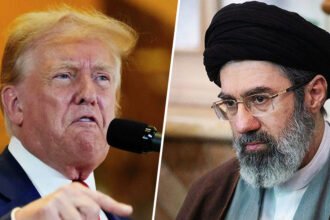








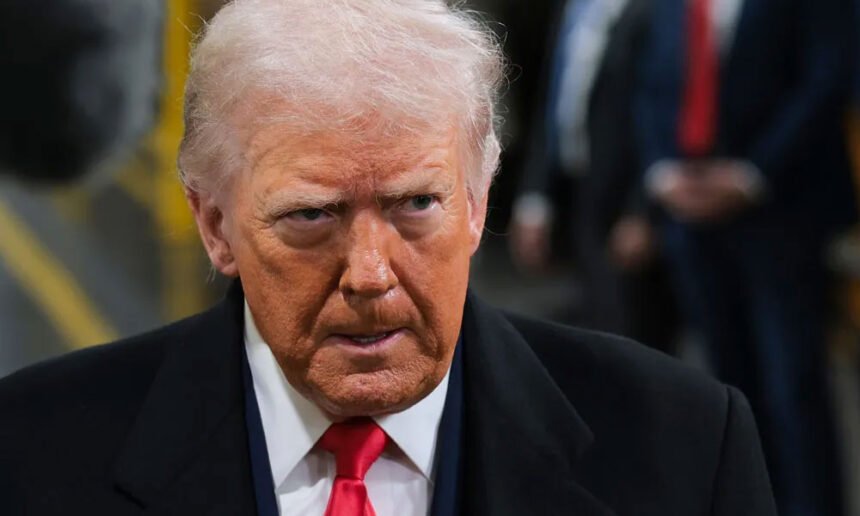
In a private briefing that’s already sending shockwaves through Washington, Pentagon officials reportedly told congressional staff that Iran had no plans to preemptively strike U.S. forces or bases in the region — directly undercutting President Donald Trump’s justification for launching strikes.
According to multiple, citing multiple sources, Defense Department briefers acknowledged Sunday that there was “no indication that Iran was preparing to preemptively strike U.S. bases in the region in anticipation of some sort of attacks from American-Israeli forces.” Politico and Associated Press independently confirmed similar accounts, with attendees saying no clear evidence of an imminent Iranian attack was presented.
That matters because just a day earlier, the White House claimed the strikes were necessary after receiving indications Iran was planning missile attacks on U.S. bases.
Trump himself escalated the rhetoric, saying Iran was building missiles that “could soon reach the American homeland.” But a prior assessment from the U.S. Defense Intelligence Agency found Iran was years away from possessing the intercontinental ballistic missile capability needed to strike the United States. At the time of the strikes, there was no intelligence indicating Iran was pursuing such a program, according to that assessment.
Sources told CNN that Iran was not interested in developing ICBMs — a position publicly echoed by Iranian Foreign Minister Abbas Araghchi last week.
The White House has pushed back. Spokesperson Anna Kelly told CNN, “President Trump is absolutely right to highlight the grave concern posed by Iran, a country that chants ‘death to America,’ possessing intercontinental ballistic missiles.” Another spokesperson, Dylan Johnson, emphasized that the Pentagon had briefed bipartisan staff for over 90 minutes about the operation.
Still, officials in the Sunday briefing reportedly leaned on Iran’s long-standing ballistic missile program and its regional proxy forces as justification for viewing the country as a threat. But sources noted those conditions have existed for years — raising fresh questions about what made this moment different.
Defense Secretary Pete Hegseth is expected to address reporters Monday.
The strikes themselves, conducted alongside Israel, marked the beginning of what the administration described as “major combat operations.” The fallout has already been severe. Iran retaliated with missile attacks on U.S. bases and allies in the region. Three U.S. service members have died since Saturday.
On Sunday, Trump acknowledged the toll may grow. “Sadly, there will likely be more before it ends. That’s the way it is. Likely be more,” he said, adding that projections from the Pentagon suggest casualties could be “quite a bit higher.”
Meanwhile, according to United States Central Command, operations under “Operation Epic Fury” are ongoing.
The administration framed the strikes as urgent and necessary. The Pentagon’s own briefing, however, appears to tell a more complicated story — one that leaves lawmakers asking what the real trigger was, and whether the public was given the full picture before missiles started flying.