







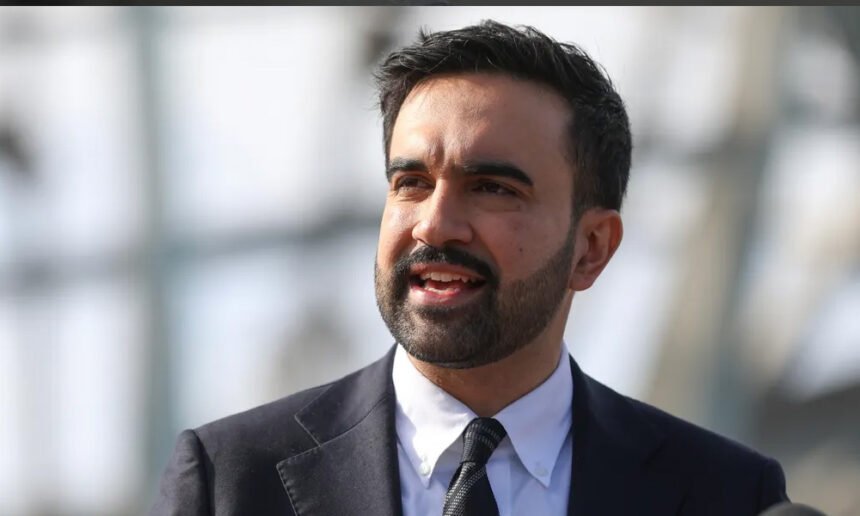
New York City Mayor Zohran Mamdani stepped onto the stage and did the one thing the city’s donor class fears most: he told the truth, clearly, without apology. No pivot. No “working families” vagueness. No performative moderation. Just a progressive mayor delivering the inaugural address that doubled down on the exact agenda that drove him to victory.
The reaction from New York’s political establishment was instant and telling. They heard the speech. They understood it. And suddenly realized they’re no longer in control.
A Speech That Refused to Beg for Permission
Mamdani’s address wasn’t designed to soothe real estate lobbyists or hedge fund bundlers. It was a line in the sand. He talked about housing as a public good, not a speculative asset. He framed public safety around stability and services, not fear. And he treated working-class New Yorkers as adults who can handle straight talk.
According to CNN’s coverage of his inaugural speech, Mamdani leaned hard into economic justice, arguing that a city this wealthy has no excuse for mass displacement, unaffordable rents, or transit systems held together by fare hikes and duct tape.
At that same event, the prepared text shows him directly telling critics that he will *not* “reset expectations” or “reset small expectations” just to make elites comfortable.
“I have been told that this is the occasion to reset expectations, that I should use this opportunity to encourage the people of New York to ask for little and expect even less,” he said. “I will do no such thing. The only expectation I seek to reset is that of small expectations.
“I will not abandon my principles for fear of being deemed radical,” he declared.
The Donor Class Hears a Warning Siren
What rattled insiders wasn’t the rhetoric. It was the confidence. Mamdani didn’t sound like a candidate auditioning for approval. He sounded like someone assuming voters are ready to move past the same recycled “pragmatic” failures.
The city’s power brokers have built careers insisting bold ideas are unrealistic while presiding over systems that plainly do not work. Mamdani’s speech put that contradiction on blast. If rents keep rising, if homelessness keeps spreading, if transit keeps decaying, then incrementalism isn’t realism. It’s surrender.
In his remarks, he explicitly framed his unapologetic approach as governance, not concession.
“What’s radical is a system which gives so much to so few and denies so many people the basic necessities of life,” Mamdani said, quoting Sen. Bernie Sanders, who administered Mamdani’s public oath of office.
Sanders praised New Yorkers and Mamdani for giving hope and inspiration to “people all over this country.”
Progressive speeches are nothing new. What made this one different was timing and tone. Voters are exhausted. Pandemic-era inequalities never closed. Costs climbed. Wages didn’t. And the city’s political class keeps asking for patience while protecting the same interests.
Mamdani didn’t offer patience. He offered confrontation. Not performative outrage, but structural confrontation with how the city allocates money, land, and power. That’s what scares people who benefit from the current arrangement.
And it’s why you’re already seeing whispers about “electability,” “coalitions,” and “tone.” Those words aren’t analysis. They’re defense mechanisms.
The next phase is predictable. Commentators will try to sand down Mamdani’s message into something safer. They’ll ask if he can “broaden his appeal,” which usually means reassuring people who already have plenty of representation.
But the speech made clear he’s not interested in diluting the argument. The bet is that clarity beats caution. That voters want a mayor who names the problem instead of endlessly studying it.