



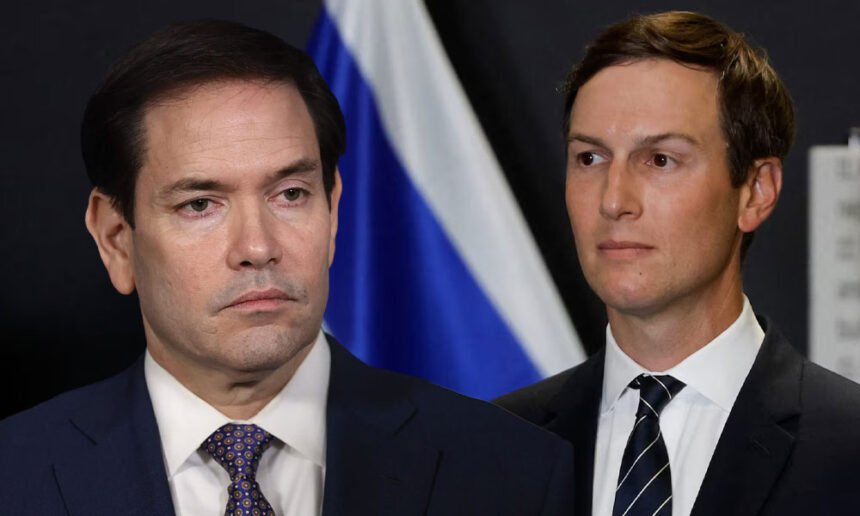
House Democrats are escalating their push for answers on Donald Trump’s war in Iran, moving to subpoena top officials, including Secretary of State Marco Rubio and Donald Trump’s son-in-law Jared Kushner, as questions mount over who is actually running U.S. foreign policy.
Rep. Gregory Meeks (D-N.Y.), the top Democrat on the House Foreign Affairs Committee, introduced motions Wednesday to compel testimony from Rubio, Kushner, and envoy Steve Witkoff, demanding they publicly explain their roles in a conflict that continues to expand with little transparency.
Meeks made it clear this isn’t just another policy dispute—it’s about basic oversight.
“If this committee cannot hold hearings on a war involving U.S. forces, the diplomacy around it, and its impacts on our allies and partners, then we are not meeting our most basic oversight responsibility,” he said, calling Trump’s actions a “war of choice.”
The move comes as the administration claims progress on negotiations with Iran—claims that have been repeatedly contradicted by Iranian officials. Trump has insisted that Rubio, Kushner, and others are actively involved in talks to end the conflict, even boasting about behind-the-scenes diplomacy.
But Iran’s leadership has flatly denied that any such negotiations are taking place.
That contradiction is exactly what Democrats say needs to be investigated.
Behind the scenes, the stakes are only getting higher. The Pentagon is preparing to deploy roughly 2,000 additional troops from the 82nd Airborne Division to the Middle East, adding to the approximately 50,000 U.S. personnel already stationed in the region. Thousands more Marines are also being sent as the conflict drags on.
The human cost is rising as well. At least seven U.S. service members have been killed in Iranian retaliation since the war began, with hundreds more wounded.
Yet despite the growing toll, Republicans in Congress have shown little appetite for aggressive oversight—something Meeks directly called out.
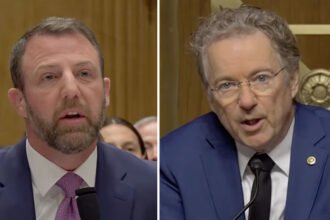
The hearing quickly devolved into a tense clash between Meeks and committee chair Rep. Brian Mast (R-Fla.), who pushed back on the subpoena effort and accused Meeks of missing prior briefings.
“Had you been on time, you might know a little bit more,” Mast snapped.
Meeks fired back, accusing Republicans of shielding Trump from scrutiny.
“I know that you want to protect the president,” he said. “No responsibility, no oversight, no public oversight. It’s time for that to stop.”
Mast responded by again criticizing Meeks’s attendance, telling him he might “learn quite a bit” if he showed up on time.
But Democrats argue that’s beside the point.
The real issue, they say, is that key figures tied to Trump’s Iran strategy—including a private citizen in Kushner—have not been forced to publicly explain their roles in a rapidly escalating war.
And unless subpoenas are approved, they may never have to.
The committee is expected to vote on the subpoena motions after the hearing, setting up a high-stakes showdown over whether Congress will actually assert its oversight authority—or continue to sit on the sidelines as the conflict deepens.