









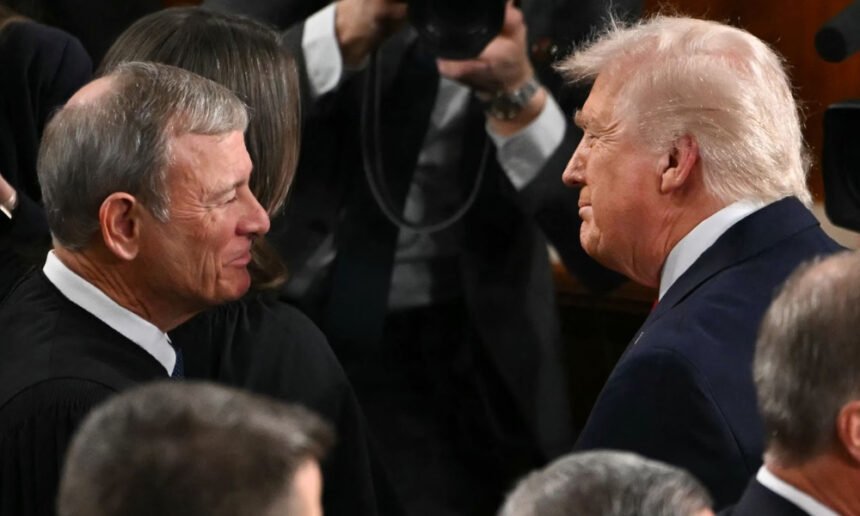
Construction on President Donald Trump’s planned White House ballroom can continue for now after Chief Justice John Roberts stepped in Friday to block a lower court order that would have halted above-ground work.
Roberts issued an order blocking the deadline while the Supreme Court considers the Trump administration’s emergency request to keep the project moving.
The order gives the justices more time to consider the case, but Roberts offered no explanation for the decision. It also does not necessarily signal how the Supreme Court will ultimately rule on the larger legal fight.
Roberts received the appeal because, as chief justice, he handles emergency matters arising from Washington, D.C. He could still send the matter to the full Supreme Court for a vote, which is typical when the Justice Department asks the court to intervene.
For now, though, Trump’s ballroom construction keeps moving.
The proposed ballroom is a roughly 90,000-square-foot project that has become one of the most controversial construction efforts associated with Trump’s second term.
The National Trust for Historic Preservation challenged the project in court and persuaded the U.S. Court of Appeals for the District of Columbia Circuit that the administration needed additional authorization from Congress before proceeding.
The preservation group has argued that the Trump administration cannot simply tear down portions of the White House and build a massive new structure without congressional approval.
“If Petitioners believe there is a pressing need for a ballroom, nothing prevents them from asking Congress for one — today, tomorrow, or any time in the future,” the group wrote in court filings.
The group accused the administration of trying to “foil judicial review” and improperly take powers that belong to Congress.
The Trump administration sees things very differently.
Trump says the project already has approval
The administration argues that the necessary approvals are already in place because the ballroom is being financed with private money.
It has also challenged the National Trust’s ability to bring the lawsuit in the first place.
Solicitor General D. John Sauer warned the Supreme Court that allowing the preservation group’s legal theory to stand could open the courts to an enormous number of challenges from people who simply dislike changes made to government property.
“That would open the courthouse doors to any of the millions of people who visit government buildings, historic sites, or parks and happen to think that they dislike something they see,” Sauer told the justices.
The Justice Department has also argued that the project has security implications following shootings and threats involving the president.
The legal battle isn’t over
Roberts’ order is not a final ruling on whether Trump has the legal authority to build the ballroom.
It simply prevents the lower court’s deadline from taking effect while the Supreme Court considers the administration’s emergency request.
That means the justices could issue another ruling at any time.
The Supreme Court is also dealing with another major Trump administration emergency appeal involving his executive order targeting mail voting ahead of the midterm elections.