







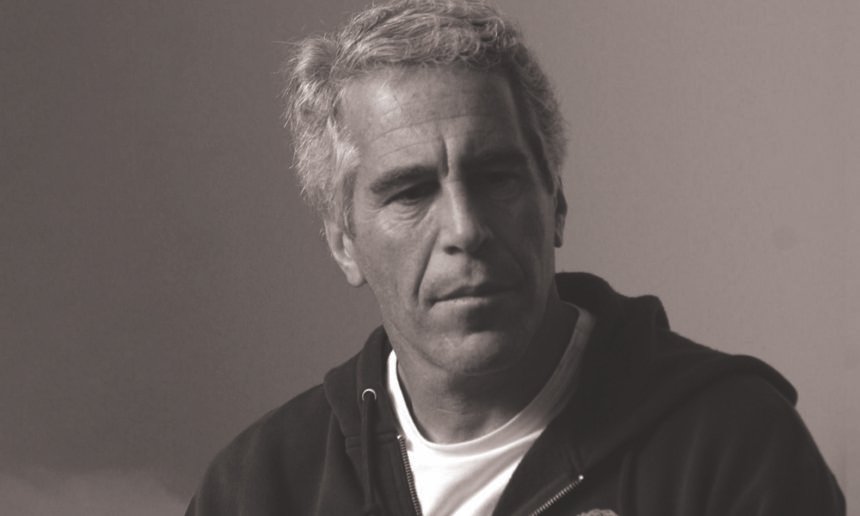
Six years after Jeffrey Epstein was found dead in his Manhattan jail cell, a new forensic analysis is raising fresh questions about the official ruling that he died by suicide — and the expert behind the report says the evidence points to something far more disturbing.
Dr. Michael Freeman, a forensic medicine professor and editor-in-chief of the Journal of Forensic and Legal Medicine, has spent months examining previously unpublished autopsy records, photographs, and other evidence provided by Epstein’s brother.
His conclusion? Epstein was likely murdered.
Freeman presented his findings Monday in London, arguing that several of the injuries documented on Epstein’s body do not fit the official explanation of a suicidal hanging.
“The injuries that were documented by the medical examiner were not consistent with the suicidal hanging,” Freeman told CBS News. He added that injuries potentially indicating a physical struggle or assault had been overlooked.
The New York City Office of Chief Medical Examiner ruled Epstein’s death a suicide in August 2019. Freeman’s findings directly challenge that determination.
And he isn’t the first forensic expert to raise concerns.
In 2020, Epstein’s brother hired renowned forensic pathologist Dr. Michael Baden to review the autopsy. Baden also questioned the suicide ruling, saying the injuries to Epstein’s neck pointed more toward murder than suicide.
The injuries that raised new questions
One of the first things that caught Freeman’s attention was a photograph showing ligature marks on the right side of Epstein’s neck.
“When I saw this photograph, my first reaction was that that is a very unusual looking injury for a hanging on the neck,” he said.
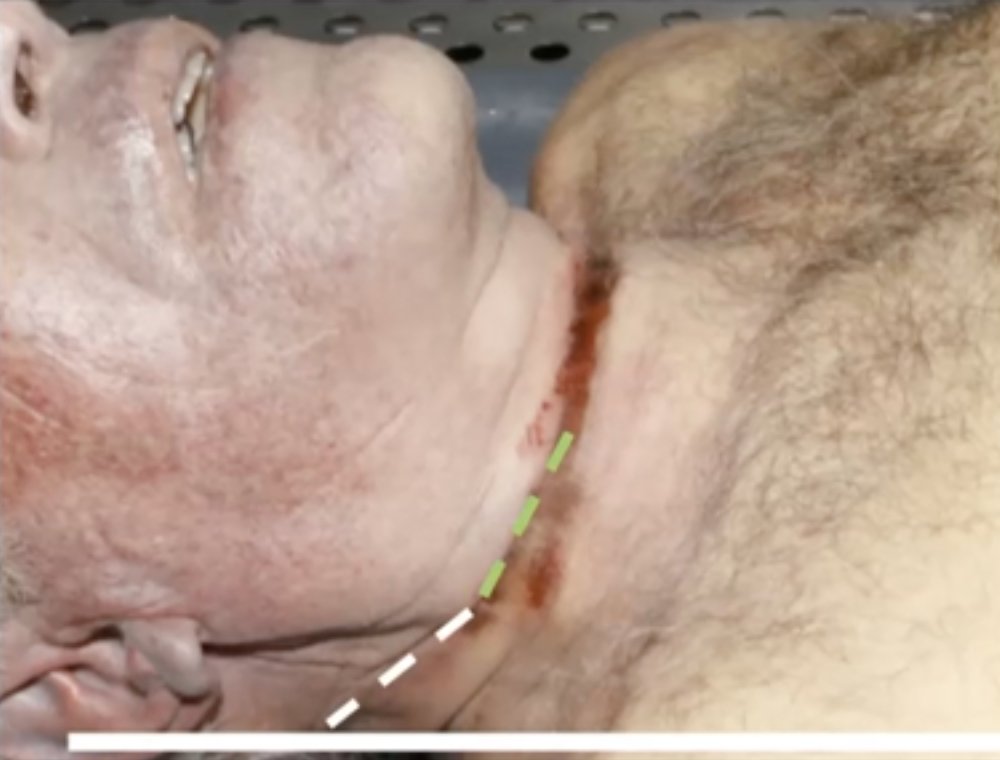
(Source: Office of Chief Medical Examiner, via CBS News)
Freeman identified what he believes were two separate marks on Epstein’s neck, with the lower mark angled differently from the one above it. He argued that the pattern was inconsistent with the mechanics of a typical suicidal hanging.
“That’s not what suicidal hangings do,” Freeman said.
His team also examined injuries elsewhere on Epstein’s body, including deep tissue bleeding in his left shoulder and an injury to his back. Freeman questioned how those injuries could have occurred if Epstein had died by suicide.
“We have too many other injuries that are not explained by any suicidal hanging,” he said. “Where did these other injuries come from?”
To test his theory, Freeman developed a three-dimensional biomechanical reconstruction using Epstein’s approximate body measurements, the visible injuries, and a corrections officer’s later description of how the body was found.
The analysis suggested that while some injuries could be consistent with hanging, others were not adequately explained by that scenario.
A possible strangulation — and evidence that may have been overlooked
Freeman’s alternative explanation is that Epstein was strangled from behind using a narrow, knotted piece of fabric.
He pointed to horizontal markings on Epstein’s neck that he believes could have been caused by a ligature pulled from behind. He also identified what he interpreted as possible fingernail marks and signs of blunt-force trauma.
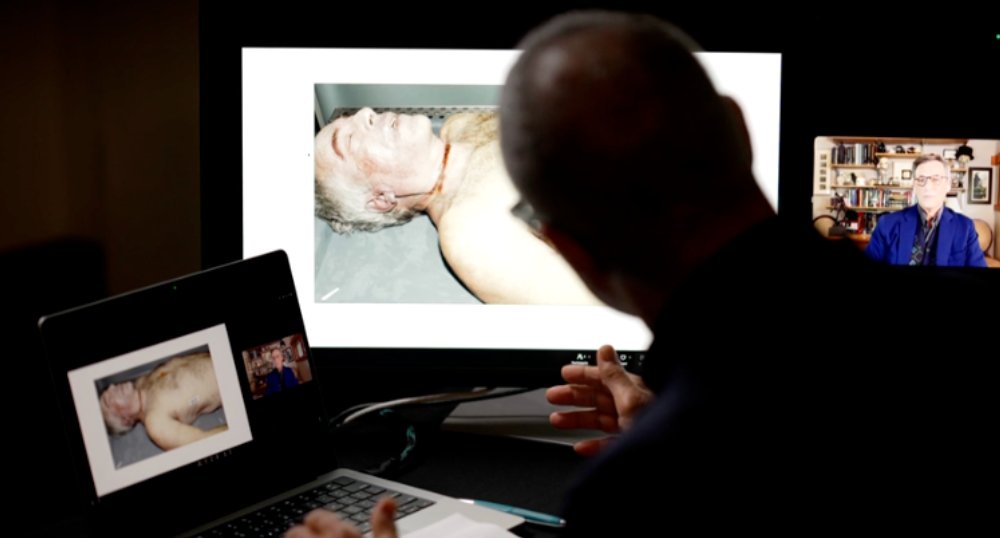
Freeman said photographs showed a piece of knotted orange fabric in Epstein’s cell that could have produced the unusual pattern of injuries.
But there’s a major problem: the fabric he believes may have been involved was never collected for the medical examiner’s investigation.
Freeman argued that the markings on Epstein’s neck did not match the noose reportedly recovered from the cell.
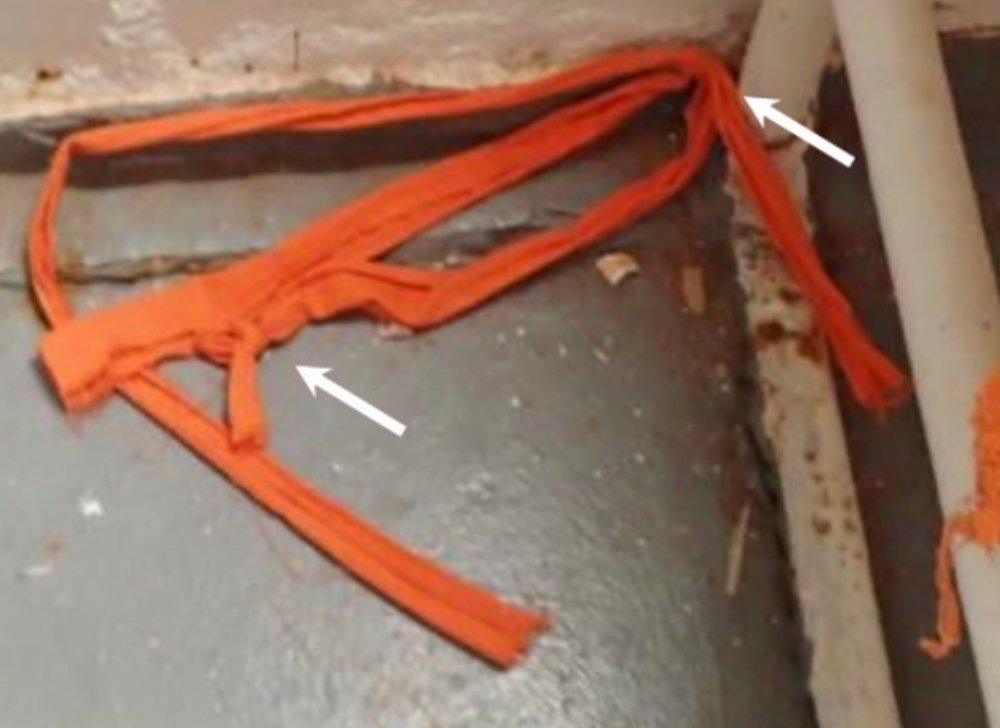
(Office of the New York Medical Examiner)
Taken together, he said, the injuries and physical evidence were most consistent with a homicide.
### The failures surrounding Epstein’s death
The new report also puts a spotlight on the extraordinary breakdowns surrounding the investigation into Epstein’s death.
Epstein was found dead on August 10, 2019, in his cell at the Metropolitan Correctional Center in Manhattan. According to Freeman, his body was already cold when discovered, suggesting he may have been dead for several hours.
Yet the scene was not properly preserved.
His body was moved out of the cell within minutes, preventing investigators from documenting the scene as it was initially found. The cell was never sealed off for a full forensic investigation, and significant evidence was not properly preserved, according to a 2025 CBS News investigation.
Most of the surveillance cameras in Epstein’s prison wing were also not working.
Even footage from the nearest functioning camera left unanswered questions. Investigators reportedly failed to follow up on an unexplained orange blur seen moving up a staircase toward Epstein’s cell block on the night he died.
There were also serious questions about the prison staff’s conduct. Guards on duty that night did not initially speak with medical examiner investigators. Some falsified records and lied about their activities.
The corrections officer credited with finding Epstein’s body, Michael Thomas, was not interviewed by federal investigators until two years later, after he had been charged with crimes involving falsified prison records. He provided an account in exchange for leniency.
Freeman used Thomas’ later description of finding Epstein hanging from a bedpost as part of his reconstruction.
Despite the new analysis, the New York City medical examiner’s office has not changed its conclusion.
“Our office stands by its determination,” a spokesperson told reporters.
A New York Times investigation published in June, based on tens of thousands of pages of documents and Epstein’s handwritten jail notes, reported indications that Epstein had been intent on ending his own life.
However, the newspaper also found that nearly all the forensic experts it interviewed believed the medical evidence alone could not conclusively establish whether Epstein died by suicide.
Freeman’s report has not yet been published in an academic journal.
The questions surrounding Epstein’s death have never gone away. And the combination of disputed injuries, missing evidence, malfunctioning cameras, falsified prison records, and delayed interviews continues to fuel scrutiny of what happened inside that cell.
Freeman says the question of whether Epstein died by suicide is no longer a mystery to him.
“Who did it? Exactly how they did it. What happened? All the other things. Why the cameras [were] off? All a mystery, yes,” he told CBS News. “Was this a suicide? Not a mystery.”