


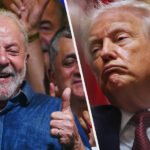

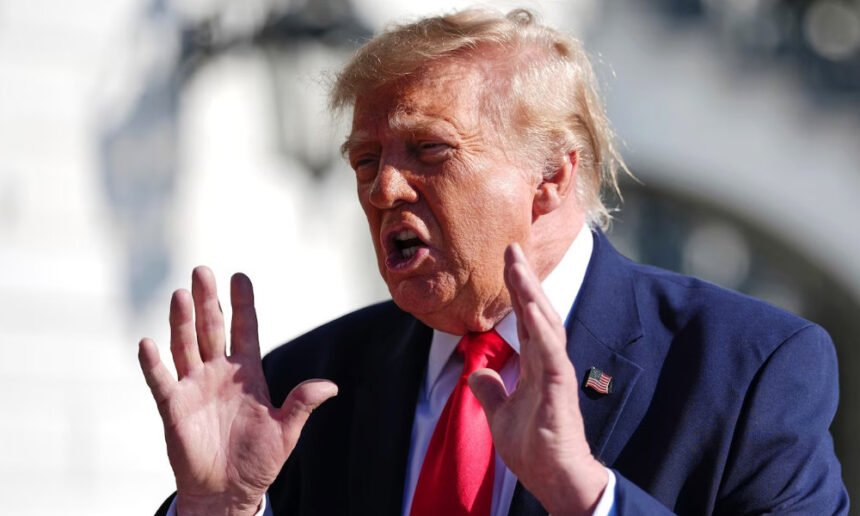
President Donald Trump finally weighed in on Brazil’s election Monday, claiming the contest was “rigged” and “so corrupt” after President Luiz Inácio Lula da Silva defeated Trump’s right-wing ally, Flávio Bolsonaro.
Trump offered no evidence to support his allegations, but his comments immediately raised questions about his willingness to accept an election result that went against a political ally — especially as his own party faces a potentially difficult fight in the upcoming U.S. midterm elections.
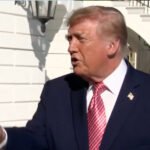
“It looked terrible to me,” Trump told reporters as he left Washington for a campaign rally ahead of the November 3 midterms.
“I didn’t take sides, but it looked like another rigged election, frankly,” he added. “It was a terrible look for the world.”
The accusation comes with a familiar backdrop. Trump has repeatedly claimed that his 2020 election defeat was rigged, despite the absence of evidence establishing widespread fraud that could have changed the outcome. He has also cast doubt on the integrity of the upcoming U.S. midterms, in which Republicans risk losing control of Congress.
Now, after his preferred political outcome failed to materialize in Brazil, Trump is questioning that country’s election, too.
Flávio Bolsonaro, the 45-year-old son of far-right former Brazilian President Jair Bolsonaro, has called for the election result to be annulled after Lula’s victory dashed his hopes of taking power.
Trump has maintained close political ties with the Bolsonaro family and has promoted a broader conservative shift across Latin America. Flávio had pledged to align himself with a growing group of right-wing leaders seeking closer relations with Washington.
After his ally was defeated, Trump insisted that he had not formally endorsed anyone in the Brazilian contest, but he repeatedly criticized the way the election was conducted.
“Elections have to be indisputable, and it looked very bad to me,” Trump said. “I didn’t endorse anybody or anything, but I watched the election and it looked so corrupt, so terrible.”
When reporters asked whether he planned to take action over the result, however, Trump backed away from suggesting any immediate response.
“I’m not running for Brazil, I’m running for the USA,” he said.
Trump also struck a more conciliatory note toward Lula, saying he liked the Brazilian president and got along with him well.
“I like Lula, I get along with him very well,” Trump said. “I just thought it was a very bad look, the way it was tabulated — with the extension.”
Trump’s comment centers in part on a two-hour extension of voting because of transportation problems in some cities.
Bolsonaro’s camp seized on the extension to challenge the result. But Trump did not present evidence that allowing more citizens to vote changed the outcome.
Trump has repeatedly portrayed recent political developments in Latin America as evidence that his administration is reshaping the region in a conservative direction.
Last week, he boasted that the region had shifted dramatically toward the right and pointed to candidates he said he had endorsed who went on to win.
“In South America, it was all leaning big left — it’s all right now,” Trump told reporters. “And, as you know, I endorsed many of those people. Every single one that I endorsed won.”
He added that countries across the region were becoming “extremely conservative in a very positive way.”
Trump has also pointed to his administration’s aggressive approach toward Venezuela, including the U.S. operation that removed Nicolás Maduro from power in January, as part of that broader shift.
But Lula’s victory complicates Trump’s sweeping claim of a regional conservative wave.
Trump’s response to Brazil’s election follows a familiar pattern: when an election produces a result Trump dislikes, he will cast doubt on its legitimacy.