







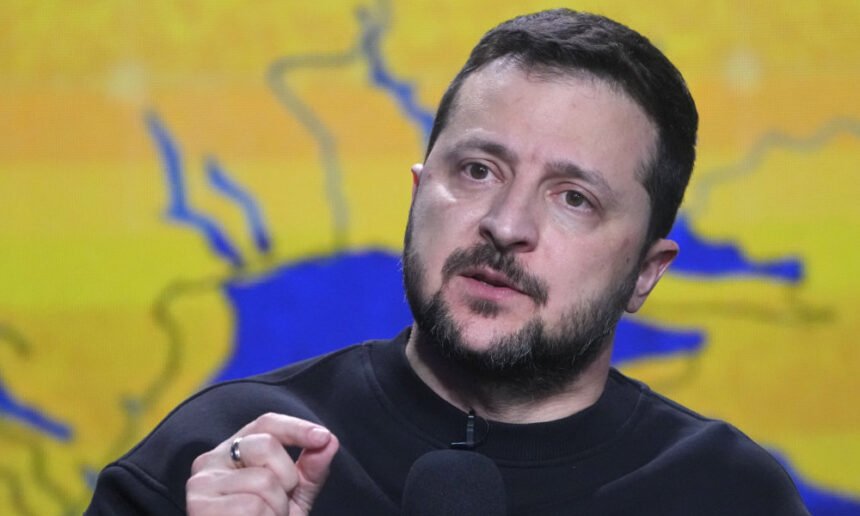
Ukrainian President Volodymyr Zelensky is running out of patience with Donald Trump — and he’s making no secret of it.
In a sharp escalation of tensions with Washington, Zelensky unloaded on Trump, accusing the US president of admiring dictators and criticizing his administration for moves that are helping Russia, while vowing to resume attacks on Russian oil refineries.
“The block [on attacking refineries] is out. We’re done,” Zelensky declared, signaling that Ukraine would no longer hold back its strikes in response to a US-backed energy ceasefire, according to The telegraph.
Hours later, Russia accused Ukraine of launching a major drone attack on an oil refinery in Ryazan, where officials said falling drone debris sparked a fire. The circumstances of the reported strike were not independently established in the account.
The confrontation marks another low point in the relationship between Zelensky and Trump, whose public feud erupted into a bitter Oval Office clash in February 2025.
In an interview with the *Financial Times*, Zelensky went beyond criticizing US policy and took direct aim at Trump’s admiration for powerful leaders who cling to office.
“He [Mr Trump] speaks about it openly and loudly that he loves such people and he respects such people,” Zelensky said.
He added that Trump appeared to admire leaders who remain in power for “20 years, 30 years, 40 years” because, in the president’s view, that longevity makes them “very strong.”
The remarks were a pointed reference to Russian President Vladimir Putin, whose grip on power has lasted decades.
Zelensky also dismissed Trump’s call for him to step down as mere “rhetoric,” warning that such comments risk playing into Putin’s hands.
But the growing rift is about more than words. Zelensky is furious over a series of US moves that Kyiv fears could weaken Ukraine while giving Moscow more room to maneuver.
Last Friday, Trump waived sanctions on Russian diesel in an effort to bring down fuel prices ahead of next month’s US midterm elections. The move would allow additional Russian fuel onto global markets, providing Moscow with another potential source of revenue as its war against Ukraine continues.
On Saturday, Trump said Ukraine needed a new president. The following day, he announced that Russia and Ukraine had agreed to an energy ceasefire, saying it was “effective immediately” — an announcement that appeared to catch both sides by surprise.
Zelensky said Ukraine had held off on energy strikes for three days to comply with Washington’s demands. But, he argued, Russia continued attacking Ukraine’s energy infrastructure, with more than 100 civilians killed in a week, according to his account.
“We didn’t destroy any relationship,” Zelensky said, making clear he did not believe Kyiv was responsible for repairing the damage.
The Ukrainian leader also made clear that he was not prepared to suspend attacks on Russian energy infrastructure indefinitely without something in return.
The stakes are enormous for Ukraine, which has faced repeated Russian attacks on its power infrastructure. Zelensky fears that restraining Ukrainian strikes while Moscow continues its own campaign would leave his country absorbing the damage while Russia benefits financially.
The dispute has also spilled into military communications and intelligence — two areas where Ukraine remains heavily reliant on American support.
Zelensky accused Washington of withdrawing intelligence assistance and restricting Ukraine’s use of Starlink satellite communications, calling both moves “dangerous.”
According to Zelensky, US officials warned Ukrainian military officers that intelligence sharing could be cut off if Kyiv continued attacking Russian energy facilities. The issue was later attributed to a technical glitch, but Zelensky rejected that explanation when discussing the Starlink disruption.
“It was not a technical problem, it was the will,” he said.
Trump has denied cutting off intelligence sharing. Still, the Starlink dispute raised fresh concerns. On Wednesday, the Pentagon imposed a 100-mph speed limit on Ukrainian drones using Starshield, the military-grade version of Elon Musk’s satellite technology that is controlled by the US government.
Hours later, Zelensky said Ukraine had been betrayed and warned that “people would die” as a result.
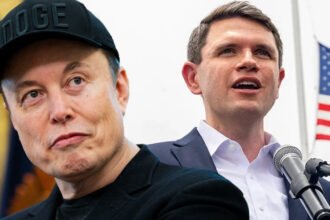
Musk also pointed the finger at Washington, writing on X that Starshield systems are owned and controlled by the US government and that any restrictions are decided by the US military and the president.
Ukraine’s defense minister, Mykhailo Fedorov, said access to Starlink was being restored but called for the speed restriction to be removed entirely. A Ukrainian defense source said Thursday that communications had been fully restored, while Kyiv continued seeking an explanation for the disruption.
Zelensky is also worried that Trump’s willingness to ease restrictions on Russian energy exports could lead to even more deals between Washington and Moscow.
The US president is reportedly considering relaxing sanctions on so-called shadow fleet ships used to transport oil and petroleum products from Russia, Iran and Venezuela.
Both Zelensky and US senators have warned that easing those restrictions would hand Putin additional revenue to help finance his war.
“The question will be when will the next deal be? Maybe it will be gas. Definitely it will be gas,” Zelensky said. “Business is interesting between the United States and Russia.”
The Ukrainian president’s message is clear: He believes Washington’s pursuit of economic deals with Moscow risks undermining the very country fighting to stop Putin’s invasion.
Yet Zelensky is not closing the door on the United States. Despite his increasingly direct criticism of Trump, he stressed that America remains an essential partner in Ukraine’s defense.
What Kyiv needs, he said, is an “honest” and “strategic” partnership — not one that leaves Ukraine uncertain whether crucial support will remain available.
“Russia can only fight all of us when we are not together,” Zelensky said.