








Donald Trump is ramping up his pitch to voters ahead of next month’s midterm elections, promising $5,000 checks for American adults if Republicans hold on to Congress while warning that a Democratic victory would trigger an economic depression.
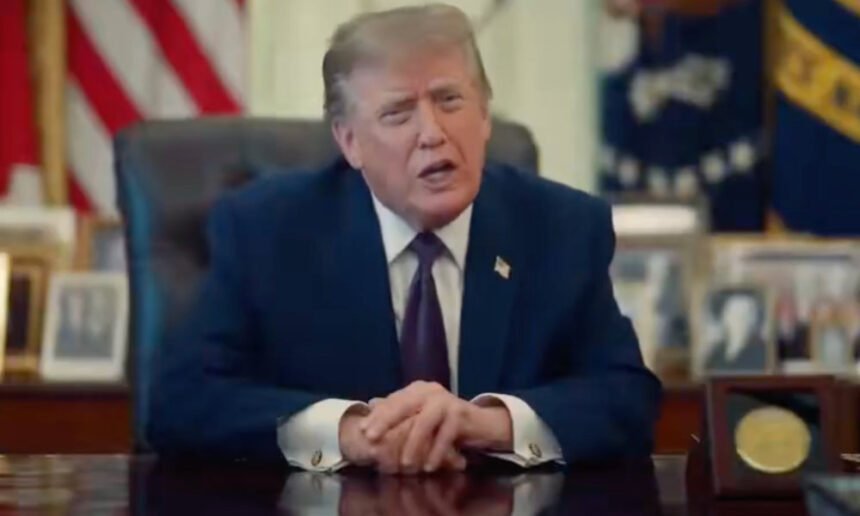
In a 42-second video posted to its rarely used X account, Trump repeated his promise to send $5,000 to every adult American, making the proposed payments sound explicitly tied to the outcome of the midterms.
“I’m going to give all adult citizens in the United States of America $5,000,” Trump declared.
Then came the fearmongering.
“Democrat policies won’t allow this to happen. In fact, the opposite. They’re going to raise your taxes. If the Democrats win, you will have an economic depression. If the Republicans win, you will each have $5,000 in your pocket and economic success for our country like we have never ever seen before.”
The catch? The administration still hasn’t explained how it would pay for the massive giveaway.
Critics have described the proposal as a political “bribe,” arguing that promising voters thousands of dollars if they keep Republicans in power raises obvious questions about the purpose of the pledge.
And Trump’s new video makes the political connection harder to defend.
Trump first floated the so-called “dividend” last month at the Republican National Committee’s midterm convention in Dallas, promising $5,000 to every adult citizen. Since then, he has repeatedly insisted the payments will happen, at one point saying they would “100 percent” go out.
But there’s a rather substantial problem with that promise: The numbers are enormous, and the funding remains unclear.
With roughly 270 million adults in the United States, sending each one $5,000 would cost approximately $1.35 trillion.
That’s more than three times what the federal government collected in customs duties during the previous fiscal year, according to the figures cited in the original report.
The administration has yet to provide a detailed explanation of how it would finance the checks.
Commerce Secretary Howard Lutnick has said the money would not come from taxpayers. Meanwhile, Kevin Hassett, director of the National Economic Council, has suggested Congress could authorize the payments through budget reconciliation, a process that can allow legislation to pass the Senate without Democratic support.
Neither explanation, however, resolves the central question of where the money would ultimately come from or how the proposal would affect federal borrowing.
And not every Republican is buying it.
Sen. Rand Paul of Kentucky and Rep. Chip Roy of Texas have both opposed the plan, pointing to the national debt as a reason to reject it.
The national debt surpassed $40 trillion for the first time in August, according to the figures cited in the report.
That leaves Trump promoting a multitrillion-dollar promise while some members of his own party are warning about the government’s mounting debt.
The $5,000 pledge is just the latest in a series of payments Trump and his administration have highlighted as the midterms approach.
Trump is making these promises as his approval ratings and voters’ assessments of his economic stewardship have come under pressure.
A Pew Research Center survey conducted September 28 through October 4 put Trump’s approval rating at 30%, with 68% disapproving. Reuters/Ipsos reportedly measured his approval at 32% in its two most recent polls cited in the report.
The cost of living remains a major concern for voters, and the numbers in the cited AP-NORC survey were particularly unfavorable: Just 17% of Americans approved of Trump’s handling of the issue.
Pew also found Democrats leading Republicans by 44% to 36% among registered voters on the congressional ballot. In addition, 44% of respondents said their vote next month would be a vote against Trump.
Those numbers help explain why Trump is now telling voters that a Republican victory could mean $5,000 for every adult, while warning that a Democratic victory would bring economic disaster.
Yet the administration has not laid out a complete funding plan for a proposal that could cost around $1.35 trillion.