








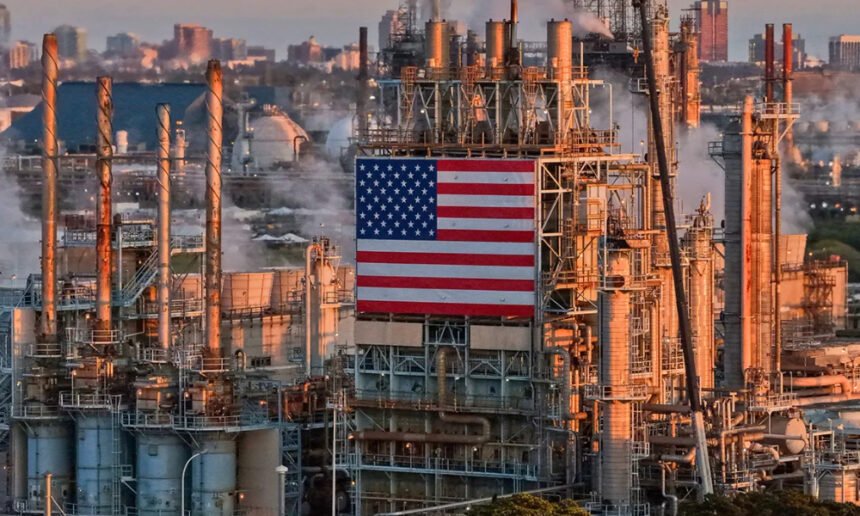
America’s emergency oil stockpile has fallen below 300 million barrels for the first time since it was being filled decades ago, and it’s happening as the Iran war continues to squeeze global energy supplies and push gas prices higher.
The Strategic Petroleum Reserve contained just 298.7 million barrels as of Friday, according to new Energy Department data.
It is the first time the nation’s emergency reserve has dipped below the 300 million-barrel mark since the early 1980s, when the stockpile was still being built.
And the timing couldn’t be more uncomfortable. The Trump administration announced in March that it would release 172 million barrels from the reserve over 120 days, drawing down the stockpile as global oil markets faced growing uncertainty.
Now the reserve has fallen to less than half of its authorized capacity of 714 million barrels.
At the same time, the war with Iran has created another headache for the global oil market.
Iran has been able to restrict or disrupt oil shipments through the Strait of Hormuz, a critical chokepoint through which a huge share of the world’s oil supply passes. The disruption has put additional pressure on global crude supplies, contributing to higher prices for consumers.
For Americans, that pressure is showing up at the gas pump.
The shrinking Strategic Petroleum Reserve does **not** mean the country is running out of gasoline. The federal reserve is separate from private oil inventories and the fuel supplies that ultimately reach consumers.
But the reserve exists for a reason.
Created in 1975 after oil-producing nations imposed an embargo on the United States, the SPR was designed to give Washington a massive emergency cushion when a major disruption threatens the nation’s energy supply.
That cushion is now considerably smaller.
The reserve can legally hold up to 714 million barrels, but its inventory has fluctuated over the years as presidents and Congress have tapped it during energy crises, attempted to stabilize oil markets or used sales to help cover government expenses.
The latest drawdown, however, leaves the United States with substantially less crude in reserve as another major geopolitical conflict continues to threaten global energy supplies.
And the stockpile isn’t expected to stop falling just yet.
Patrick De Haan, head of petroleum analysis at GasBuddy, said on X that the SPR’s decline is “likely for a few more weeks” before the currently authorized release is completed.
That means the nation’s emergency oil cushion could shrink even further before Washington begins rebuilding it.
The United States still has enormous oil production capacity and substantial private-sector inventories.
But when an emergency reserve built to withstand an oil shock falls to its lowest level in roughly four decades, while a war is simultaneously pushing energy prices higher, there’s little doubt that America’s energy safety net is looking a lot thinner than it used to.