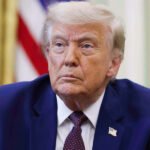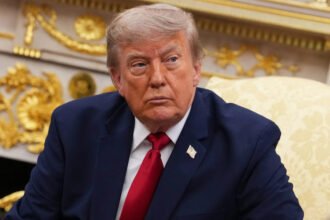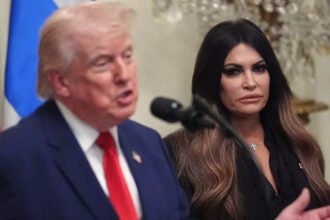








President Donald Trump has decided that if he can’t get his election wish list through Congress, neither can one of the biggest bipartisan housing bills in years.
In a dramatic escalation of his pressure campaign on Capitol Hill, Trump abruptly scrapped plans to sign a major housing package Wednesday and declared he won’t support moving it forward unless Congress first passes his sweeping SAVE America Act—a voting proposal that even several Republican senators acknowledge doesn’t have enough support to become law.
The move instantly threw a rare bipartisan effort to tackle America’s housing affordability crisis into limbo.
Trump announced the decision on Truth Social, calling the SAVE America Act a “national emergency” and insisting lawmakers prioritize it over the housing legislation. The bill, designed to encourage new home construction and ease soaring housing costs, had been one of the few areas where Republicans and Democrats had managed to find common ground.
Instead, Trump tied the two issues together, effectively telling lawmakers that housing can wait.
The outburst comes just hours after the Supreme Court rejected his effort to stop states from counting mail ballots that are postmarked by Election Day but arrive afterward. In a 5-4 ruling, the Court said federal election law does not require ballots to be received by Election Day, preserving existing laws in Mississippi and several other states.
Trump immediately slammed the decision, arguing that the Court’s ruling made the SAVE America Act “more important than ever.”
But in the same breath, he acknowledged a major political reality.
“I’d like to have the SAVE America Act added on, but that’s probably not going to happen,” Trump told reporters. “Because we have four Republican senators, maybe five, that just won’t vote for it.”
That admission undercuts much of the urgency behind his demand. Trump is effectively threatening to stall unrelated legislation over a bill he concedes lacks the votes to pass.
Trump also took to Truth Social to pressure the handful of Republican senators standing in the bill’s way.
He accused anyone opposing the legislation of effectively supporting election fraud and launched into one of his trademark all-caps tirades, claiming the country was facing a “powerful Communist Movement” that he bizarrely described as more dangerous than World War I, World War II, Pearl Harbor, or even the September 11 terrorist attacks.
“There is only one reason to oppose — CHEATING!” Trump wrote before singling out Republican Sens. Lisa Murkowski, Susan Collins, Thom Tillis, Bill Cassidy, and Mitch McConnell by name, demanding they vote to “SAVE OUR COUNTRY.”
But reality is not on his side. Senate Majority Leader John Thune has publicly acknowledged the math simply isn’t there to overcome a Senate filibuster.
“Those are just hard realities,” Thune said. He also dismissed the online narrative pushed by some Trump allies, remarking that “the alternative universe that is X doesn’t reflect the facts on the ground.”
Other Republicans have begun voicing concerns as well. Texas Sen. John Cornyn warned that divisions within the party could become politically costly heading into the midterms, while Sen. Thom Tillis expressed hope that tensions could be eased behind closed doors.
Trump, meanwhile, has continued endorsing primary challengers against sitting Republican senators and pressuring lawmakers to line up behind his legislative priorities, even as several remain skeptical of both the strategy and the chances of success.
The SAVE America Act would require documentary proof of citizenship and stricter identification requirements for federal elections. Trump has also called for adding new restrictions on mail voting, including proposals that would sharply limit or eliminate mail-in ballots.
Supporters argue the measures would strengthen election security.
Critics counter that the requirements could make voting more difficult for eligible Americans who don’t have ready access to documents such as passports or birth certificates, while pointing out that documented cases of noncitizen voting remain rare.
Trump has repeatedly argued—without evidence—that expanded mail voting enables widespread fraud, despite having voted by mail himself.
The immediate casualty is a housing package that had attracted bipartisan support because of growing concern over rising home prices and affordability.