






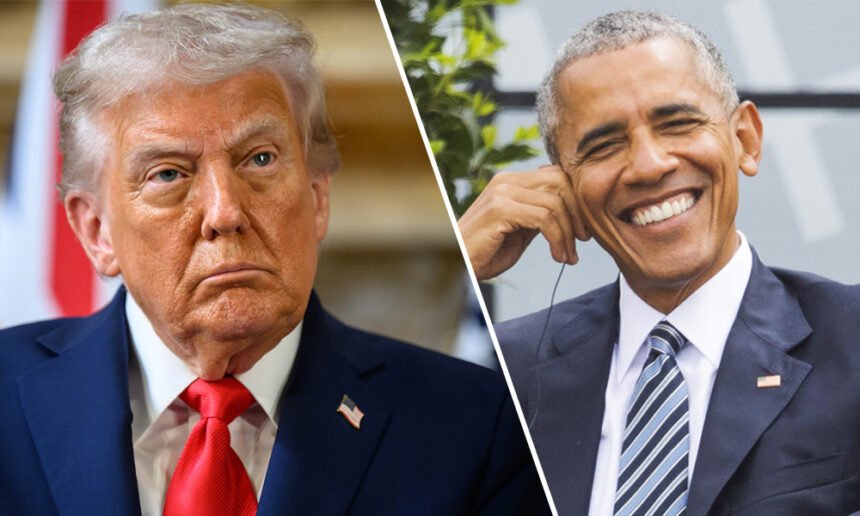
Donald Trump’s latest social-media stunt, posting a video that depicts Barack and Michelle Obama as apes, wasn’t just morally grotesque. It turned into a political self-own. The racist clip detonated online, triggered bipartisan backlash, and landed at the exact moment Trump’s approval numbers are sinking to new lows.
The video, posted to Trump’s Truth Social account, briefly superimposes the Obamas onto dancing primates set to “The Lion Sleeps Tonight.” Critics immediately condemned the imagery as racist, pointing to the centuries-old trope of portraying Black people as monkeys or apes. Even some of Trump’s usual online defenders appeared uneasy, while political observers warned the post crossed a line that would further damage his already battered public image.
Trump eventually deleted the video under pressure, but by then the damage was done. The outrage had already escaped the platform, ricocheted through cable news and social media, and hardened perceptions that Trump is increasingly reckless, and unconcerned with the consequences.
The timing couldn’t have been worse. A new NPR/PBS News/Marist poll shows Trump’s overall approval languishing at just 39 percent, with 51 percent disapproving — a level not seen since the fallout from January 6, 2021. His numbers on core issues are even uglier: only36 percent approve of his handling of the economy and foreign policy. Other recent surveys show similar dips, with support sliding into the low 30s on several key issues. The racist meme didn’t cause those numbers — but it sure didn’t help.
Instead of containing the fallout, the White House poured gasoline on it. Press Secretary Karoline Leavitt defended the post, saying it came from “an internet meme depicting President Trump as the King of the Jungle and Democrats as characters from The Lion King,” before scolding reporters to stop the “fake outrage.” The response only intensified criticism, reinforcing the impression that the administration would rather normalize offensive behavior than acknowledge a mistake.
Condemnation came fast and from both sides of the aisle. Civil rights groups blasted the video as deeply offensive. Democrats called it a “racist disgrace.” Even some Republicans quietly admitted the post was “over the line.” Commentators piled on, labeling the White House’s defense “absurd,” “pathetic,” and emblematic of an administration allergic to accountability.
For years, Trump has relied on provocation to energize his base. This time, the numbers suggest the tactic backfired. What may have been intended as meme-driven culture-war bait instead reinforced voter concerns about judgment, temperament, and leadership — and the polls are starting to reflect it.