







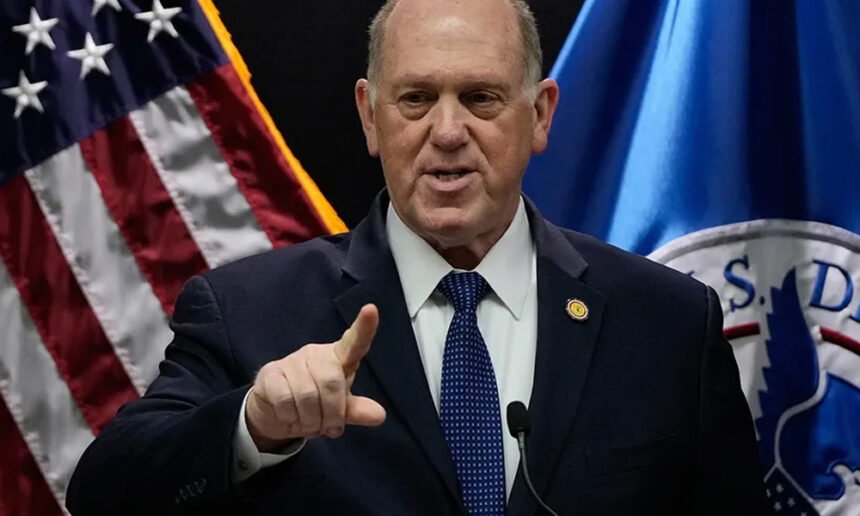
The Trump administration says it’s pulling 700 federal immigration agents out of Minneapolis “effective immediately,” but let’s be blunt: this looks less like a real de-escalation and more like optics in motion. White House border czar Tom Homan stood at a podium and declared victory as part of a partial drawdown of Operation Metro Surge, the highly controversial immigration enforcement operation that has rocked Minnesota for months.
Here’s the math: roughly 3,000 federal agents — ICE, Customs and Border Protection, and Border Patrol officers — were sent into the Twin Cities late last year to arrest undocumented immigrants and deport them. Today, Homan says 700 of those officers are heading out, leaving about 2,300 still on the ground. That’s still fifteen times the federal presence Minnesota saw before the surge began.
Homan and the White House are pitching this like a public safety win, claiming cooperation from local jails and sheriffs now allows ICE to snatch immigrants from lockups instead of chasing them on the streets. “Given this increase in unprecedented collaboration… we’ll draw down 700 people effective today,” Homan said. But that cooperation framework still keeps federal agents embedded in Minnesota communities with sweeping authority.
And there’s the rub: this isn’t a genuine pullback; it’s a tactical shift to keep the same mission rolling with fewer bodies in the street. Homan made clear that personnel dedicated to officer safety and responding to protests or “hostile incidents” aren’t going anywhere — they’re exempt from this drawdown.
Even in Homan’s own words, further reductions are conditioned on what he calls an end to “illegal and threatening activities against ICE and its federal partners.” In other words: protests, community resistance, even anger at federal violence stand in the way of any real retreat.
Let’s be clear: this comes on the heels of two fatal shootings of U.S. citizens by federal agents in Minneapolis — including Alex Pretti and Renee Good — that ignited protests, lawsuits, and national scrutiny. It’s not surprising that the White House would sell this partial pullback as progress.
The administration’s insistence that the Minneapolis operation has been a win — Homan said he thinks ICE “took a bunch of people off the streets” — rings hollow to communities still traumatized by aggressive raids and deadly force.
Let’s call it what it is: a PR pivot. The backdrop here isn’t cooperation and calm — it’s weeks of backlash, local lawsuits, protests and lawsuits filed by Minnesota officials calling the entire surge unconstitutional. They argue DHS agents have used excessive force, disrupted schools and communities, and violated basic civil liberties. The pain on the ground hasn’t gone away just because 700 bodies are being shuffled out.
This “drawdown” came because of political pressure, not because the administration suddenly decided the operation was misguided. Minnesota’s leaders — including Gov. Tim Walz and Attorney General Keith Ellison — have hammered DHS in court and in the media, pointing to deaths, chaos and constitutional questions that a federal judge has acknowledged but refused to halt.
Homan’s news conference was less about de-escalation than about spinning a PR win amid growing public outrage and political pressure.
So yes, 700 agents are leaving Minnesota’s streets. But with more than 2,000 still deployed, no guarantee of full withdrawal, and strict conditions attached to any future pullback, this isn’t an exit — it’s a cosmetic rebalance.
Watch the video below: