









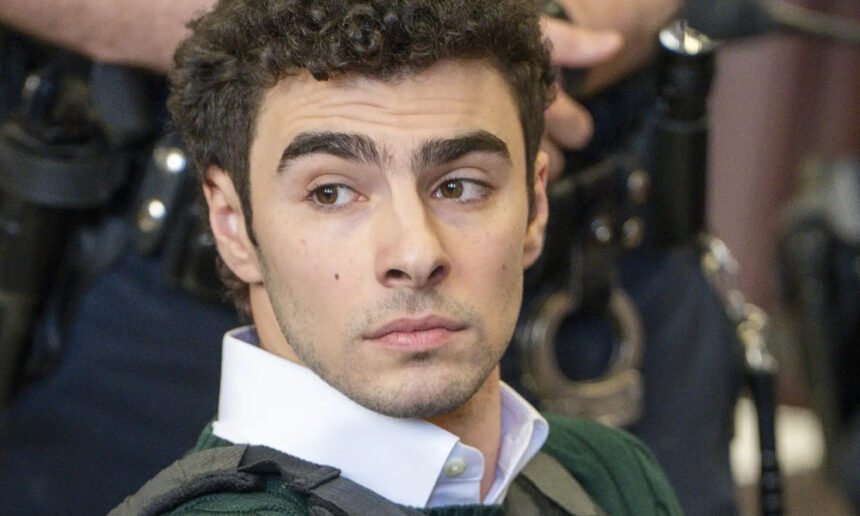
Federal prosecutors just ate a courtroom defeat they didn’t see coming. A federal judge on Friday stripped the death penalty from the federal case against Luigi Mangione, the man accused of killing UnitedHealthcare CEO Brian Thompson in Manhattan in December 2024 — handing a major legal setback to the Department of Justice’s high-profile prosecution.
U.S. District Judge Margaret Garnett ruled that prosecutors can no longer seek capital punishment because the sole federal murder charge that could trigger the death penalty was dismissed as legally flawed.
That means if Mangione is convicted in federal court, a death sentence is now simply impossible. The remaining federal counts against him — two stalking charges tied to the killing — carry a maximum of life in prison without parole.
This isn’t a minor procedural headache. It’s a public humiliation for prosecutors who, under Attorney General Pam Bondi, publicly declared they would pursue the death penalty in one of the most sensational killings of the year. Bondi had cast Mangione’s alleged murder of Thompson — gunned down outside a Midtown Manhattan hotel — as a “premeditated, cold-blooded assassination,” and vowed capital punishment was warranted.
Garnett’s ruling also dismissed a related firearms offense that hinged on classifying the stalking offense as a “crime of violence” — something the judge said stalking does not legally qualify as under current law.
Despite that blow, the judge allowed key evidence to stay in the federal case, including a handgun, a loaded magazine, and a red notebook seized from Mangione’s backpack when he was arrested in Pennsylvania days after Thompson’s killing. Prosecutors say those items tie him to the crime. Mangione’s defense had argued the backpack search was illegal because officers didn’t have a warrant and there was no immediate threat — but the judge disagreed.
Mangione, 27, has pleaded not guilty to all federal and parallel state charges. He still faces a separate state murder case in New York, where the death penalty wouldn’t apply anyway, and where prosecutors continue to push for trial dates.
Prosecutors could still appeal the federal judge’s exclusion of the death penalty option, but for now this is an embarrassing loss for the Trump-installed DOJ — a high-profile case that was supposed to send a message, now deprived of its ultimate punishment leverage.
Federal jury selection in the remaining federal case is expected to start in September, with opening statements to follow.
Whether this legal rebuke shifts momentum in Mangione’s favor or merely reshapes strategy remains to be seen. For now, one thing is clear: after Judge Garnett’s ruling, the government’s bid to execute Mangione has effectively died in court.