



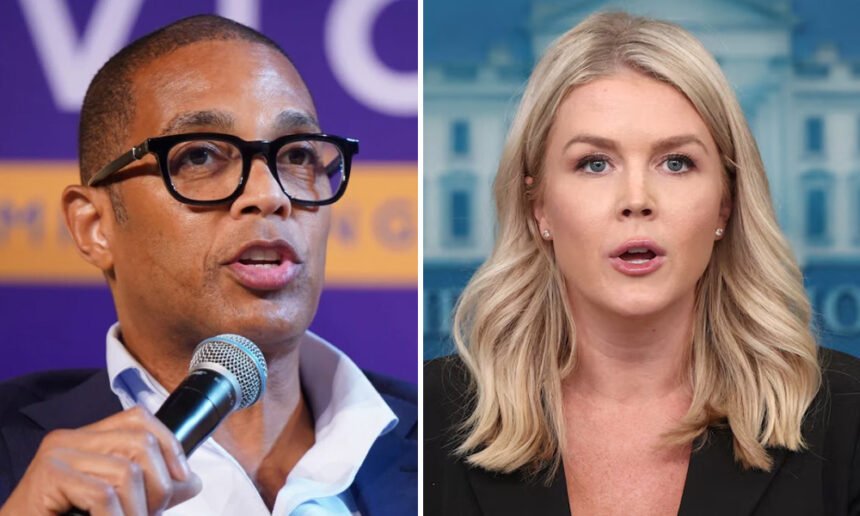
Don Lemon didn’t just report the chaos in Minneapolis — he faced the ire of MAGA figures and even a top DOJ official for it, and his response has lit up the internet.
The former CNN anchor livestreamed himself alongside anti-ICE protesters who stormed a Sunday service at Cities Church in Minneapolis, chanting “ICE out” in the wake of protests over the fatal shooting of Renee Good by an ICE agent.
Conservative firebrands have gone ballistic.
Harmeet Dhillon, the Justice Department’s assistant attorney general for civil rights and a prominent Trump ally, took to X to declare that a “house of worship is not a public forum for your protest” and warned Lemon: “You are on notice!” alleging the reporting could violate federal criminal and civil laws.
White House Press Secretary Karoline Leavitt piled on, saying the DOJ has launched a full investigation into the Minneapolis church incident and claiming “President Trump will not tolerate the intimidation and harassment of Christians in their sacred places of worship.”
Even fringe conservative influencers like Auron MacIntyre of The Blaze called for federal charges and demanded that Lemon be “in custody by the end of the day.”
Lemon’s take? He’s doubling down on free speech and journalistic duty.
Lemon rejected the conservative hysteria, calling out MAGA figures for “losing their mind over something that’s not even true” and insisting he was merely chronicling events, not organizing or participating in them.
“I had no affiliations with that organization. I didn’t even know they were going to this church until we followed them there… Once the protest started in the church, we did an act of journalism,” Lemon said, invoking the First Amendment as his shield.
Lemon also interviewed the church’s pastor, who described the protest as “shameful” and said worshippers felt violated.
The controversy touches on broader cultural flashpoints: press freedom, and the heated politics around ICE’s role in Minneapolis. Conservative commentators have even invoked the Freedom of Access to Clinic Entrances (FACE) Act, arguing protesters — and by extension Lemon — could be liable for criminal violations.
For his part, Lemon has stood firm that covering the protest was journalism — a constitutionally protected act — and urged people to understand that protests are “not comfortable” but are part of democratic expression.
It’s a bizarre stand-off: one side equates his coverage with criminal disruption of worship, the other sees a journalist merely documenting a moment of civil unrest. And as the internet ignites, both sides are sharpening their lines in what may be yet another flashpoint of the 2026 political battleground.