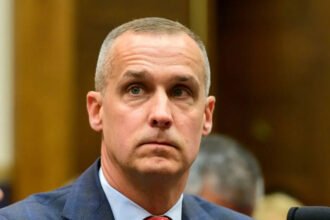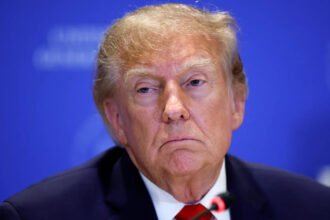





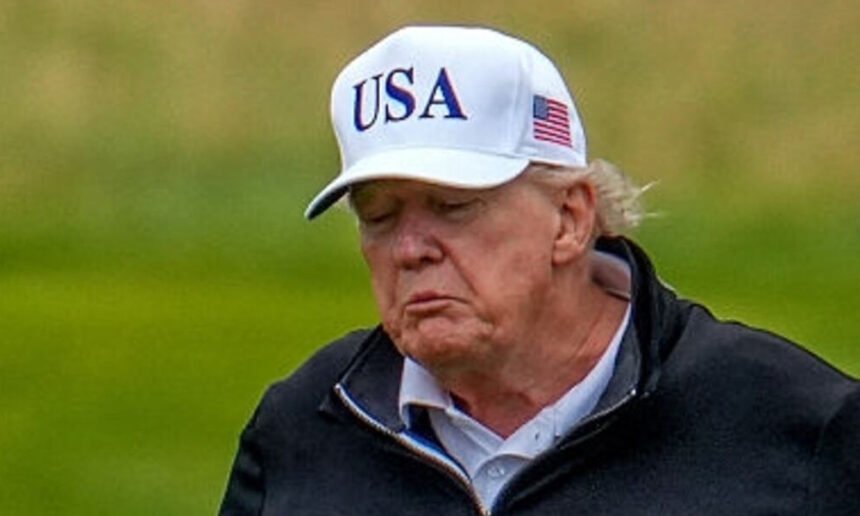
A Washington State University medical professor says he believes President Donald Trump suffered a stroke in early 2025, a claim he says is backed by multiple behavioral clues — from awkward gait to speech changes to how the president descends Air Force One’s stairs.
Professor Bruce Davidson, a clinical medicine expert at the Elson S. Floyd College of Medicine in Spokane, told The Court of History podcast that Trump’s physical mannerisms and speech patterns are consistent with a cerebrovascular event.
“My impression is that President Trump has had a stroke,” Davidson said, adding that he believes it was on the left side of the brain, which controls the right side of the body.
Trump, 79 and the oldest commander in chief in U.S. history, has faced persistent scrutiny over his health, particularly since assuming his second term in 2025. Critics and observers have pointed to episodes in which Trump appeared to nod off at events and exhibited moments of slurred or unusual speech — all of which have fueled speculation about his neurological and physical condition.
But the White House has pushed back on health concerns. In a recent interview with The Wall Street Journal, Trump insisted he is in “perfect health”, even as he clarified that a scan he previously described as an MRI was actually a CT scan. White House physician Dr. Sean Barbabella has called the imaging part of routine examinations and said the results were “perfectly normal” with no abnormalities detected.
Trump also sat for cognitive testing that his aides and the president himself have touted as evidence of his mental fitness, with Trump saying he “aced” the exams — remarks some critics say are part of an effort to deflect ongoing questions about his fitness for office.
On the podcast, Davidson walked through what he sees as evidence supporting his concern. He pointed to video of Trump shuffling his feet — a departure from his typically more purposeful walk — as well as moments where the president clutched his right hand with his left, which Davidson argues could signal residual post‑stroke weakness. Davidson also cited a video of Trump descending Air Force One’s stairs slowly and gripping the banister with his left hand despite being right‑handed.
The professor described episodes of excessive daytime sleepiness — medically known as hypersomnolence — as another sign. Hypersomnolence is observed in some stroke survivors and can reflect neurological disruption.
Davidson also addressed Trump’s long‑publicized daily aspirin regimen, a topic detailed in Trump’s own Wall Street Journal interview in which he discussed taking a 25 mg aspirin daily — a higher dose than typically recommended and a routine sometimes associated with stroke prevention, not general cardiac health. Trump justified it by saying he wants “nice, thin blood pouring through my heart.”
In the podcast discussion, Davidson explained why aspirin at that level is usually prescribed only after a confirmed stroke or significant vascular blockage, furthering his argument that medical professionals might wonder what’s going on beneath the surface.
Watch the full podcast below: