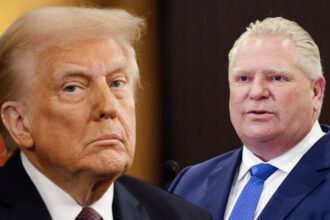









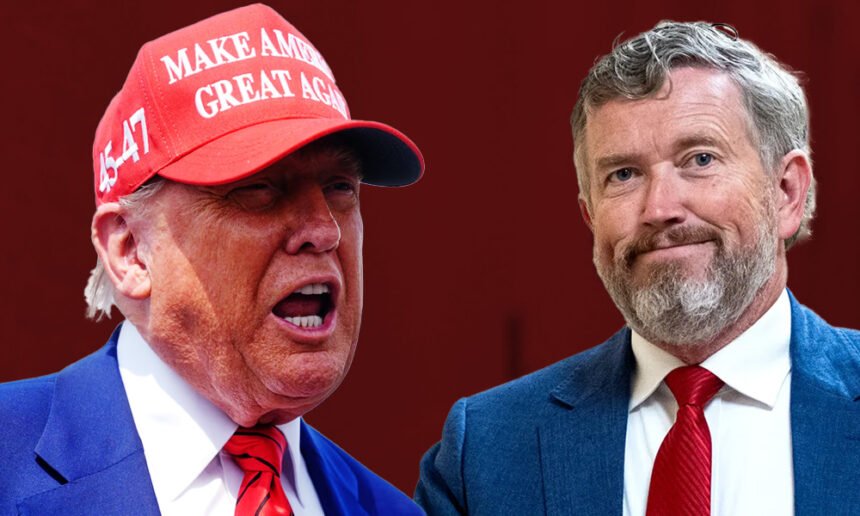
What Happened: In the past 48 hours, the political world erupted when President Donald Trump publicly blasted Kentucky Republican Congressman Thomas Massie as a “lowlife” — not over ideology or policy, but for supporting a bipartisan effort to pry open deeply buried government files tied to Jeffrey Epstein. Massie co-authored the Epstein Files Transparency Act, a bill aimed at forcing federal agencies to release documents related to Epstein’s network, timelines, and government interaction.
Massie’s crime? He tried to do something both parties pretend to care about — transparency. Instead of debating the merits of disclosure, Trump unloaded personal attacks and threw his weight behind a primary challenger to oust Massie in 2026. That’s right: a sitting president is openly weaponizing his influence against a lawmaker inside his own party over how to handle a transparency measure.
Meanwhile, Massie is turning Trump’s insult into cash — raising thousands in campaign donations off the spat — but that doesn’t change the signal being sent. GOP strategists are bracing for blowback, and GOP lawmakers are visibly tense. Latest polls shows Trump’s approval has slid to about 36%, and conservative angst over his dominance is feeding broader dissatisfaction.
To Be Blunt:
Let’s call this what it is: a power purge, not a policy disagreement. Trump didn’t argue against wrongdoing. He targeted a member of his own party for demanding transparency. He didn’t hustle facts; he hurled insults. And he didn’t let it go — he endorsed a challenger to punish deviation.
This is no longer about party unity; it’s about enforcing obedience. If a Republican dares to support bipartisan scrutiny of Epstein — a subject that resonates with millions of Americans unhappy with government secrecy — Trump’s response is not debate, it’s defeat. That tells you everything you need to know about how power is currently exercised in GOP leadership.
Trump’s optics are terrible here. Massie’s effort is framed as helping victims and demanding government accountability — something even many mainstream politicians say they support. But public sympathy doesn’t translate into party tolerance. In the current GOP, loyalty trumps principle.
This is a chilling message for any lawmaker thinking about breaking ranks: raise questions, and you risk public humiliation and political exile. That’s not a party. It’s a club where dissent is punished.
Who’s the Villain:
The villain isn’t Thomas Massie. The villain isn’t the media. The villain is Trump’s political intimidation cloaked as party discipline.
This is the behavior that corrodes democracy from the inside: when legitimate questions are met with threats rather than answers. When accountability becomes a punishable offense. When transparency is treated as betrayal.
Trump’s move shows that in today’s GOP, power matters more than truth. And when power becomes the villain, the public pays the price.
Who Benefits?
The real winners here are:
* Donald Trump and officials connected to Epstein scandal, whose records remain sealed.
* Partisan loyalists, who see independence as a threat rather than an asset.
* Primary challengers funded directly by establishment actors reshaping the party.