




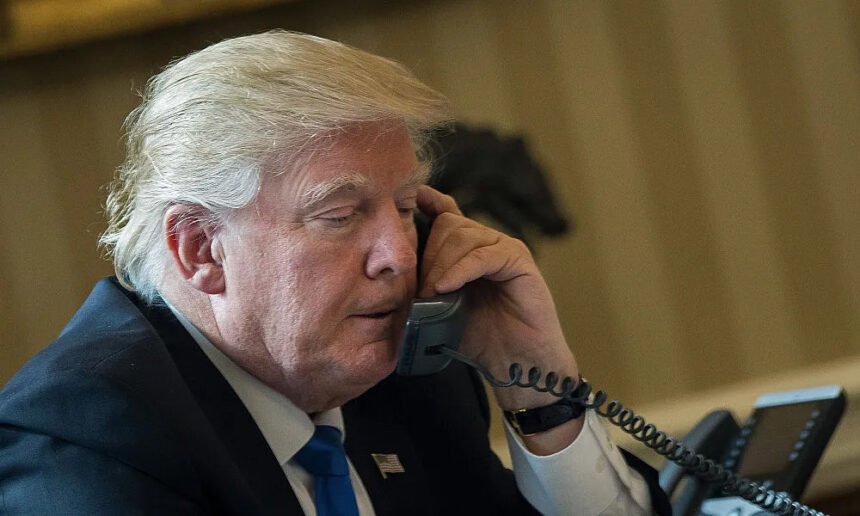
There’s something uniquely unsettling about hearing a plan laid out in real time—especially when that plan involves undoing an election after the votes are already counted. That’s what makes the newly surfaced audio obtained by The New York Times so striking. This isn’t interpretation or hindsight. It’s Donald Trump, on the phone, spelling out exactly what he wanted Republican lawmakers in Georgia to do after he lost the state in 2020.
The audio comes from a tranche of materials tied to the now-dismissed Fulton County criminal case against Trump and more than a dozen of his allies. The case may be sidelined for now, but the recordings don’t fade with it. They capture Trump in a 12-minute call with the late former Georgia House Speaker David Ralston, pushing for a special legislative session to reverse Georgia’s election outcome.
Trump didn’t hedge. He didn’t suggest. He pressed.
“Who’s gonna stop you for that?” Trump asked, referring to calling a special session.
Ralston, to his credit, didn’t pretend the idea was harmless. “A federal judge, possibly,” he replied, laughing—but the nervous kind of laugh that signals this conversation had already crossed into dangerous territory.
What follows is the sound of a president acting less like a candidate pursuing legal remedies and more like a boss issuing instructions. Trump walked Ralston through how such a session would go, insisting—falsely—that he had actually won Georgia by hundreds of thousands of votes. In reality, Trump lost the state by roughly 12,000 votes. The margin was narrow, but it was decisive.
Still, Trump leaned into conspiracy theories that had already been debunked, including claims about ballot boxes at Atlanta’s State Farm Arena. These were the same stories Rudy Giuliani had been peddling publicly, long after election officials and courts had tossed them aside.
“If we had a special session, we will present, and you will say, ‘Here, it’s been massive fraud. We’re going to turn over the state,'” Trump said.
That line matters. It’s not vague frustration. It’s not rhetorical venting. It’s a former president describing a specific process to nullify a certified election result. And it’s said plainly, without irony or restraint.
Ralston never agreed to hold the special session, and that hesitation is part of why Georgia didn’t descend into outright chaos in late 2020. But the call itself became central evidence in Fulton County District Attorney Fani Willis’ RICO case, where she argued Trump was attempting to illegally solicit Ralston to violate his oath of office by calling a special session “for the purpose of unlawfully appointing presidential electors from the State of Georgia.”
Judge Scott McAfee later dismissed those initial charges, ruling that Willis had not been specific enough about which statutes were violated. Legally, that matters. Politically and ethically, it changes very little.
Because the audio doesn’t hinge on technicalities. It captures intent.
Perhaps the most revealing moment comes when Ralston himself lays bare his personal loyalty. “I march to my own drummer, and my own drummer says I want Donald Trump to remain the president,” he said.
That statement, casually delivered, cuts to the core of the problem. When loyalty to a person outweighs loyalty to the law, democracy becomes optional. The system holds only if enough people decide it’s worth holding.
Supporters will argue this is old news, that the case was dismissed, that Trump was simply exploring his options. But the audio strips away the spin. Exploring options doesn’t usually sound like instructing a state official on how to “turn over the state.” That sounds like a demand.
What’s striking is how unguarded Trump is on the call. There’s no sense of caution, no awareness that this might one day be scrutinized. It suggests he didn’t see these actions as extraordinary. To him, leaning on lawmakers to reverse an election result seemed not just acceptable, but expected.
The release of these recordings doesn’t introduce a new scandal so much as it sharpens an old one. We’ve known Trump refused to accept the 2020 loss. We’ve known he pressured officials. What this audio does is remove the buffer of summaries and testimony. It lets voters hear it themselves.