




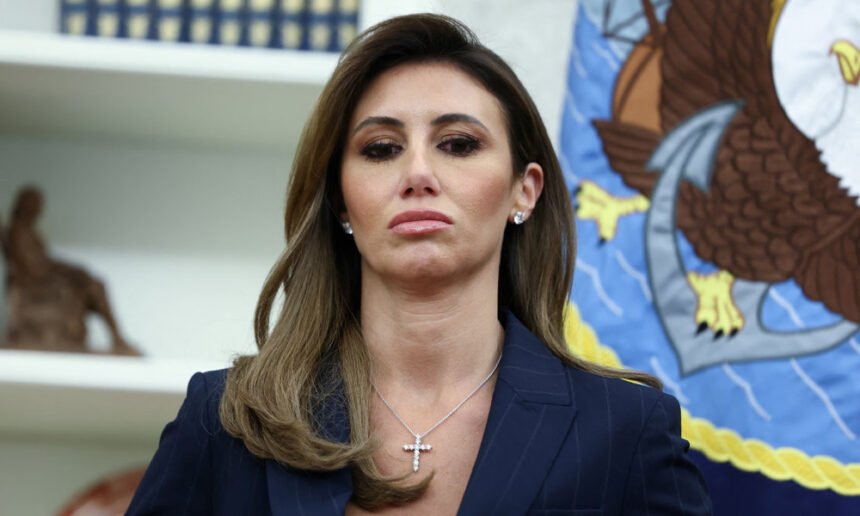
A federal appeals court on Monday upheld the disqualification of Alina Habba, President Donald Trump’s pick for U.S. attorney in New Jersey, delivering a sharp rebuke to the administration’s use of unconventional tactics to install loyalists in key prosecutorial positions without Senate approval.
“It is apparent that the current administration has been frustrated by some of the legal and political barriers to getting its appointees in place,” Judge D. Michael Fisher, a George W. Bush appointee, wrote in the 32-page opinion. “Its efforts to elevate its preferred candidate for U.S. Attorney for the District of New Jersey, Alina Habba, to the role of Acting U.S. Attorney demonstrate the difficulties it has faced — yet the citizens of New Jersey and the loyal employees in the U.S. Attorney’s Office deserve some clarity and stability.”
The ruling underscores a broader struggle by the Trump administration to quickly put largely unqualified prosecutors into top U.S. attorney roles without Senate confirmation. Similar disputes are playing out across the country. In California and Nevada, federal judges have already ruled that Trump-appointed prosecutors are serving unlawfully, and a case is pending in upstate New York.
Last week, the Eastern District of Virginia dealt another setback when a judge disqualified top federal prosecutor Lindsey Halligan and dismissed politically charged cases she filed against Trump critics, including former FBI Director James Comey and New York Attorney General Letitia James.
The Trump administration could appeal Monday’s decision to the Supreme Court. Spokespeople for both the administration and Habba did not immediately respond to requests for comment. Oral arguments are scheduled Thursday in a case challenging the authority of John Sarcone III, Trump’s pick to lead the Northern District of New York.
The 3rd U.S. Circuit Court of Appeals panel that upheld Habba’s disqualification included Judge Fisher, Judge D. Brooks Smith (both Bush appointees), and Judge L. Felipe Restrepo (appointed by Barack Obama). During oral arguments in October, the judges expressed skepticism over the multistep process the administration used to designate Habba, Trump’s former personal attorney, as acting U.S. attorney and keep her in the role after district judges moved to replace her.
Many of the legal challenges focus on whether indictments brought by Trump-appointed U.S. attorneys should be thrown out. Defendants argue that the prosecutors lacked the authority to file charges in their districts. Monday’s ruling did not address the New Jersey District Court’s decision not to dismiss indictments. In California and Nevada, judges have likewise declined to toss charges despite finding the appointments unlawful.
The case highlights growing tension between the executive branch and the judiciary over the limits of presidential authority in appointing top federal prosecutors. For now, the court sent a clear message: loyalty to a president does not override the law.