





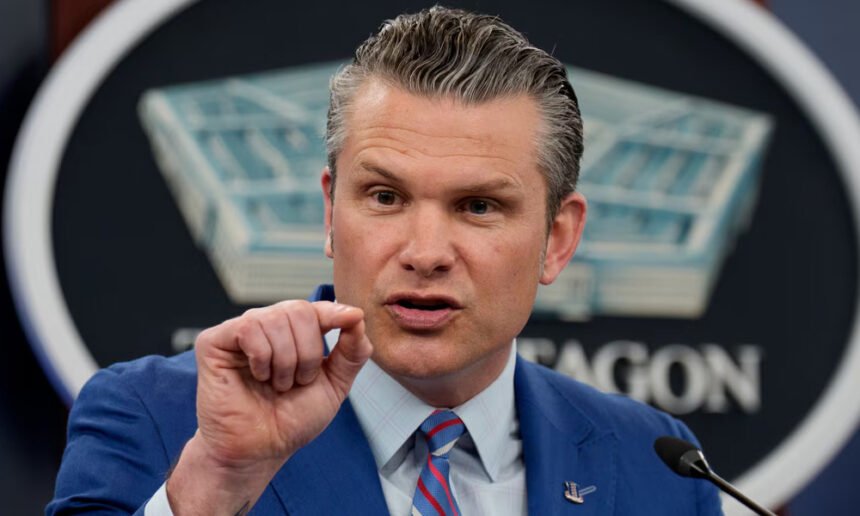
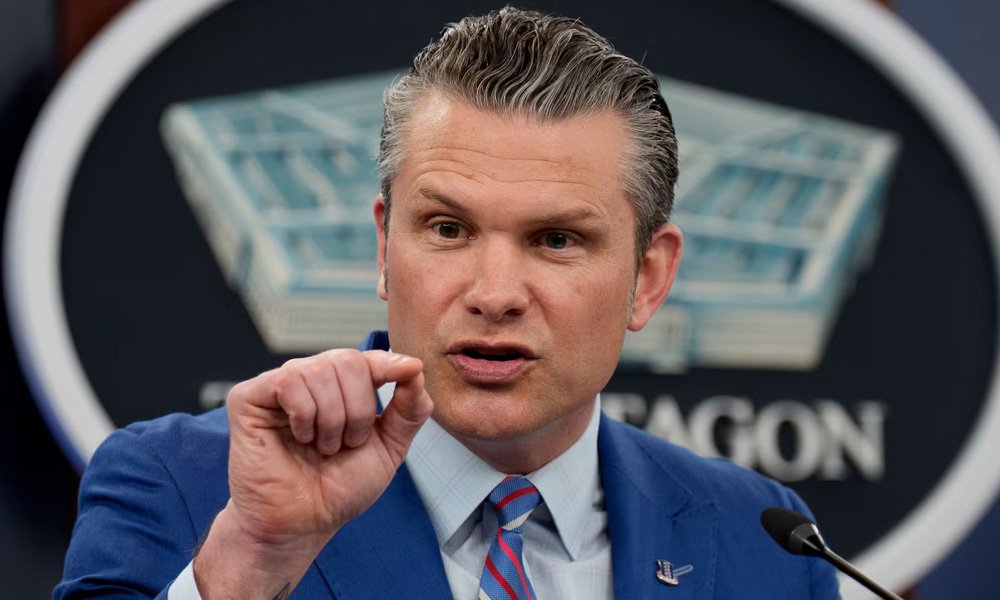
A wave of backlash swept across social media after the Pentagon—now branded the “Department of War” under Defense Secretary Pete Hegseth—announced it is investigating Democratic Senator Mark Kelly of Arizona after Kelly appeared in a video urging U.S. service members to reject unlawful commands.
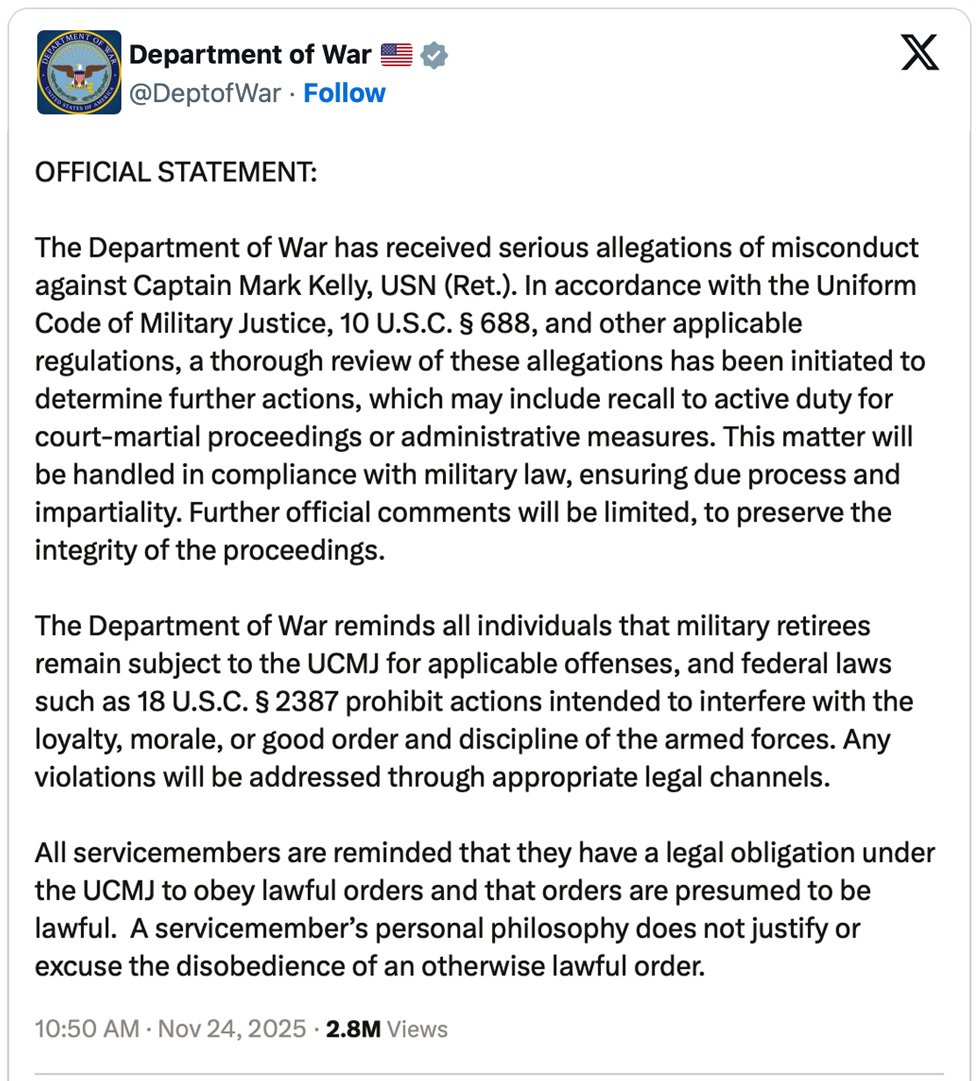
The Pentagon posted its statement on social media Monday, citing a federal law that lets the defense secretary recall retired service members to active duty. According to the statement, that power could be used to subject Kelly to military discipline despite his current role as an elected senator.
A key line in the announcement warned that Kelly could face “court-martial proceedings or administrative measures,” signaling that the Pentagon is treating his remarks as a potential breach of military law.
Kelly, who retired as a Navy captain after serving as a fighter pilot and later as an astronaut, is one of the most prominent veterans in Congress. Yet even with his résumé, the Pentagon’s decision to publicly threaten a sitting senator is extraordinary and has sent shockwaves through Washington. For decades, the Department of Defense avoided overt political confrontations. This moment suggests that norm may be collapsing.
The video that set off the clash was posted last Tuesday. Kelly was one of six lawmakers with military or intelligence backgrounds who addressed service members directly. In his segment, Kelly told troops, “you can refuse illegal orders,” while others urged them to “stand up for our laws…our Constitution.”
The Pentagon’s statement claimed Kelly’s comments could interfere with the “loyalty, morale, or good order and discipline of the armed forces,” and said a “thorough review of these allegations has been initiated” to determine whether he crossed a legal line.
That’s where the public backlash exploded.
Across social media, users tore into the Pentagon’s reasoning and the optics of threatening a senator for reiterating what many consider bedrock principles of military law. User Diana Rivera wrote: “Explain to me how reminding troops that they have the right to refuse UNLAWFUL orders interferes with the ‘loyalty, morale, or good order and discipline of the armed forces.'”*
Another user, @jdogzeenft, blasted the department’s direction under Hegseth, posting: “This is fresh coming from a Department that no longer identifies itself by its legally established name. Who should be court-martialed/impeached for such seditious behavior?”
Others zeroed in on what they saw as the absurdity of criminalizing a reminder of the military oath. User @libdunkmedia wrote: “You’re going to court martial somebody for checks notes… repeating back service members’ oath to the Constitution… got it 👍”
Gun-safety advocate Fred Guttenberg reacted even more sharply, saying: “The Defense Department, via statement below, is admitting that the transition to a Russian style propaganda service is complete.” He added: “@CaptMarkKelly is an American hero. @PeteHegseth is a raging dipshit. Was alcohol involved in the writing of this post?”
That last line prompted user @ShelvaStickland to reply: “If he wrote it you know for sure there was alcohol involved.”
Whether the investigation ultimately leads anywhere, the political blowback has already grown into a full-blown uproar. The idea that the Pentagon might recall a retired officer who is now an elected senator—over comments about refusing illegal orders—has touched a nerve far beyond Washington.
And it leaves behind a larger question that no statement from the Pentagon has yet answered: if a senator can be threatened for reminding troops of their duty to reject unlawful commands, what does that mean for the boundaries of military power and political speech in the months ahead?