







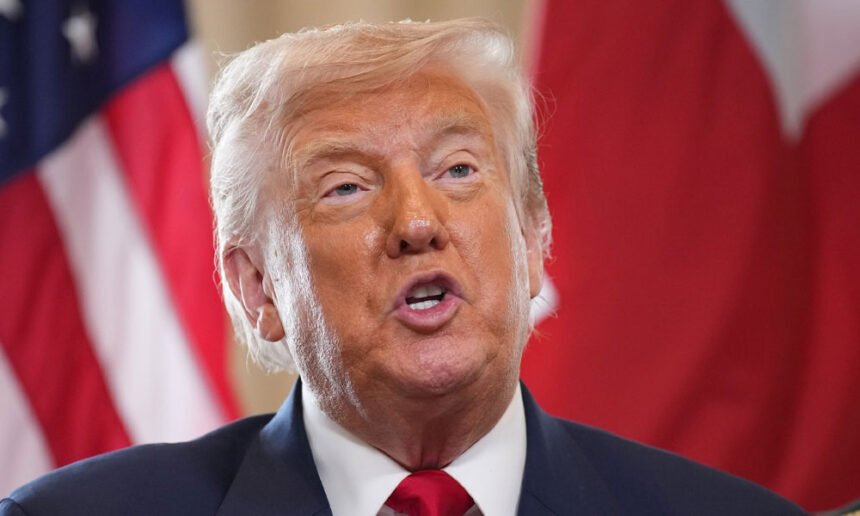
President Donald Trump is facing mounting backlash over his claims that the economy is thriving and inflation is under control. As voters across the country grapple with higher grocery bills, rising rent, and steeper utility costs, Trump’s “no inflation” spin is quickly collapsing under the weight of public frustration.
The president has taken an increasingly defensive tone on affordability, brushing off growing anger about prices that could define next year’s midterm elections. His shifting message on the economy — and his reluctance to acknowledge voters’ pain — comes after Democrats scored surprise victories in Virginia, New Jersey, and New York City last week, fueled in part by cost-of-living concerns.
Initially, Trump urged Republicans to “talk more about affordability” and highlight what he called the administration’s accomplishments. But within days, his tone changed. He began dismissing complaints about high prices as a “con” created by Democrats.
Asked by Fox News host Laura Ingraham whether affordability was simply a “voter perception issue” or something the White House needed to take more seriously, Trump was blunt. “It’s a con job by the Democrats,” he said.
He also questioned whether Americans were even worried about the economy. “I don’t know that they are saying that,” Trump said. “I think polls are fake. We have the greatest economy we’ve ever had.”
But data — and voters — tell a different story. A Washington Post/ABC News/Ipsos survey from late October found that a majority of Americans said they’re spending more on groceries and utilities than a year ago. And exit polls after the Nov. 4 elections showed that 49 percent of Virginia voters named the economy as their top issue, while 56 percent of New York City voters said the cost of living was their number one concern.
According to the Bureau of Labor Statistics, prices were up 3 percent in September compared to the previous year. Energy costs rose 2.8 percent, electricity 5.1 percent, and food prices climbed 3.1 percent. Even though overall inflation has cooled since peaking in 2022, the bite of higher prices remains a daily frustration for millions of Americans.
Trump has tried to counter those perceptions by cherry-picking examples of falling costs. He’s repeatedly cited drops in egg and gasoline prices and pointed out that “the price of a Thanksgiving meal package from Walmart is down 25 percent from a year ago,” although that package now includes fewer items.
“We did a great job on groceries and affordability. The only problem is the fake news,” Trump said last Friday during a meeting with Hungarian Prime Minister Viktor Orbán.
White House press secretary Karoline Leavitt jumped to his defense at that same event, accusing reporters of ignoring Trump’s economic achievements. “Affordability is what the American people elected this president to do, and he is doing it,” she said, citing extended 2017 tax cuts and deregulation efforts as proof.
White House communications director Steven Cheung shared a Bloomberg chart showing mentions of an “economic slowdown” on corporate earnings calls were at their lowest since 2007 — a data point he said proved the economy’s resilience.
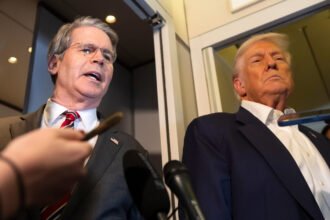
Treasury Secretary Scott Bessent echoed that optimism, telling Morning Joe the administration “inherited an affordability crisis” and blamed the previous government shutdown for making things worse.
But behind the scenes, even some Republican strategists admit Trump’s blanket denial of inflation problems makes it harder for his team to appear in touch with voters. “When he insists everything’s great, it leaves no room for his own people to acknowledge what’s actually happening,” one strategist said.
Still, the administration appears to know it can’t ignore the issue completely. Trump recently ordered the Justice Department to investigate major meatpacking companies, accusing them of “driving up the price of Beef through Illicit Collusion, Price Fixing, and Price Manipulation.” Beef prices have jumped roughly 15 percent in the past year — an echo of similar moves by the Biden administration years ago.
For a president who campaigned on “low prices” and “no inflation,” the growing voter anger is unmistakable. Trump’s confident spin may have worked before, but as families cut back on essentials and watch their budgets shrink, fewer are buying it this time.