








President Donald Trump insists the fragile ceasefire between Israel and Hamas remains intact, despite deadly clashes and growing signs that his peace plan may be unraveling.
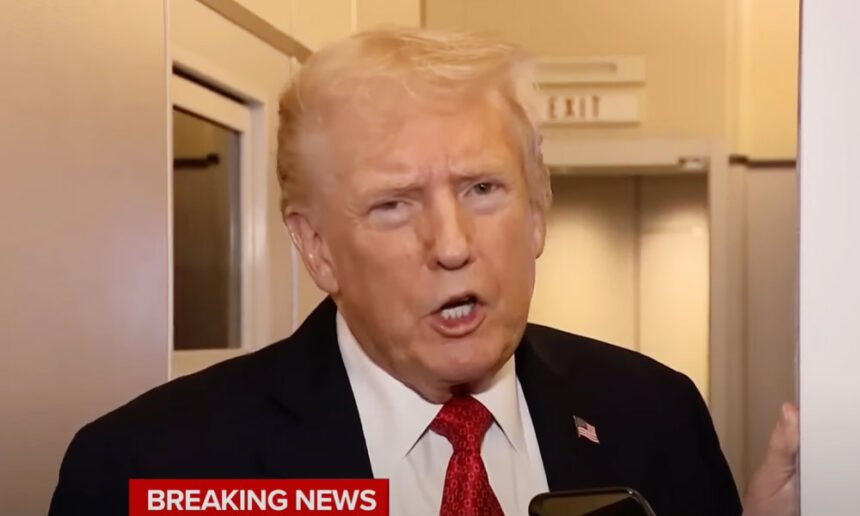
Speaking aboard Air Force One Sunday night, Trump downplayed the weekend’s violence. “The ceasefire is still in place,” he told reporters on his return from Palm Beach. He acknowledged Hamas had been “quite rambunctious” but added, “I believe its leadership isn’t involved in that.”
That’s a bold claim, given the facts on the ground. Over the weekend, Israel launched a series of airstrikes in southern Gaza after claiming Hamas militants opened fire on its troops—killing two Israeli soldiers in the process. In response, Israel said it struck dozens of Hamas targets. Palestinian officials reported at least 29 Palestinians killed in the strikes, though the health ministry in Gaza doesn’t distinguish between militant and civilian casualties.
The airstrikes followed a week that had, at least briefly, looked like progress. Both sides had followed through on the initial phase of the ceasefire: exchanging the remaining living hostages and prisoners, and allowing aid to start flowing into Gaza. Israel also pulled back troops from key areas, and Gaza saw food, medicine, and water arrive after months of dire shortages.
But the second phase of the agreement is proving much harder—and far bloodier.
Israel has demanded Hamas return the bodies of 28 deceased hostages. Hamas has turned over 12 so far, saying it needs time to locate the rest. Israel isn’t buying it. In response, it’s keeping the Rafah border crossing—the lifeline to Egypt—closed “until further notice.”
Hamas fired back, accusing Prime Minister Benjamin Netanyahu of violating the deal by shutting the border. Then came the Sunday firefight and the deadly Israeli airstrikes.
The situation escalated again when Israel temporarily halted all aid into Gaza after the strikes. But Axios’s Barak Ravid reported that pressure from the Trump administration led Netanyahu to reverse course, and the border crossings reopened Monday morning.
While Trump’s team scrambled to keep the ceasefire on life support, the U.S. also issued a stark warning to Hamas. The State Department said Saturday it believes Hamas is planning an “imminent” attack on Palestinian civilians—a move it said would be a “direct and grave” violation of the ceasefire.
“If the attack goes forward,” the statement read, “the U.S. will take measures to protect the people of Gaza and preserve the integrity of the ceasefire.”
Meanwhile, Hamas appears to be tightening its grip on Gaza through brutal methods. The group has carried out public executions in recent days, aiming to crush rival militias and consolidate control—openly defying one of the core demands of Trump’s peace plan: that Hamas disarm and cede power.
“If Hamas doesn’t disarm itself, we will disarm them,” Trump said last week.
He made it clear the U.S. wouldn’t send troops into Gaza to stop Hamas from targeting civilians—but cryptically added, “somebody” would go in “under our auspices.”
Despite the “ceasefire,” bullets have been exchanged. Airstrikes have landed. Aid has been cut off and restarted. And neither side seems ready to trust the other.
The initial hostage and prisoner exchanges were the easy part. Everyone knew the second phase—disarming Hamas, returning bodies, reopening borders—would be a far tougher climb. And right now, it’s unclear whether Trump’s plan has the traction to survive the battlefield reality.
Watch the report below from News Nation: